

Earth Day has been celebrated since 1970. To mark the occasion, we present 10 charts that show the current condition of humanity’s only home.
 Tomáš Grečko



Earth Day has been celebrated since 1970. To mark the occasion, we present 10 charts that show the current condition of humanity’s only home.
Nothing suggests that we will have another one any time soon. Yet the state of the earth is deteriorating faster than we still thought quite recently.
What can you do about it? Here are a few quick tips: if your city has one, install the app for buying public transport tickets and try using it; ask a colleague who cycles to work which routes they take and what they do to feel safe on them; come up with a short adventure trip with your family that you will take together by train.
The earth is losing the conditions needed for civilisation to function
Imagine someone tells you that all 10 out of 10 of their medical tests came back bad. These would not be minor deviations, but results indicating overall organ failure. Would you invite them, in this condition, for a fried schnitzel with chips?
According to the latest data from the World Meteorological Organization, our planet is in a similar state. If additional emissions keep flooding an already disrupted system, the result may be collapse.
The Earth needs an immediate transfer to “intensive care” – a radical reduction in emissions and increased protection of all remaining ecosystems.
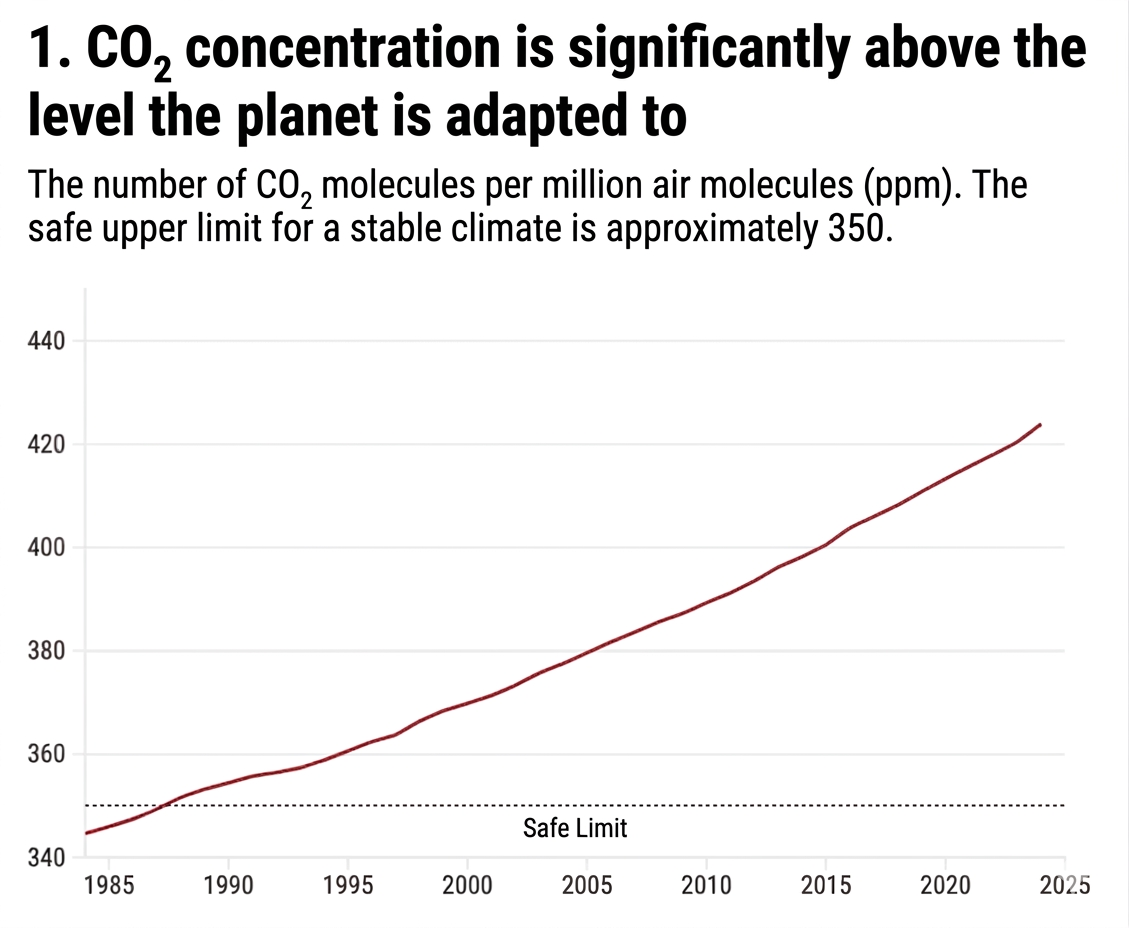
The increase in carbon dioxide caused by humans is the main driver of climate change. Global CO₂ concentrations are at their highest level in the past two million years. The result is an intensified greenhouse effect, which leads to planetary warming, ocean acidification and disruption of agricultural productivity, ultimately threatening global food security.
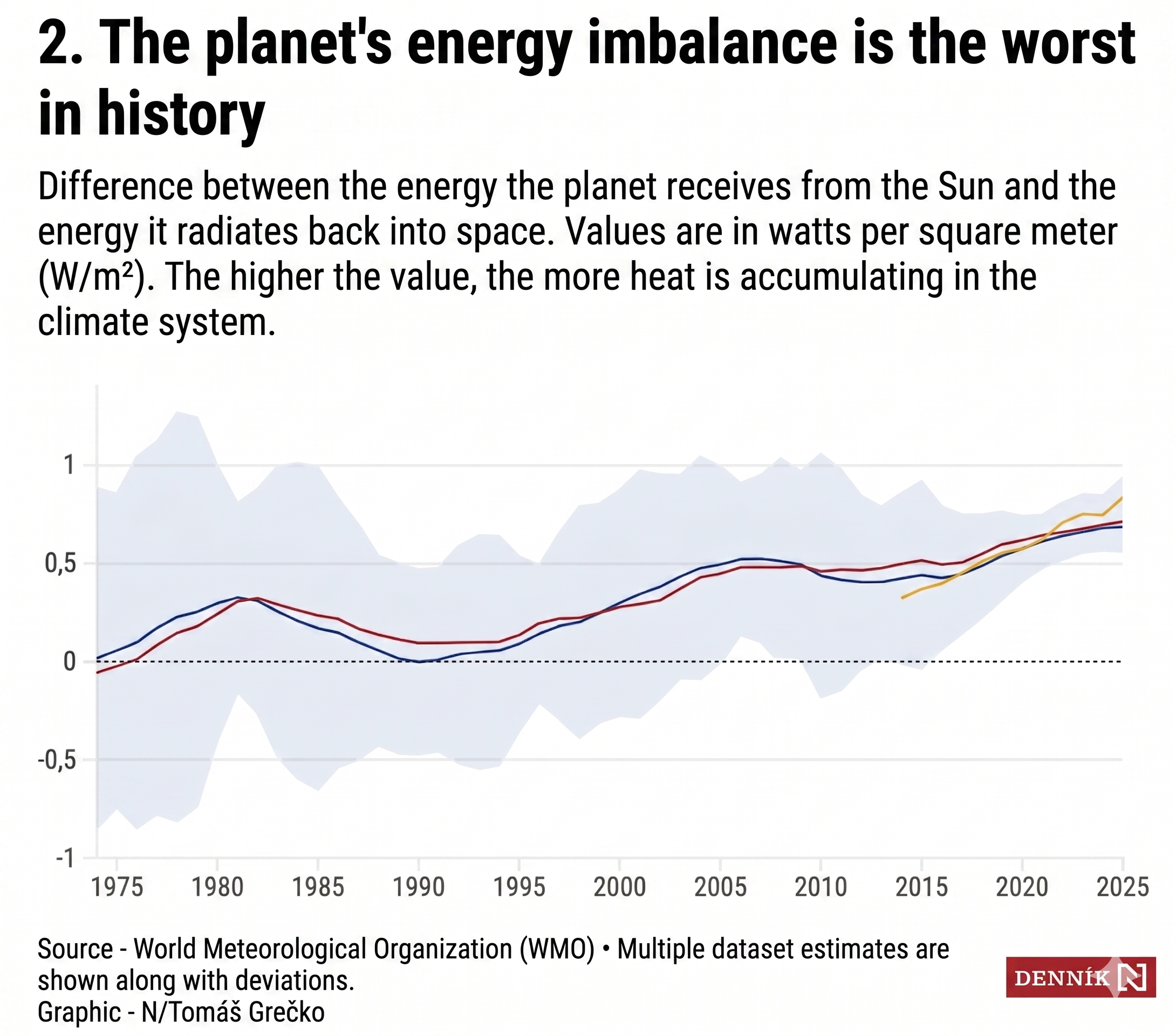
Energy imbalance measures how quickly heat trapped by greenhouse gas emissions is accumulating in the climate system. It is the difference between the energy received from the sun and the energy radiated back into space. A positive value means the planet is gaining energy. In 2025, this imbalance reached the highest value recorded in the measurement history since 1960. The result is a massive accumulation of excess energy, of which approximately 91 percent is stored in the oceans.
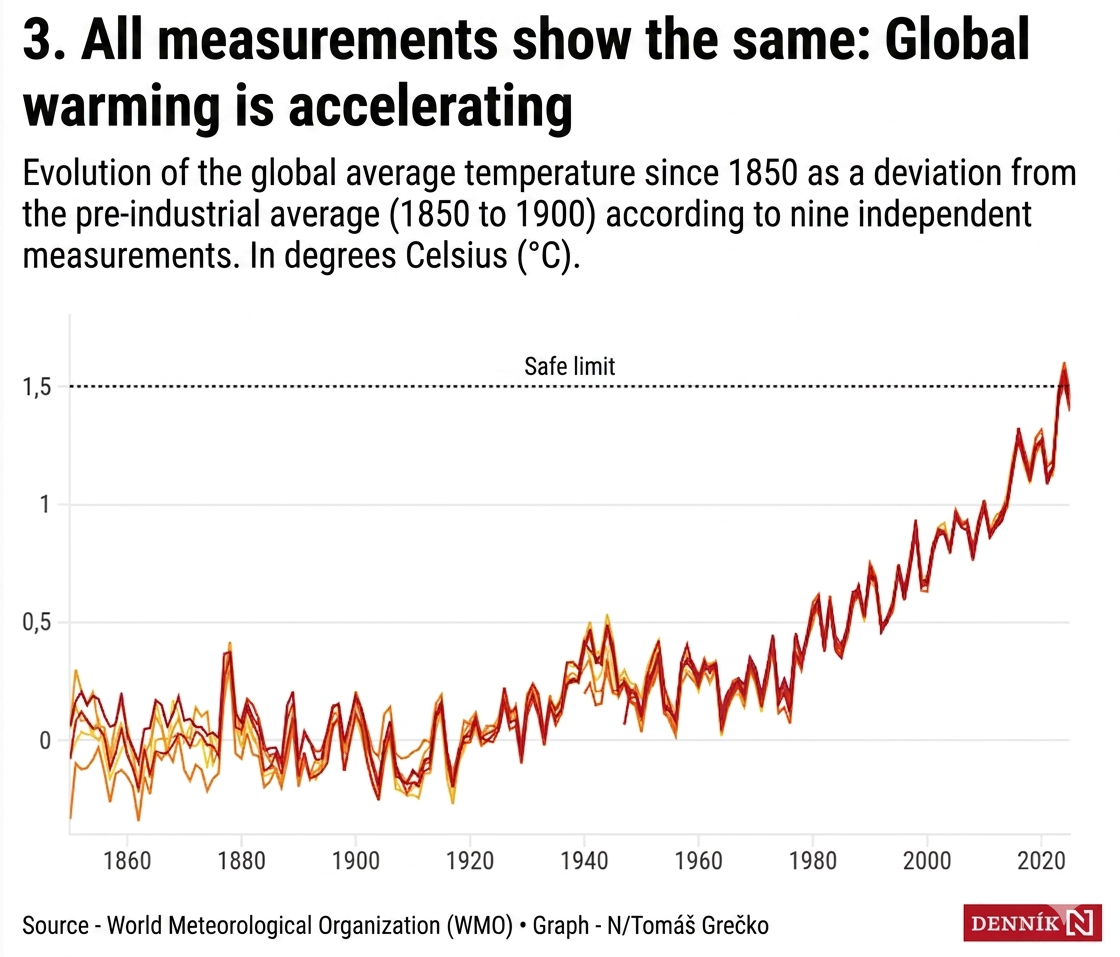
Measuring the global average surface temperature is one of the longest-running observations of climate change and serves as the main benchmark for tracking progress towards the Paris Agreement. Its goal is to keep the temperature increase below 1.5 to 2 degrees Celsius.
According to measurements, 2025 was the second or third warmest year on record, with an anomaly of 1.43 degrees Celsius above the pre-industrial era. The last 11 years (2015–2025) were also the 11 warmest years in the history of measurements. Dramatic consequences include more frequent extreme heat, water shortages, destructive storms, floods, fires and loss of biodiversity.
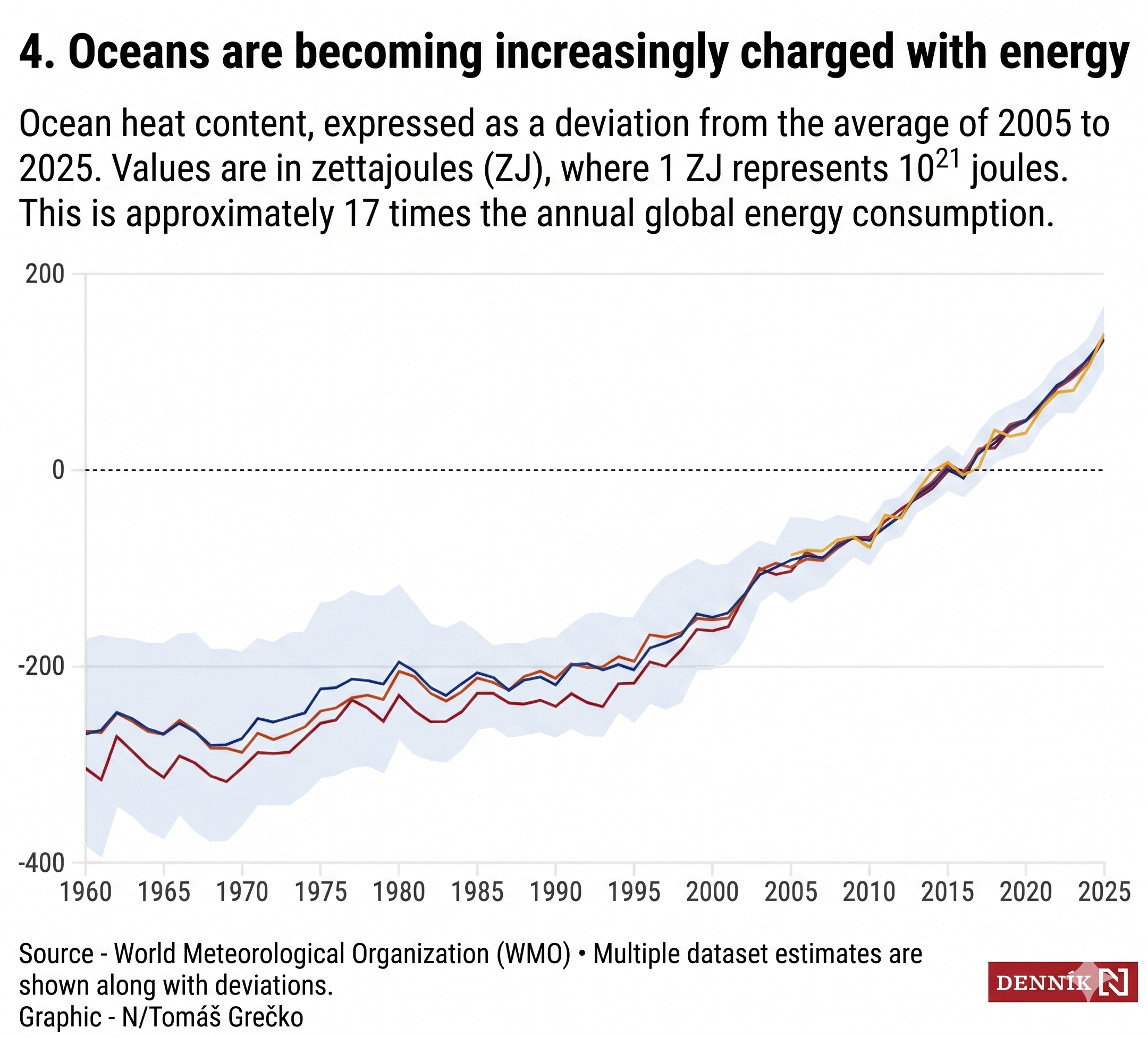
The oceans absorb the overwhelming majority of the excess energy trapped by greenhouse gases. These changes are practically irreversible over the coming centuries to millennia. The warmed ocean will thus fuel extreme weather like a nuclear reactor for many centuries to come. Warm water heats the air above it and at the same time increases the amount of water vapour the air can hold.
These saturated air masses move towards land and pick up more and more energy as they travel. Over land, this energy is released all at once. In the tropics, this leads to stronger hurricanes and typhoons.
In warmer oceans, marine ecosystems are collapsing and coral bleaching is becoming more frequent.
Sea levels are now 11 centimetres higher than in 1993, and since 2012 the rate of rise has almost doubled. This leads to flooding of coastal areas, salinisation of freshwater sources and soils, loss of habitable land and forced displacement of people.
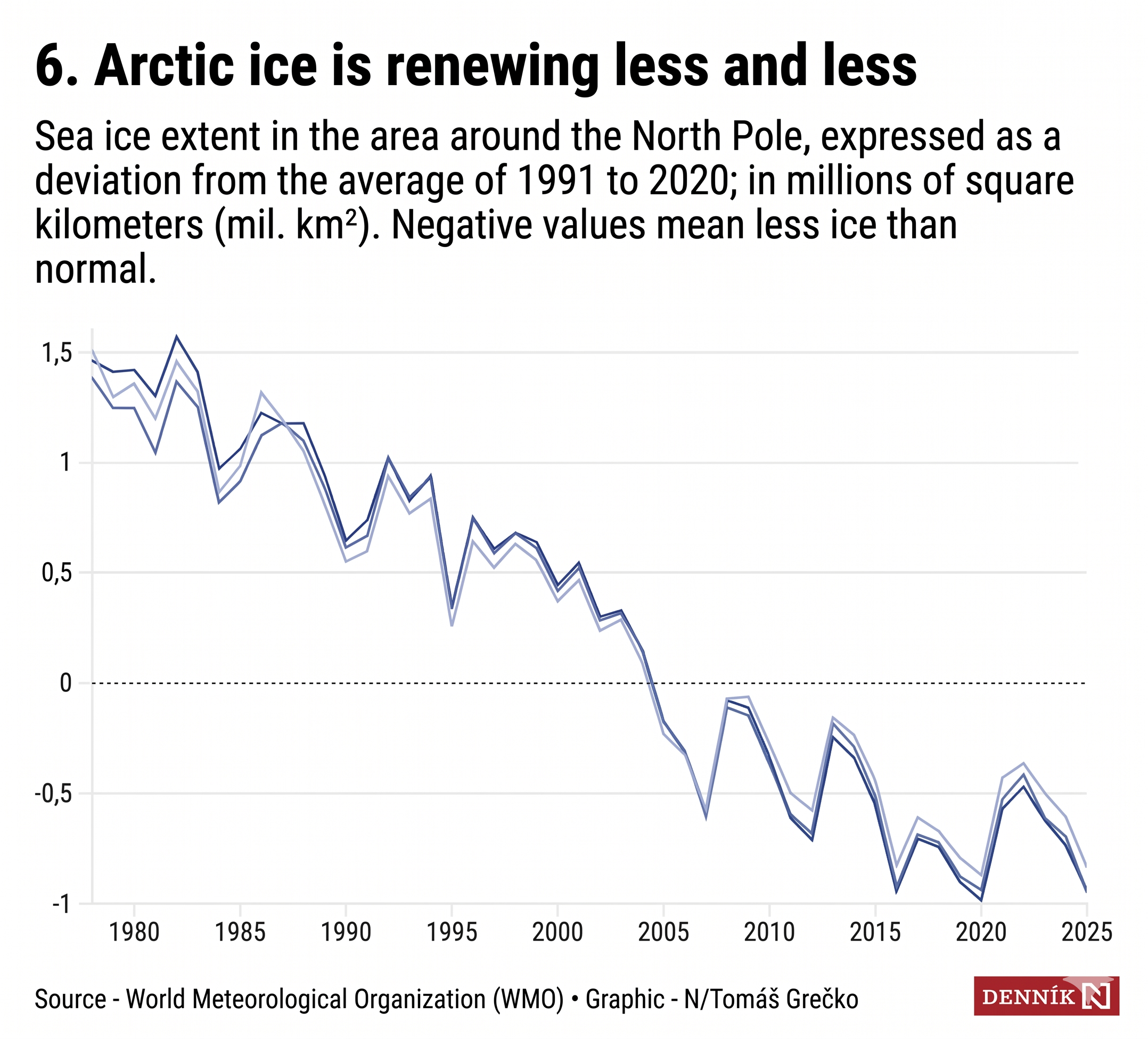
The Arctic acts as the air conditioning of the northern hemisphere; disruption of Arctic ice changes the weather over a much wider region – it affects global ocean circulation and the warming of the planet’s surface.