
The EU tried to sanction Patriarch Kirill back in 2022, calling him ‘one of the most prominent supporters of the Russian military aggression against Ukraine’. Now Viktor Orbán and his veto is history, religious actors cannot remain immunised from consequences merely by virtue of hiding behind the veil of religion.
 Robert Blitt



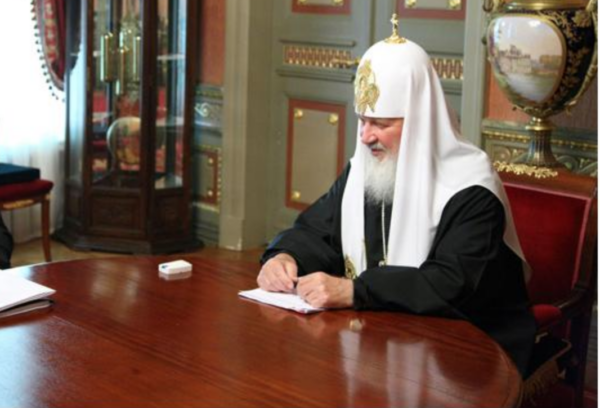
Since the onset of Russia’s 2022 invasion of Ukraine, Patriarch Kirill, the leader of the Russian Orthodox Church — Moscow Patriarchate (ROC), has distinguished himself as one of the most vociferous and loyal supporters of the Kremlin’s aggression.
At the same time, he has consistently managed to evade European Union restrictive measures for this conduct.
Prime minister Viktor Orbán’s recent defeat in Hungary opens a dramatic new opportunity to hold the patriarch and the ROC accountable for their actions.
The EU must not only seize the moment but make up for lost time.
Patriarch Kirill’s unflagging support for Russia’s aggression was already on display in the early stages of the conflict.
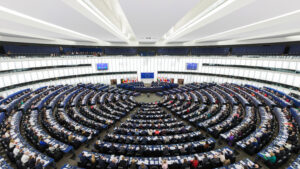
In response, the European Union Commission included the patriarch in its proposed sixth sanctions package in spring 2022, identifying Kirill as “one of the most prominent supporters of the Russian military aggression against Ukraine.”
‘Religious freedom’ red herring
Orbán, however, scuttled this plan, demanding Kirill’s removal from the sanctions list as an “issue of religious freedom.”
Hungary’s unilateral Luxembourg veto — dubiously premised on a misinterpretation of the right to freedom of religion — has persisted through 14 additional rounds of EU sanctions.
It continues to operate today as a de facto prohibition on reconsidering Kirill for inclusion in a list that now encompasses nearly 2,000 individuals.
This ban has remained in place despite clear evidence that Kirill and the ROC have escalated their support for Russia’s aggression.
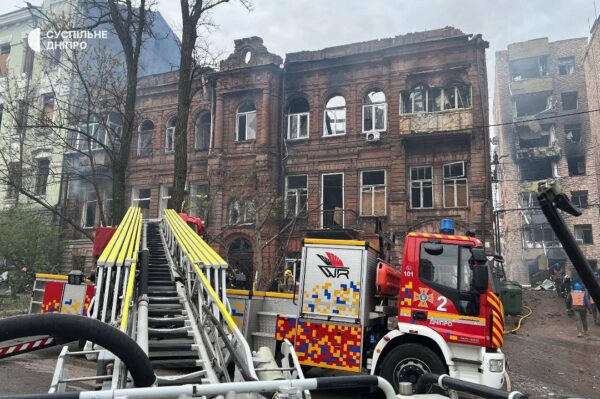
Four years on, Kirill and his associates have branded the invasion nothing less than a holy war against the West’s debased godlessness — a necessary campaign to recapture ROC infrastructure and souls, and, more temporally, to rebuild Russia’s diminished status and geopolitical influence.
Coupled with its strident proclamations, the ROC has attached its imprimatur to the annexation of Ukrainian territory, the transfer and “reeducation” of Ukrainian children, state prosecutions of anti-war clergy (in tandem with its own internal campaign to defrock and banish such clergy), and the condoning of public incitement against Ukrainians, including from its own jingoistic clergy.
This ever-growing ideological and practical support for Russia’s war undoubtedly has vindicated the EU’s original case for sanctioning Patriarch Kirill.
Then, as now, Orbán’s rationale that freedom of religion requires forgoing sanctions remains without merit.
Prior state practice and relevant international norms confirm not only the legitimacy but the lawfulness of such measures, provided they are appropriately tailored and imposed on a non-discriminatory basis.
Follow their example
The current willingness of a few brave democracies that have acted against Patriarch Kirill on this basis — including Canada, Australia, and the UK — reaffirms this reality.
Simply put, religious actors cannot remain immunized from consequences merely by virtue of hiding behind the veil of religion.
Sanctions targeting the ROC and other religious actors actively supporting the aggression against Ukraine can be framed and understood as a proportionate response to those who elect to pervert faith and coopt institutional structures in the name of fueling an illegal war, rather than as an attack on a given faith.
One hopeful sign that Hungary’s veto of sanctions can be surmounted came earlier this week.
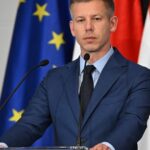
The country’s new leader, Péter Magyar, agreed to retract another Orbán era veto that thwarted an EU plan to extend a €90bn loan to Ukraine intended to support its defence.
This positive momentum must be harnessed to advance the issue of restrictive measures.
However, the overdue effort to secure ROC accountability can no longer end with sanctioning Patriarch Kirill alone.
Through Patriarch Kirill’s leadership, the ROC itself has become intimately embroiled in the war supporting various initiatives aimed at solidifying the Kremlin’s grip on occupied and annexed Ukrainian territory.
ROC assets flow to church-controlled nongovernmental organizations operating in Russian-occupied territories, such as the World Russian People’s Council.
Similarly, the Patriarch’s influence carries over to other organisations like the Imperial Orthodox Palestine Society, seemingly detached from the church yet active in the mission of legitimating Russia’s actions.
Unlike the longer-term prospect of criminal liability for individuals, restrictive measures against these varied ROC-affiliated individuals and institutions can operate as a near-term tool for expanding the accountability net around the church.
Moreover, these expanded measures can reach a varied and untapped source of new sanctions targets that can decisively expose the full range of church proxies used to foment the Kremlin’s agenda.
Concerted action on this front, in tandem with other actions — including efforts to downgrade the standing of ROC-affiliated NGOs at the United Nations and elsewhere and lifting up dissenting voices within the ROC — can trigger long overdue practical and reputational ramifications to meaningfully rebuke the Patriarch and his church for surrendering their moral capital in support of Russia’s illegal war.