

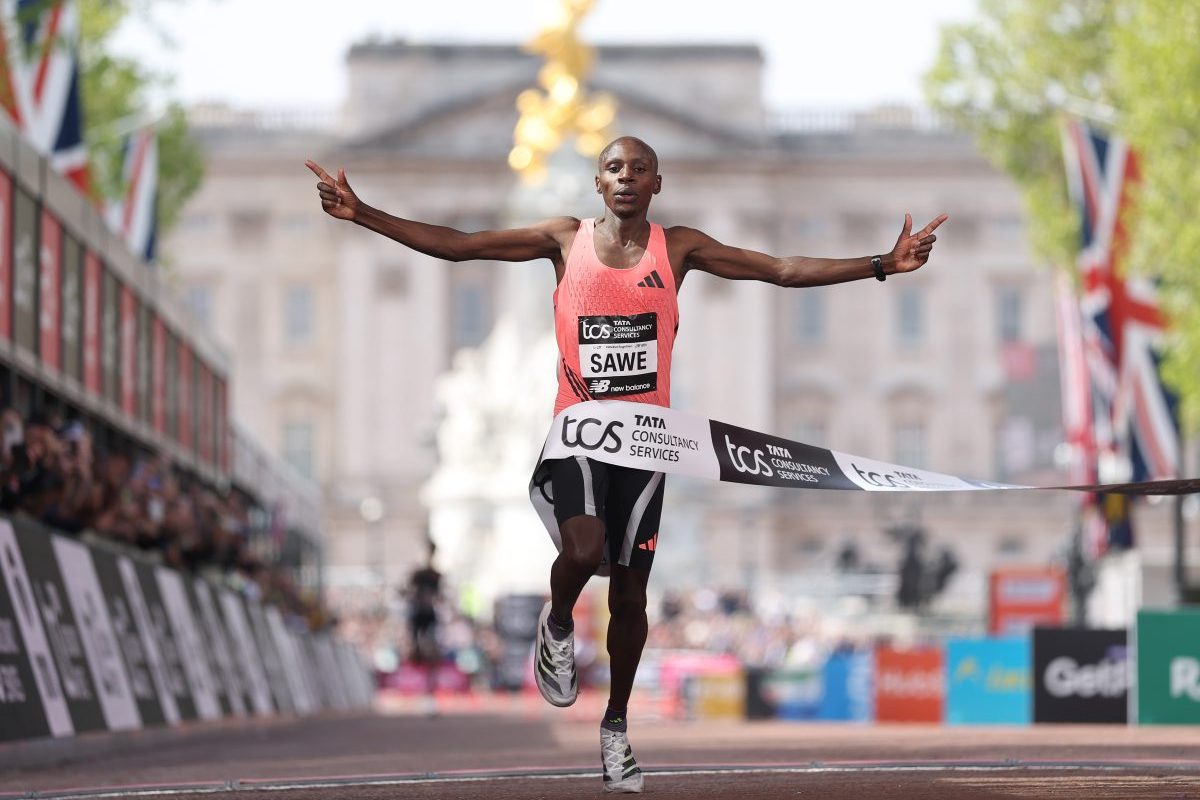
Trust in performances like Sabastian Sawe’s at the London Marathon is the cornerstone of sport’s success, writes Ed Warner. The modern sports economy is anchored in belief: belief that the successes we celebrate are genuine, hard-earned, and comparable across eras. Without this belief records lose meaning, fans become disillusioned, sponsors
 Ed Warner



Thursday 30 April 2026 7:00 am | Updated: Wednesday 29 April 2026 3:21 pm
Trust in performances like Sabastian Sawe’s at the London Marathon is the cornerstone of sport’s success, writes Ed Warner.
The modern sports economy is anchored in belief: belief that the successes we celebrate are genuine, hard-earned, and comparable across eras.
Without this belief records lose meaning, fans become disillusioned, sponsors turn tail and there is a risk that general participants lose heart. Clean athletes aren’t just our moral exemplars, they are the foundation of our entire sporting system.
The scrutiny applied to standout performances is so intense now because we, the public, have been let down so often by our heroes in the past.
It is why the decision by Adidas to spend $50,000 on 25 additional, no-notice drugs tests for Sabastian Sawe ahead of his phenomenal 1:59.30 marathon on Sunday is an inextricable part of the narrative of his momentous run in London. The sum is trivial, but the initiative itself is revealing. You don’t go to such lengths unless you know public trust in endurance sport is brittle.
#mc_embed_signup { background: #fff; clear: left; font: 14px Helvetica, Arial,sans-serif; width: 100%; max-width: 600px; margin: 20px 0; } #mc-embedded-subscribe-form { margin: 20px 0 !important; } .newsletter-form-flex { display: flex; gap: 0; align-items: center; margin-top: -10px; } .newsletter-form-flex input[type=”email”] { flex: 1; padding: 2px 10px; border: 1px solid rgb(18, 22, 23) !important; border-radius: 12px 0 0 12px !important; } .newsletter-form-flex input[type=”submit”] { padding: 4px 10px !important; margin: 0 !important; background-color: rgb(18, 22, 23) !important; color: rgb(255, 255, 255) !important; border: 1px solid rgb(18, 22, 23) !important; border-radius: 0 12px 12px 0 !important; } .newsletter-banner-content { margin-bottom: 15px; } .newsletter-banner-content h2 { margin: 0 0 10px 0; font-size: 18px; font-weight: 600; } .newsletter-banner-content p { margin: 0 0 10px 0; line-height: 1.5; } .newsletter-banner-content ul, .newsletter-banner-content ol { margin: 0 0 10px 20px; } .newsletter-banner-content a { color: #0073aa; text-decoration: none; } .newsletter-banner-content a:hover { text-decoration: underline; } .newsletter-banner-content img { max-width: 100%; height: auto; margin: 10px 0; } #mc_embed_signup #mce-success-response { color: #0356a5; display: none; margin: 0 0 10px; width: 100%; } #mc_embed_signup div#mce-responses { float: left; top: -1.4em; padding: 0; overflow: hidden; width: 100%; margin: 0; clear: both; }
On Sunday I was way back in the pack, just as I was in 2002 when running my first marathon a long way behind Paula Radcliffe on her own debut. A year later I again trailed miles behind as she obliterated the world record.
It may have been Sawe rather than Radcliffe up front this time, but the dynamic was the same: the masses chasing the inspiration of a standard set by someone extraordinary. The difference is that now every extraordinary performance is interrogated just as soon as it is celebrated.
Radcliffe’s name brushed up against such scrutiny when a database of athlete blood values surfaced in the media in 2015. Doubts about her briefly flared.
The world governing body issued a detailed rebuttal, explaining that her elevated readings had plausible explanations – dehydration, altitude training and tests taken immediately after competition – and that all other urine and blood tests were negative. She was cleared emphatically.
“When all of the necessary information is considered, however, there are clearly plausible explanations for the values in her [Radcliffe’s] profile that are entirely innocent.”
IAAF statement, November 2015
Radcliffe was on BBC commentary duty at the London Marathon, a reminder that clean reputations can survive a storm, but only with transparency and supporting evidence. Painful though the episode must have been for her, athletics was arguably strengthened in the process.
I spotted another British icon, Sir Mo Farah, near the start on Sunday and my daughter later spied him spectating roadside. Despite the long ban handed to his former coach, Alberto Salazar, back in 2019, Farah himself never failed a doping test.
The allegations around his training environment caused a storm. As chair of UK Athletics I found myself giving evidence to a parliamentary select committee on the case. Ultimately, though, the public has continued to grant Farah national treasure status, forgiving proximity to wrongdoing, but not wrongdoing itself. A fine distinction, but a vital one.
How helpful might 25 sponsor-funded additional drugs tests have been for both Radcliffe and Farah when they were each in the eye of the media storm?
Belief need not be naivety. Properly grounded, it is an essential part of sport’s infrastructure. Let’s remember too why we need clean heroes we can believe in.
They provide benchmarks against which to measure ourselves and humanity’s limits; they embody the fairness of competition, elevating sport beyond mere entertainment; they inspire investment of time, emotion and money, from across society and commerce.
If the public stops believing, the whole model collapses. Athletics has learned this the hard way over the years. Cycling too.
Tadej Pogacar, already a four-time Tour de France winner at the tender age of 27, is a multi-generational talent.
Read more Sawe and Adidas London Marathon record could see athletes jump from Nike
His dominance of road cycling is so complete that it triggers reflexive suspicion, not because of anything he has done, but because of what others did before him. The cost of a tainted era is that every triumphant athlete inherits the doubt sown by the cheats that have gone before them.
At the end of May the inaugural Enhanced Games will pose a direct challenge to the public’s engrained attitude towards clean sport. This doping‑allowed competition, with chunky bonuses for world records (even though officially unratifiable), is framed as a libertarian alternative to the regulatory constraints within conventional sport and a test of the scope of science to extend human boundaries.
For all the flamboyant publicity generated by the Enhanced Games’ backers, the challenge to mainstream sport is limited.
Enhanced performances may prove to be faster and they may be credible in a literal sense but, because they won’t be comparable to historical records, they won’t excite the masses by producing the sort of heroes we crave. They may inspire a narrow minority, but to the vast majority they will be mere curiosities, and rather sad ones too.
If anything, the Enhanced Games may strengthen the case for clean sport by showing, in stark relief, what chemically-assisted performance looks like when stripped of historical context, and, with it, meaning.
We need clean heroes because sport is one of the places where excellence feels as though it can’t just be engineered but must be earned. On Sunday, as I crossed the line almost two hours after Sabastian Sawe, I felt the same thing I felt in 2002 behind Paula Radcliffe: awe and admiration rooted in trust.
Such trust is fragile. It must be defended – with testing, transparency and relentless, healthy scepticism – because without it sport loses the very thing that makes it worth watching.
Spurred on
As feared, Sunday reminded me that there is indeed no substitute for quality training mileage. But I’ve always subscribed to the “when’s the next one?” school of marathoners, so the lesson won’t be wasted.
As ever, there were lots of motivational banners among the crowd lining London’s streets, ranging from the cheesy to the rib-tickling (if only I could catch my breath). My favourite this year: “DON’T BE SPURSY – STAY ELITE”.
Gutted
I woke yesterday to articles by journalists who’d been given pairs of the new shoes sported by Sabastian Sawe to try out. Hey, Adidas! What about this columnist?
Perhaps the shoe company reckoned my legs would be too sore to evidence a performance uplift ahead of today’s launch of public sales of the £450 runners. Always happy to be a fast follower or late adopter though. Just saying…
Knocked on
Last Friday at a Special General Meeting, the Rugby Football Union’s member clubs duly voted down a proposed governance overhaul that I flagged in last week’s column (and which I played a small part in formulating).
Although the sport’s ruling council members had already approved proposals that would have refined their powers and reduced their numbers, it appears that some of the minority orchestrated an effective whipping process among the clubs to overturn the majority’s recommendation. Such is the democratic process.
In short, a massive opportunity to modernise rugby in England has been spurned. Doubtless some are thrilled at the outcome of their lobbying. As a dispassionate, independent participant in the process, however, I fear that the consequences of this evident self-interest will be something that clubs come to rue.
I hope that on cool reflection the RFU’s leadership will find enough encouragement within rugby to try again promptly rather than, as previously, wait years before conducting another review.
Ed Warner is chair of GB Wheelchair Rugby and writes his sport column at sportinc.substack.com
Read more Rory McIlroy, Gout Gout and the search for sport’s elusive heroes
Similarly tagged content: Sections Categories People & Organisations