

Barocal, a Cambridge University spin-out commercialising efficient, refrigerant-gas-free cooling and heating technology, has raised a €8.5 million ($10 million) Seed round to accelerate development and scale its engineering team ahead of commercial deployment. Investors in the round included World Fund, Breakthrough Energy Discovery, Cambridge Enterprise Ventures and IP Group. The
 David Cendon Garcia



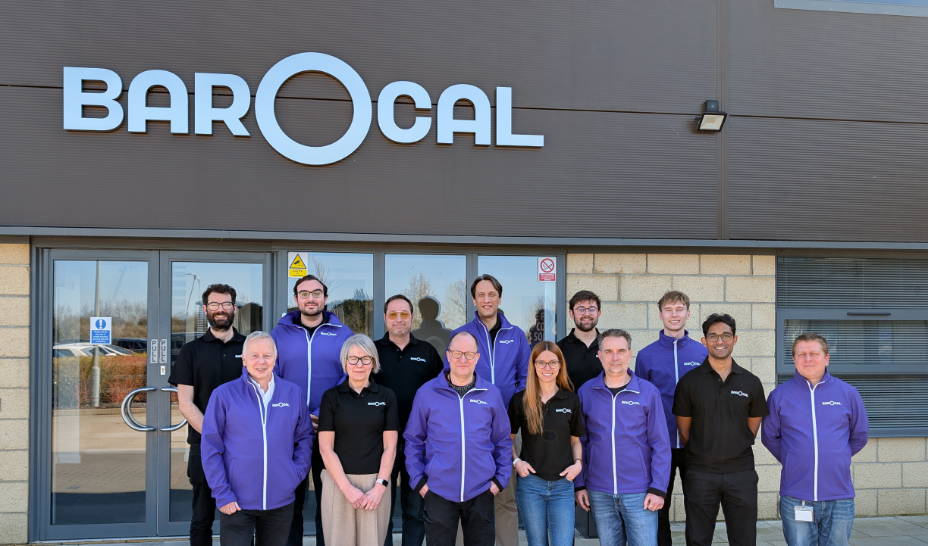
Barocal, a Cambridge University spin-out commercialising efficient, refrigerant-gas-free cooling and heating technology, has raised a €8.5 million ($10 million) Seed round to accelerate development and scale its engineering team ahead of commercial deployment.
Investors in the round included World Fund, Breakthrough Energy Discovery, Cambridge Enterprise Ventures and IP Group. The team will use the new funding to scale operations and recruit senior technical and commercial talent to accelerate system development.
Prof. Xavier Moya, Founder of Barocal, says: “Heating and cooling have always been the elephant in the room when it comes to emissions, and ours is a set of materials that could change history. We are building something truly revolutionary. The world can only hit a 1.5 degree target if we cut emissions by around half – solving heating and cooling emissions would achieve that goal. I am thrilled to be partnering with investors who will support us to commercialise and scale our technology before the planet runs out of time.”
Barocal’s Seed round sits within a 2026 dataset showing continued early-stage and project-linked capital for thermal systems, building efficiency and energy-intensive infrastructure.
The closest same-country comparables are Exergy3 in Edinburgh, which raised €11.4 million for thermal energy storage for clean industrial heat, and Ionech in Oxfordshire, which secured €2.3 million for ambient-air-to-electricity pilots.
Adjacent activity includes SolidWatts’ industrial process-heating technology, Lucend’s data-centre optimisation platform, ecoworks’ residential energy-renovation project, and WtEnergy’s industrial waste-to-energy systems.
Taken together, these examples indicate investor interest in technologies that address heating, cooling, thermal efficiency and energy use across buildings, industry and data centres, with over €51 million in funding.
Mark Windeknecht, Principal at World Fund, adds: “Barocal has achieved what scientists have struggled to do for decades – a materials breakthrough delivering solid-state materials that finally enable new cooling and heating platform technology that competes with vapour-based incumbents. We are extremely proud to be supporting this world-leading scientific team as they commercialise.”
Founded in 2019, Barocal is developing next-generation solid-state cooling and heating systems – replacing conventional refrigerant gases with innovative organic barocaloric materials that heat and cool under pressure, eliminating high-global-warming refrigerants and improving energy efficiency.
While many caloric materials are limited by costs, degradation, or fatigue, Prof. Moya discovered a way to demonstrate unprecedented performance in barocaloric materials – hence the company’s name.
Barocaloric materials use pressure-driven phase transitions to generate large temperature changes. Based on this discovery, his team developed and patented a heating and cooling platform technology. It is designed to be more efficient and less expensive than traditional vapour-compression systems that rely on climate-damaging gas refrigerants to power today’s air conditioning units.
The company will initially target fast-growing applications, including data centre cooling and commercial refrigeration, tapping into a ~€384 billion ($450 billion) global HVAC market that is expected to surge to ~€492 billion ($577 billion) by 2033.
At scale, Barocal says their technology will significantly reduce heating and cooling sector emissions through efficiency gains and avoiding gas refrigerants. The sector is responsible for around 15% of annual global greenhouse gas emissions – a far higher proportion than the aviation sector. Cooling alone accounted for more than 4 Gt of CO₂e in 2022, and demand is expected to triple by 2050.
Ashley Grosh, Head of Breakthrough Energy Discovery, says: “Buildings account for roughly 7% of global emissions, and decarbonising heating and cooling is essential to address that impact. We first supported Barocal through the Breakthrough Energy Fellows program, where Professor Moya’s rigorous, years-long research into caloric materials stood out for its technical depth and commercial potential.
“This most recent investment reflects our continued confidence in the team as they scale a solid-state alternative to vapour compression that is cleaner, more efficient and fundamentally rethinks how we deliver comfort.”