
London’s luxury “Moscow-on-Thames” has transformed from a Russian oligarch haven into a graveyard of frozen assets. Driven by historical financial deregulation and “golden visas,” billions in property now sit in disrepair due to post-2022 sanctions. Experts warn that despite transparency reforms, London remains a global playground for opaque wealth.
 Tomáš Hrivňák



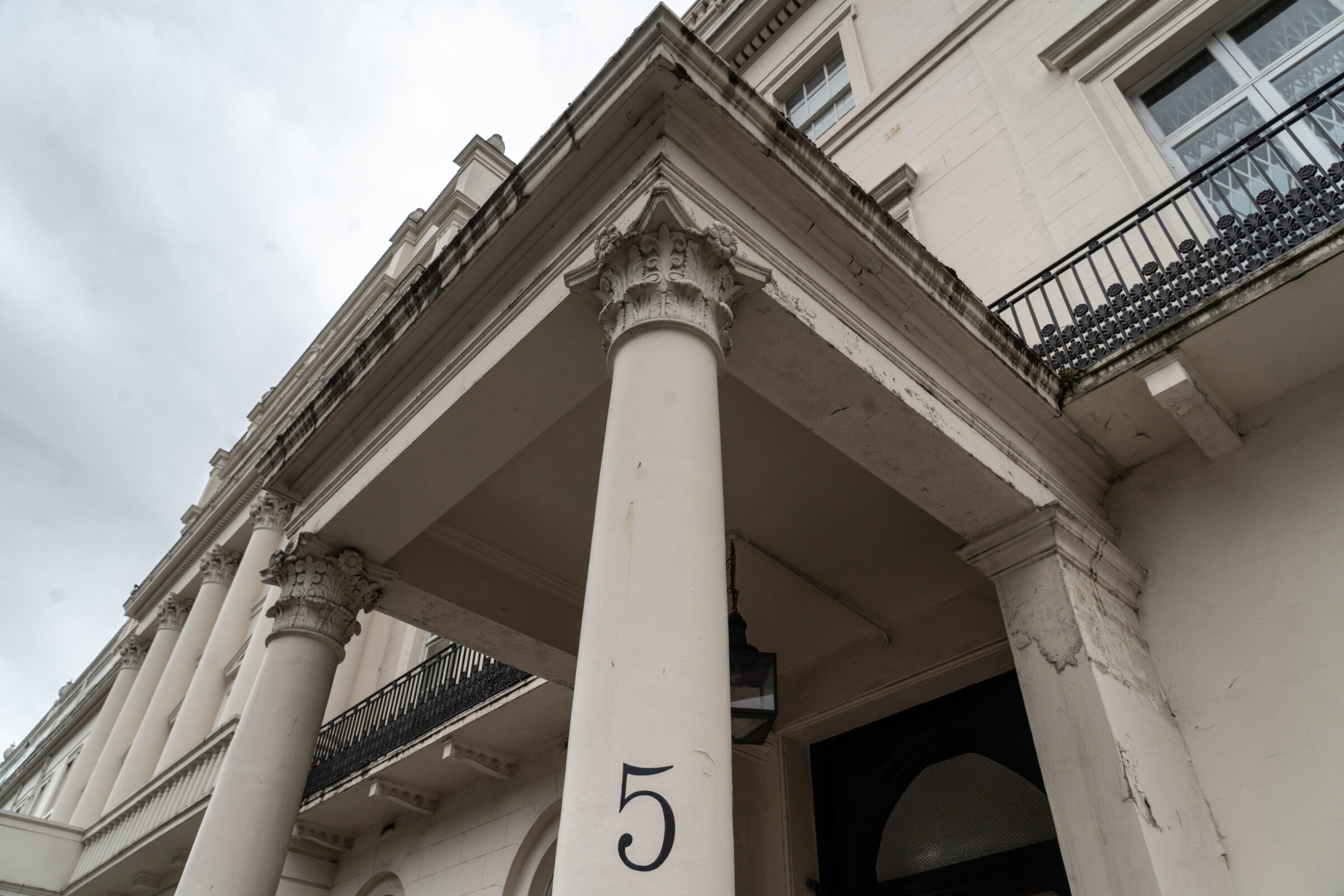
At first glance, it is clear this is one of the most luxurious districts in the world.
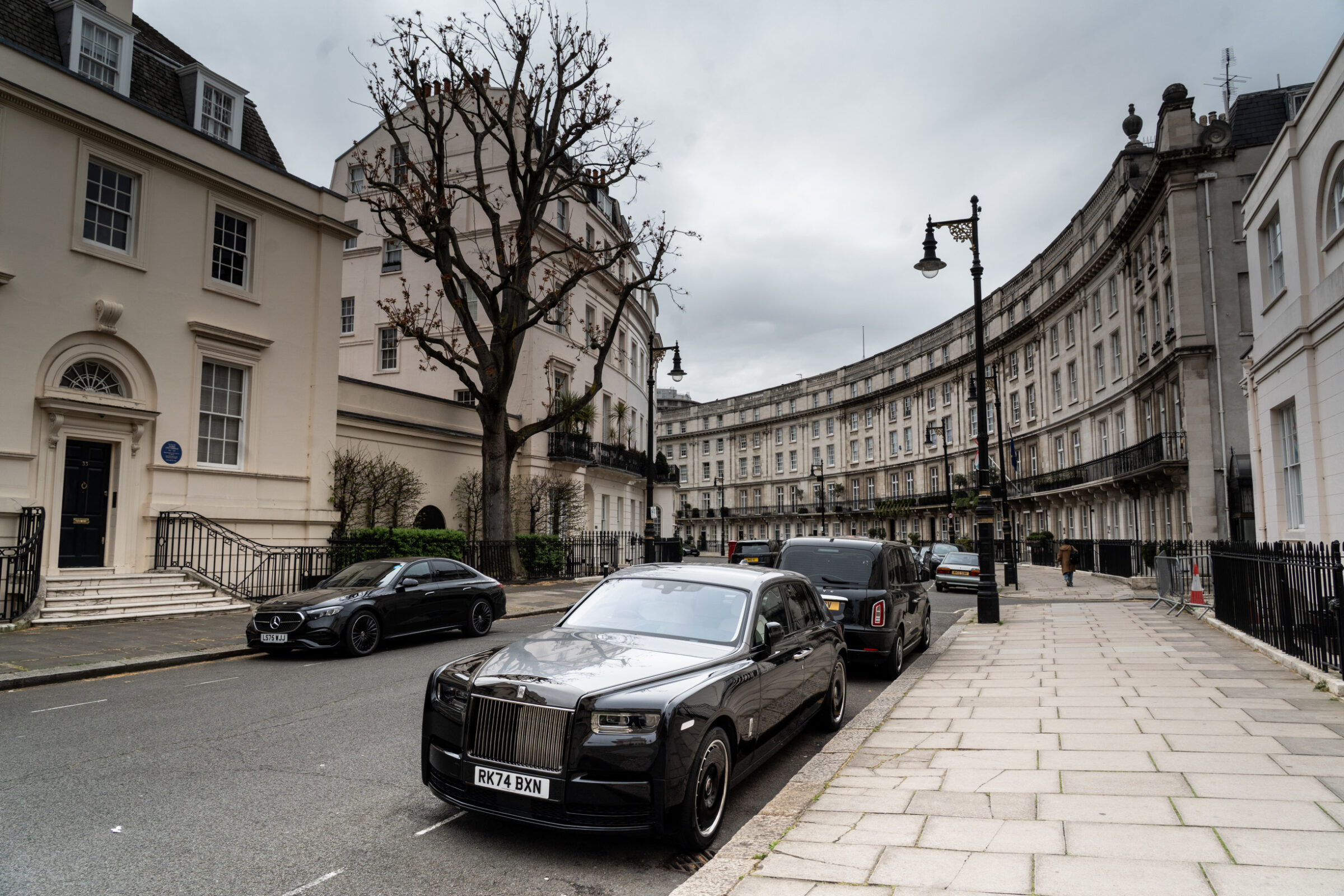
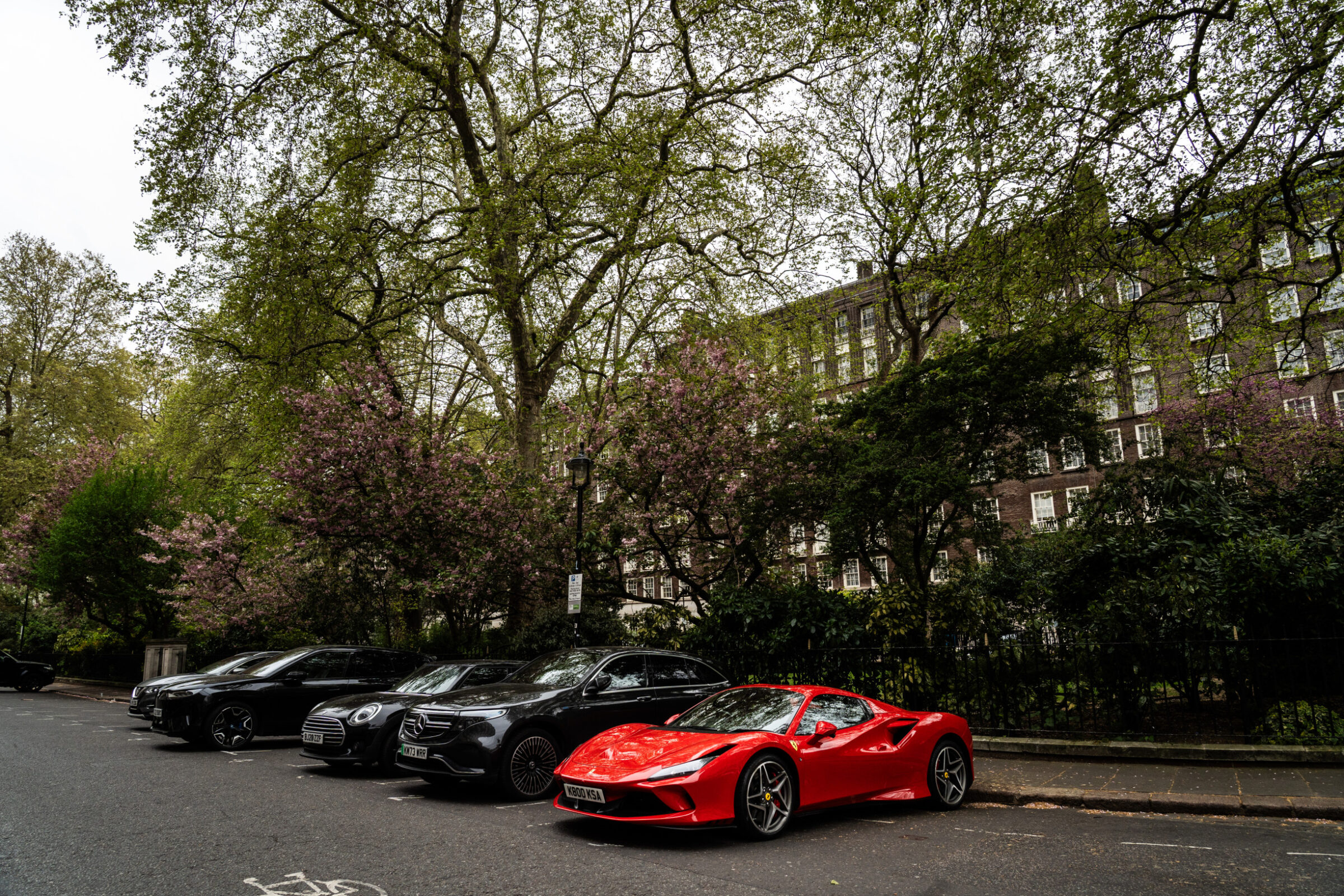
In front of the opulent houses rise huge white columns that look as if they came from ancient palaces. Parked beside the villas are sports cars worth hundreds of thousands of pounds.
London’s Belgrave Square is just a few minutes from Buckingham Palace and Hyde Park. Unlike the popular tourist attractions, however, you find hardly any people there.
This ostentatious square is home to many embassies and NGOs, but in the British capital it had long been associated with Russian oligarchs. Some even called it Moscow-on-Thames.
One of the most luxurious houses there, worth more than £50m, was owned through a complex structure by the family of Russian billionaire Oleg Deripaska, who has been on the UK sanctions list since 2022. Today, at the entrance you find an improvised barrier made of brown packing tape and newly installed security doors.
Several other properties in the surrounding neighbourhoods ended up in a similar way. After more than four years of Russia’s war against Ukraine, they remain a symbol of the darker side of London, which became a refuge for Russian oligarchs.
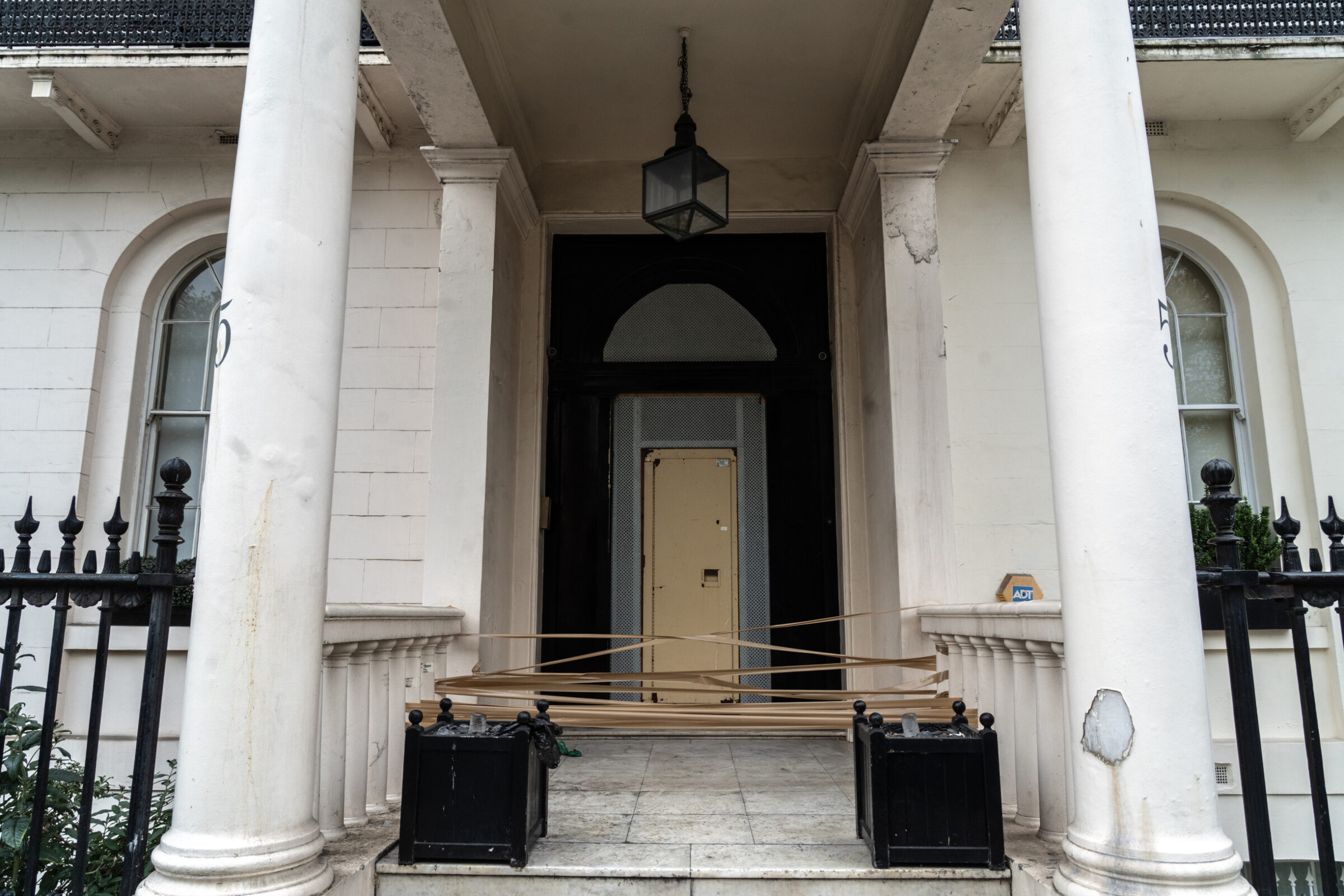 (Source: Tomáš Hrivňák, Denník N)
The fact that London became a haven for newly rich Russians was no accident. To understand why so many oligarchs came to London, we have to go back to the 1950s.
Although the British were among the victors of World War II, their empire soon fell apart and the Suez Canal crisis in 1956 prompted investors to sell off their holdings of pounds, driving down its value and threatening the British economy.
At this time, Britain came up with an innovation that changed the world of banking. its banks began lending money to foreign investors in foreign currencies, not in pounds.
For foreign clients, this meant that thanks to Britain they could trade in dollars beyond the control of the United States. These were known as “eurodollars”.
In the 1950s, Soviet elites, including members of the KGB security service, also began to make extensive use of this system, fearing that US authorities might freeze their dollar holdings. The Bank of England noticed this but consciously decided not to intervene – it officially treated dollar trading as a foreign, not a domestic, transaction. In London, Soviet money was safe.
“Britain thus allowed the Soviets to circumvent the restrictions that would have applied to them in the United States,” Oliver Bullough, who has written several books on the subject, to;d Denník N.
Gradually, the British also began to make increasing use of their overseas territories such as the Cayman Islands and the British Virgin Islands. Compared with Britain, these territories had the advantage of significantly lower taxes. At the same time, they allowed clients to protect their identities more effectively.
In essence, this gave rise to the concept of so‑called offshore structures – a system that wealthy people still use today.
 (Source: Tomáš Hrivňák, Denník N)
 (Source: Tomáš Hrivňák, Denník N)
London offered them what no one else could
Another turning point was the collapse of the Soviet Union in 1991. In Russia and neighbouring countries, a narrow layer of influential people then emerged who privatised state-owned enterprises.
A favourite destination for them was Switzerland, and to a lesser extent France and Spain. But in the end, Britain surpassed them all.
As Bullough describes it, no other place could offer oligarchs what London could. “They could use the same services as Soviet institutions before them – above all, they could discreetly move their money, secretly buy assets and invest their wealth efficiently,” he says.
London also brought them other advantages – top schools for their children, first-rate art, and the possibility to invest in sport.
This is illustrated by the story of probably the most famous Russian billionaire, Roman Abramovich, originally a member of the inner circle of president Vladimir Putin, who began to spend time in the city at the start of the new millennium. In 2003 he bought London’s Chelsea football club for around £140m.
In 2009, Abramovich moved into a villa on one of London’s most luxurious streets in Kensington, for which he reportedly paid £90m.
Other businessmen also invested in lavish properties in the city centre. Russian businessman Andrei Goncharenko, who held a senior position in Gazprom, bought a villa in Regent’s Park for around £110m. He also owned a luxury house on Eaton Square, which is known as Red Square.
Ukrainian billionaire Dmytro Firtash, whom Kyiv has since placed on a sanctions list, acquired the former Underground station The Old Brompton for more than £50m. He also owned a luxury house nearby.
In 2022, the NGO Transparency International estimated that Russians accused of corruption or of ties to the Kremlin owned property in London worth at least £1.5bn [€1.73bn].
For some businesspeople from the former Soviet Union, London was only about real estate; others invested heavily in media or charities.
For instance, former KGB agent and billionaire Alexander Lebedev became the majority owner of the Evening Standard newspaper.
Another well-known case is that of Leonard Blavatnik, a businessman of Ukrainian origin with US and UK citizenship, who was even awarded a knighthood in 2017 for his philanthropic work. In 2023, Ukrainian president Volodymyr Zelenskyy imposed sanctions on Blavatnik, after whom a school at Oxford and an entire wing of the famous Tate gallery are named.
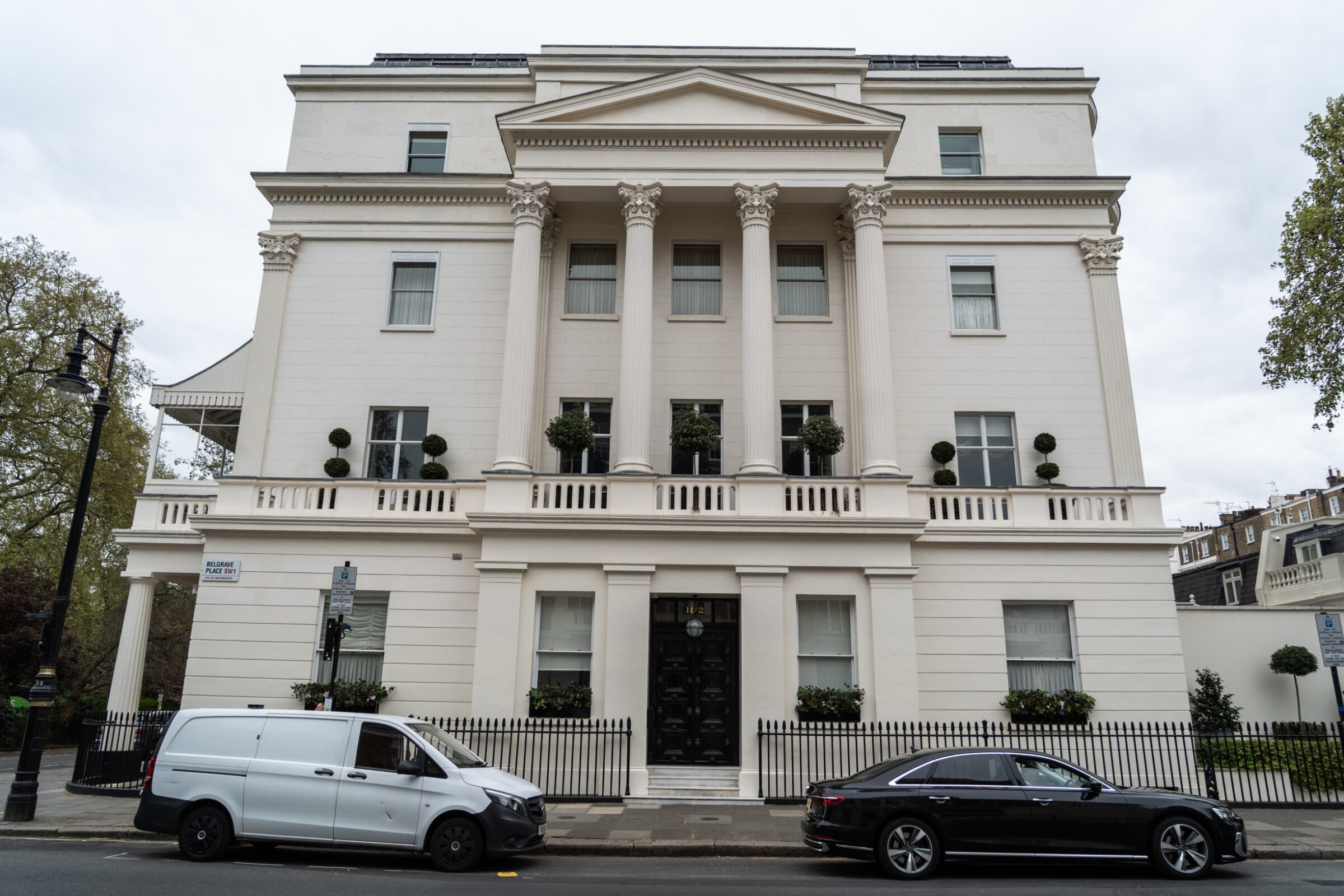 Luxury villa on Eaton Square. (Source: Tomáš Hrivňák, Denník N)
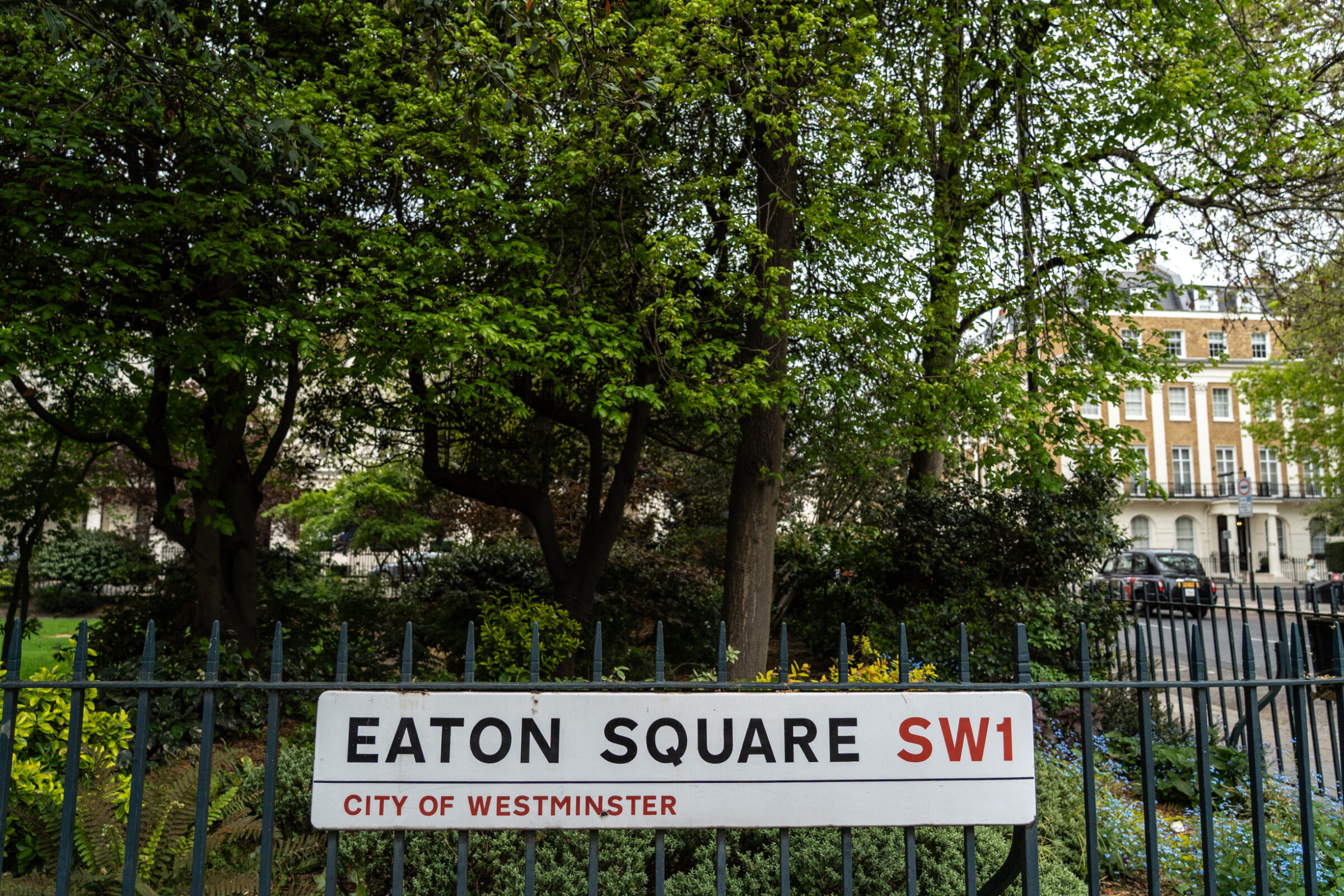 Eaton Square, also known as Red Square. (Source: Tomáš Hrivňák, Denník N)
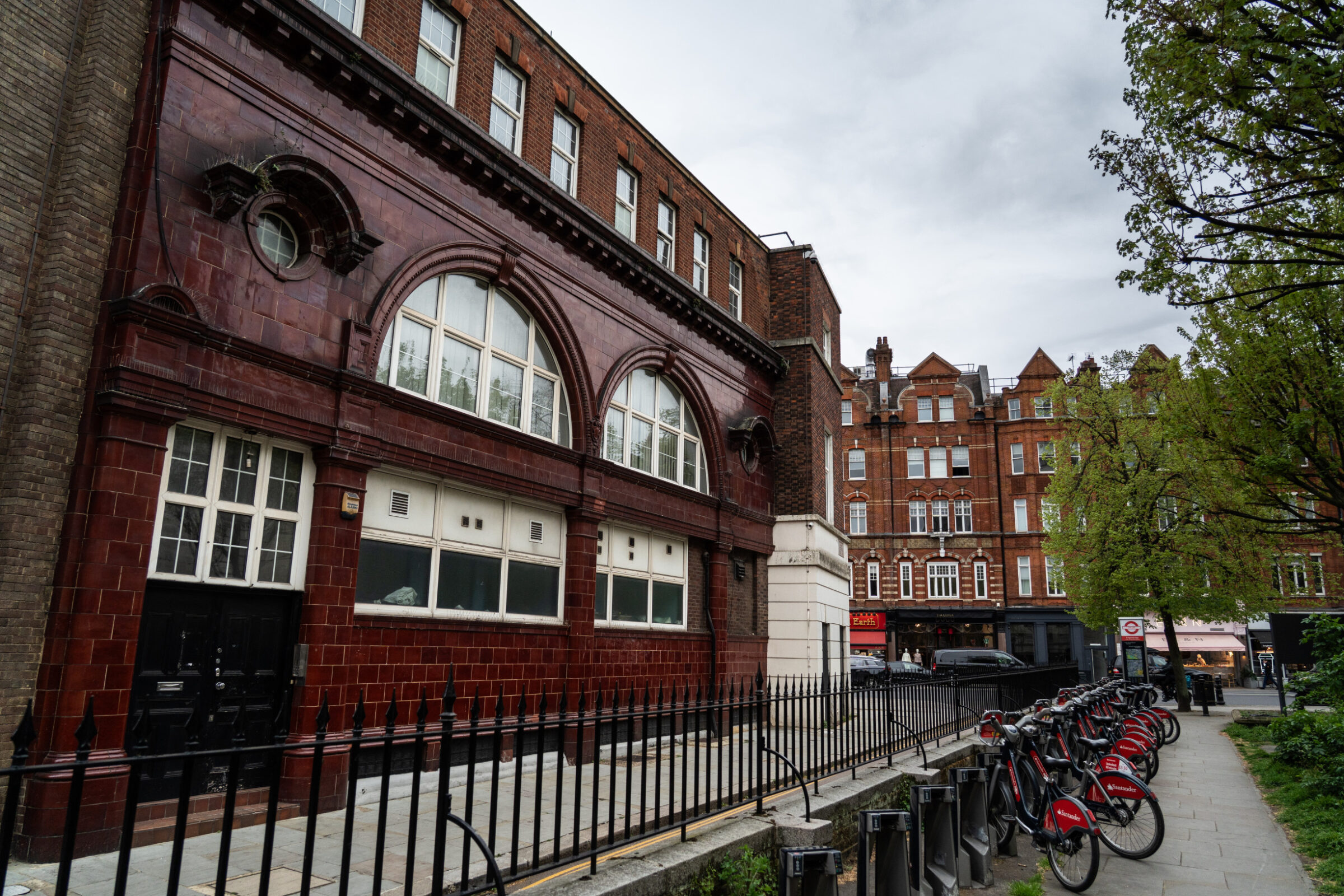 Former Underground station bought by Dmytro Firtash. (Source: Tomáš Hrivňák, Denník N)
Better late than never
Oligarch expert Bullough is convinced that the British were naive about the wealthy from the former Soviet Union. According to him, British politicians thought they would “civilise the oligarchs and turn them into good capitalists”. He described this as “an absurd notion”.
“People do not stop being corrupt just because they fly from Moscow to London. But it was a comforting idea for us – not only were we making money from them, we were also telling ourselves we were doing good for the world,” he continued.
In practice, he said, this meant that for years Britain pursued a double policy. On the one hand, it supported democracy in Eastern Europe, but at the same time it helped its enemies. Indirectly, it also contributed to Russia having enough money to finance the war against Ukraine.
Bullough points to the poisoning of former Russian intelligence officer Alexander Litvinenko in London in November 2006. “We knew who Putin was. Yet all British prime ministers kept going to Moscow and calling for more investment,” he continued.
Wealthy businesspeople could, for example, obtain golden visas in the UK if they pledged to invest at least £2m there. They were then subject to virtually no checks, and after five years could apply for permanent residence and eventually citizenship. At least ten Russian oligarchs who used this scheme are now on the sanctions list.
At the same time, they could set up trusts in overseas territories, for example in the Cayman Islands, through which they used complex schemes to buy property in London. This meant UK authorities were unable to identify their real owners.
Moreover, British politicians from both major parties were happy to meet wealthy businessmen from the former Soviet republics.
Former prime minister Boris Johnson was a close friend of Alexander Temerko, a businessman of Ukrainian origin who became rich in the 1990s as a director of the Russian energy company Yukos. Temerko donated more than £1m to the Conservatives’ campaign. Today he presents himself as a critic of Putin and calls for anti-Russian sanctions.
A major donor to the Conservatives was also the Canadian-Pakistani oil magnate Murzata Lakhani, whom Britain has since placed on the sanctions list on suspicion of trading in Russian energy.
Former Conservative chancellor George Osborne, together with one of Labour’s leading figures, Peter Mandelson, met oligarch Oleg Deripaska on a yacht. Deripaska is a Russian billionaire who made his fortune in the 1990s trading aluminium and long benefited from good relations with Putin.
Although experts, including Bullough, had been warning about this long before the full-scale invasion of Ukraine, the UK government only undertook more substantial changes in 2022 and imposed sanctions on several leading Russian oligarchs and froze their assets. “It is better to do the right thing late than not to do it at all. But the willingness to provide services to Russia persisted here surprisingly long,” he continued.
Abramovich was forced to sell Chelsea. Some fans, who credit him with delivering 21 trophies, responded by chanting his name during a minute’s silence for Ukrainian victims of the Russian invasion. According to reporting by the Telegraph, the businessman currently lives in the Turkish port city of Marmaris.
Goncharenko is not on the sanctions list, but he still sold his £120m villa. Firtash’s assets, including the former Underground station, were frozen by the UK government.
Some villas are now falling into disrepair
London now faces a curious problem – some of the properties that previously belonged to Russian oligarchs have begun to fall into disrepair. Politico noted last year that, for example, the houses of sanctioned businessman David Davidovich, Abramovich’s right-hand man, are in an exceptionally poor state.
The website reported that some local residents have started to complain about it.
In Kensington, where Davidovich bought houses for millions of pounds, you can see it with your own eyes. In the basement of his villa, the steps are broken, overgrown with dry leaves and weeds. Beside the historic façade, the green door is covered in graffiti and carries a red sign reading ‘No entry’.
By the white columns are steps coated in layers of dirt.
As Politico explained, when a property is on the sanctions list, its owner cannot do anything that would increase its value. Even if they wanted only to repair damaged windows, they would have to obtain permission from the UK Treasury.
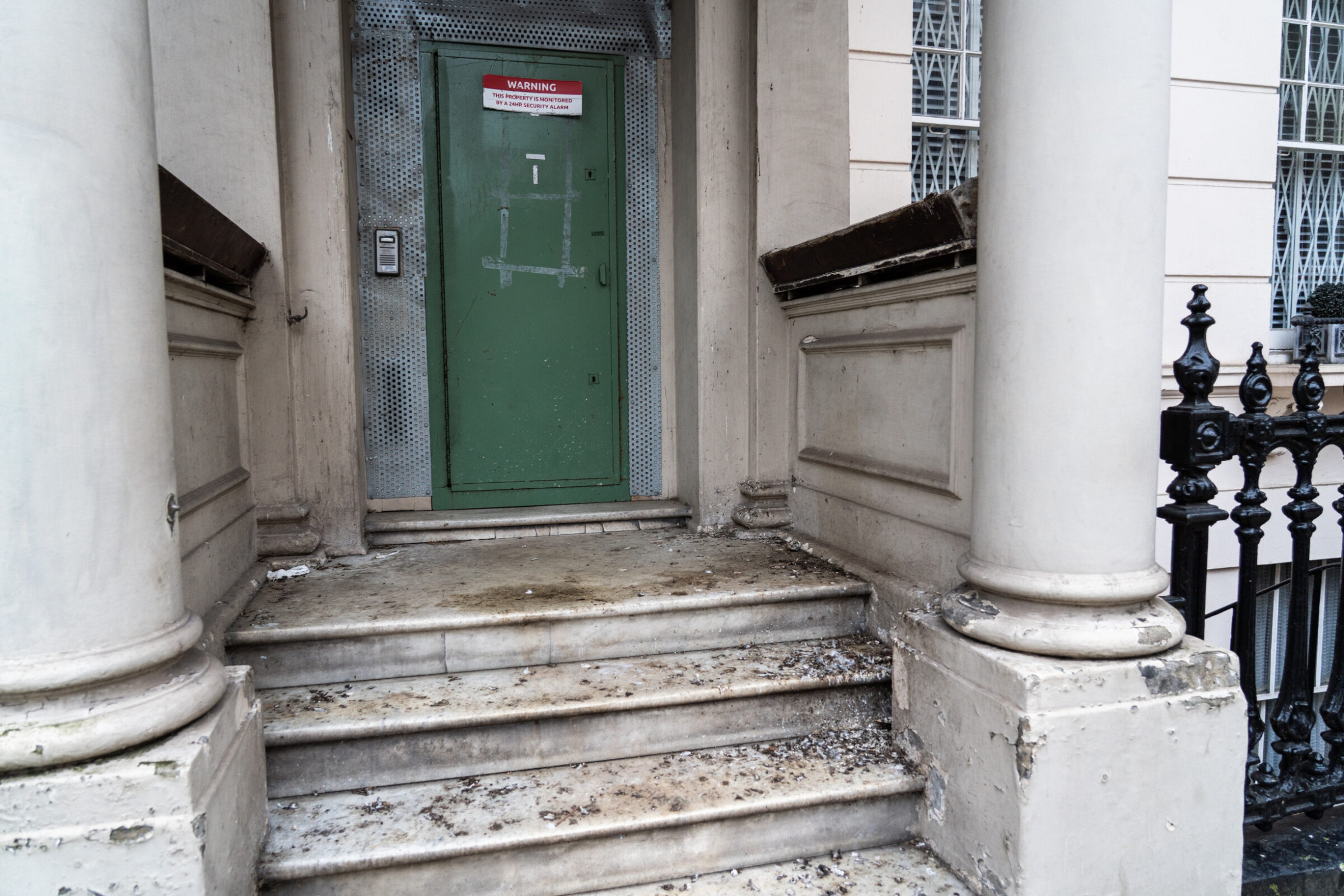 Entrance to David Davidovich’s villa in London. (Source: Tomáš Hrivňák, Denník N)
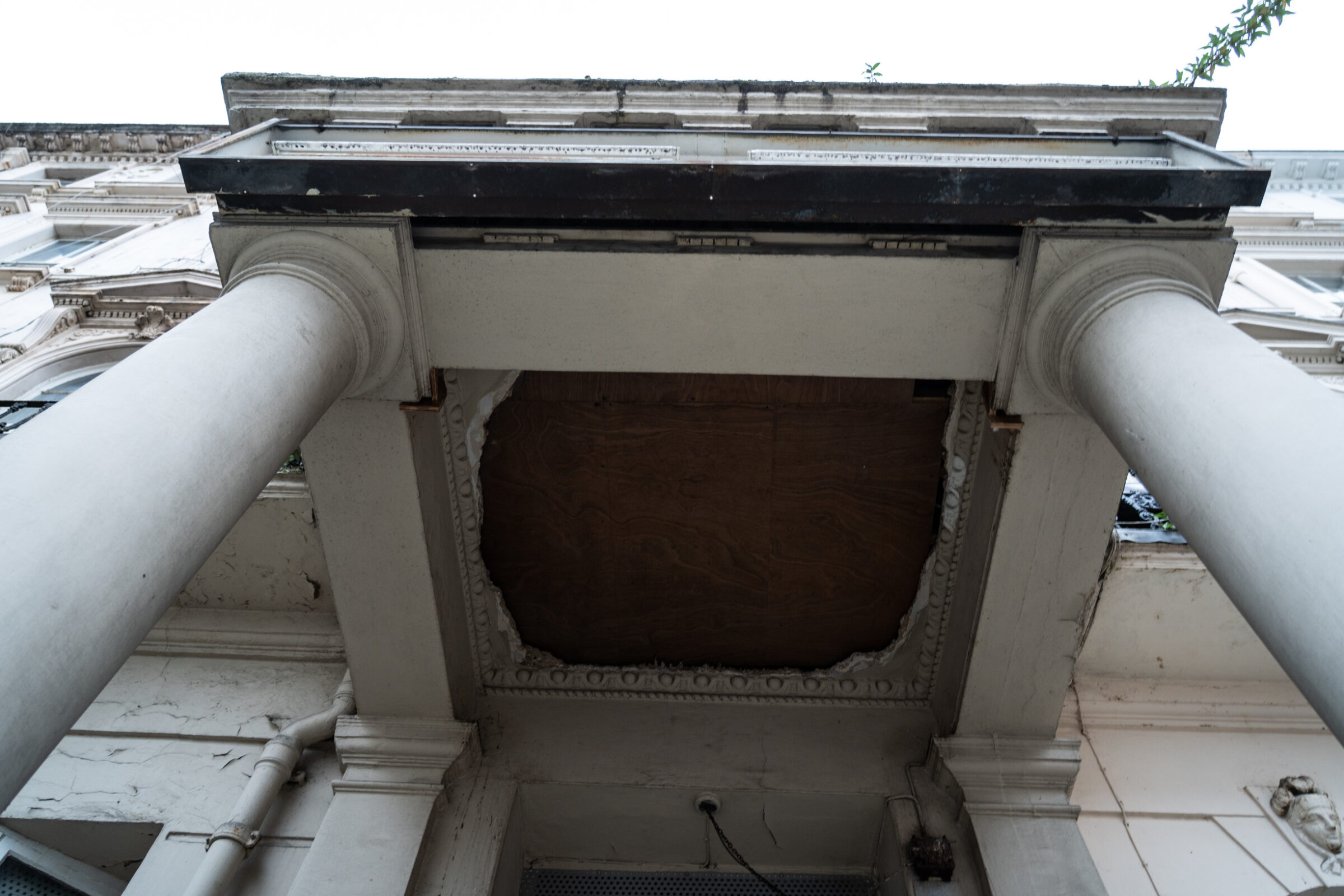 (Source: Tomáš Hrivňák, Denník N)
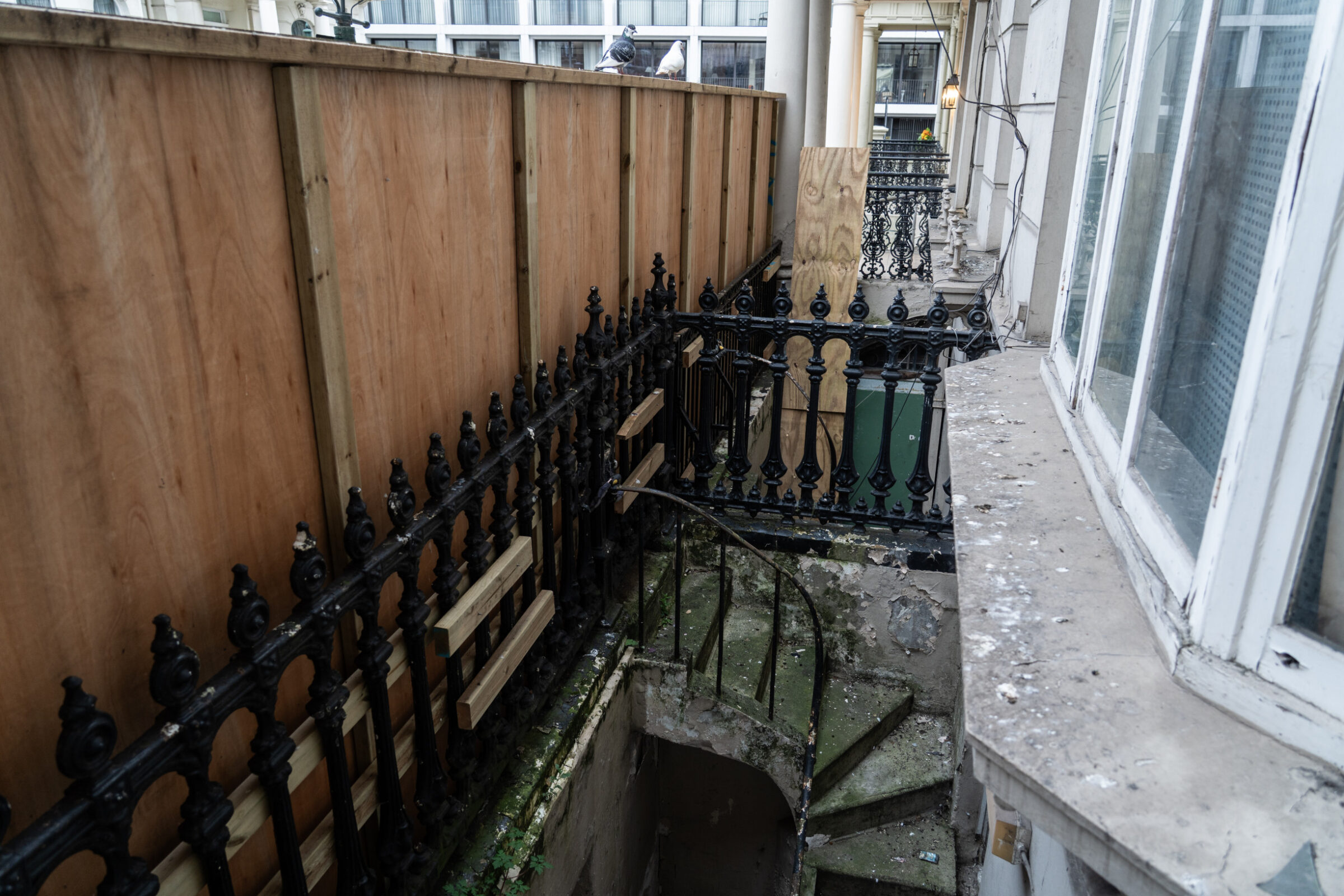 (Source: Tomáš Hrivňák, Denník N)
Several experts say this situation resembles the imposition of sanctions on Libyan leader Muammar Gaddafi in 2011. The British then froze properties belonging to his associates, but they remain empty to this day.
The key difference is that Russians owned a far larger number of buildings in London.
Russian businessman Mikhail Fridman, who bought a property in north London for tens of millions of pounds, has already complained about the poor condition of his villa. After the UK government placed him on the sanctions list, a court did not allow him to invest in its upkeep, including heating, air conditioning or lawn care.
According to local media, among other things this also means that his art collection, worth around £44m, is at risk. Because of the sanctions, Fridman cannot travel to the UK.
Some British newspapers reported last year that London estate agents are already preparing for a possible return of sanctioned oligarchs if Moscow and Kyiv were to agree a ceasefire. Most experts, however, do not expect them to regain access to frozen assets in the coming years.
A lesson for the future?
Bullough is convinced that London should learn from its experience with Russian oligarchs. “The UK government should be very careful about whom it provides its services to,” he said.
In his view, the current laws are strict enough, but London needs to improve their enforcement.
One of the changes introduced since 2022 is that foreign companies are required to disclose the names of the ultimate owners of all properties. Until then, it was not known who owned many prominent buildings in the city centre, because it was enough for the owner to register them under shell companies from the Virgin Islands or the island of Jersey.
Thanks to this legislation, The Londoner took a closer look at Oxford Street, one of the busiest streets in Britain. It found that a substantial share of the buildings there are owned, via shell companies, by billionaires including the brother of the president of the United Arab Emirates and Donald Trump’s friend Barry Sternlicht.
For example, the luxury Arundel Great Court hotel near the Thames, worth almost £800m, is owned by US billionaire Kenneth Dart, even though it is officially registered to a company in Jersey.
Perhaps The Londoner’s most shocking finding is that the popular Harry Potter-themed shop apparently belongs to the Libyan sovereign wealth fund, even though that fund is on the UK sanctions list.
“London may no longer serve the rich from Russia, but it still serves the rich from the rest of the world. That has not changed,” Bullough added.