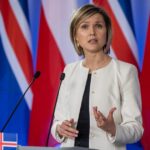
Asked if southern EU states were at risk of further aggression, EU commissioner Dubravka Šuica said: “It’s not easy to anticipate at this moment, but I don’t think it will happen”.
 Andrew Rettman



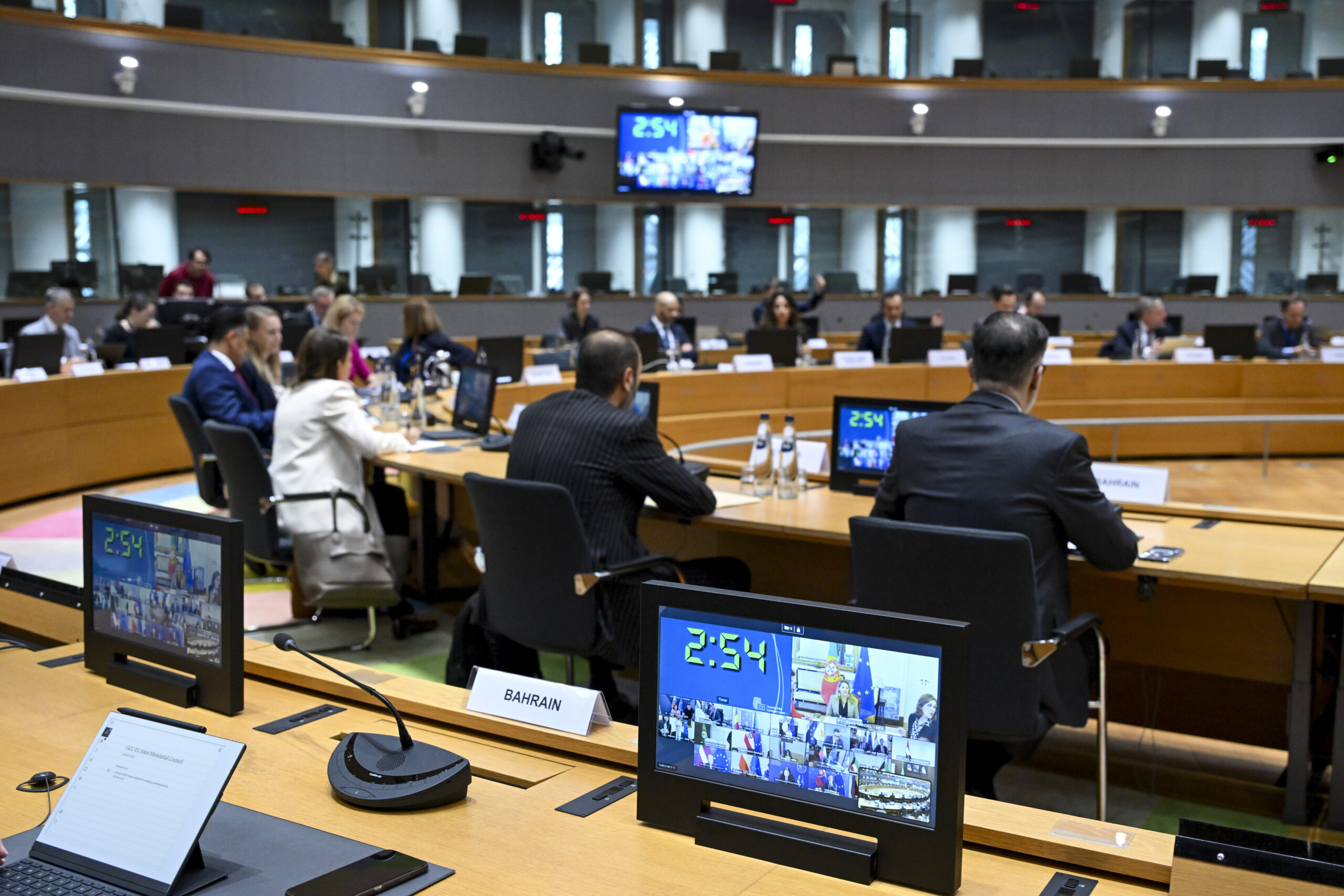
EU and Gulf ministers have urged Iran to stop firing at them, as Europe struggles to stay out of the Middle East war.
They “strongly condemned the unjustifiable Iranian attacks against the GCC [Gulf Cooperation Countries] countries, which threaten regional and global security and called on Iran to cease immediately its attacks,” after emergency video-talks on Thursday (5 March).
The GCC includes Bahrain, Kuwait, Oman, Qatar, Saudi Arabia, and the United Arab Emirates.
Iran has also fired at a UK base in EU member Cyprus, at Nato member Turkey, at Turkey’s ally Azerbaijan, Iraq, Jordan, Israel, and at commercial ships.
Asked if southern EU states were at risk of further aggression, EU commissioner Dubravka Šuica, said in Brussels on Thursday after leaving the GCC meeting: “It’s not easy to anticipate at this moment, but I don’t think it will happen”.
And that would be “more about Nato” than EU reactions anyway, she said.
But the Iranian drones and missiles had caused “significant damage” in the Gulf, the ministers reported.
They had hit “civilian infrastructure, including oil facilities, service facilities and residential areas, resulting in material damage and threatening the security, safety and lives of civilians”.
Keeping open the Strait of Hormuz and the Suez Canal as well as preventing instability in Lebanon and Syria were Thursday’s main points of concern, Šuica said.
Gulf ministers also reminded the EU “it’s very important not to sideline Gaza, not to forget the situation there,” she said, amid ongoing Israeli aggression.
The GCC states said none of them had helped Israel or the US, while warning of escalation by saying they would “defend themselves, individually and collectively, against the armed attacks of Iran”.
No direct criticism of US attack
Their joint EU statement called for a diplomatic solution and respect for the UN charter — but did not criticise the unilateral US attack, while saying Iran should not have pursued nuclear weapons.
An Iranian foreign ministry spokesman told the TVE broadcaster the same day that EU countries would “pay the price, sooner or later”, if they did not condemn the US attack.
In the EU, France, Greece and Portugal have let the US use their bases, while Spain refused and Italy said the US had not asked it.
In an usual step, a Nato official also emailed international press on Thursday to say a viral social-media claim that missiles were fired at Iran from its peacekeeping base in Kosovo ‘were “This claim “was bogus and we fully reject it”.
Nato forces in the Western Balkans are within reach of long-range Iranian missiles.
But in any case, European naval assets have surged to the conflict zone after the Cyprus strike, including France’s flagship aircraft carrier, with 20 jets, a frigate, and two radar boats, Italian air-defence systems, a Spanish frigate, and two Greek frigates.
The EU was also beefing up its two naval missions in the Red Sea and Strait of Hormuz regions, Aspides and Atalanta, to protect commercial shipping, said EU foreign affairs chief Kaja Kallas on Thursday.
“We are trying to keep these strait routes open,” she said.
Meanwhile, EU-ally Ukraine was preparing to supply Gulf states with drone interceptors, developed in its war with Russia, Kallas said.
Šuica later said: “It was not mentioned during this meeting, but that was one of the options”.
Kallas warned the Iran war was having a “clear impact” on Ukraine by diverting US air-defence supplies to the Middle East and enriching Russia by pushing up oil prices.
When asked by press if Iranians were fleeing the country toward Europe, she said: “We don’t see it yet, but if the war drags out it could become more likely”.
EU evacuations
Poland has also sent military flights to evacuate its nationals from the Middle East, while the first civilian rescue flight chartered by Germany landed in Frankfurt on Thursday.
Cyprus, the Czech Republic, France, Ireland, and Spain have also tried to get nationals out, with some 400,000 French people and 20,000 Irish people estimated to be in the conflict zone.
The EU Commission helped organise six reparation flights to Austria, Bulgaria, Italy, and Slovakia, it said Thursday.
Austria, Belgium, Bulgaria, Cyprus, Czechia, France, Italy, Luxembourg, Romania, and Slovakia have activated an EU crisis-response mechanism to coordinate reactions.
US president Donald Trump, his defence chief, and his secretary of state have sent mixed messages on how long the war would last and whether it was aimed at regime change.
Marina Miron, a defence expert from King’s College London in the UK, said of the White House messaging: “There’s a lot of conflicting things being said, or not so much conflicting, as incoherently incompatible”.
“I don’t see that [regime change] happening without the US sending ground troops, but for Trump, ground troops are political suicide ahead of the mid-term elections,” she said, referring to a US vote in November.