
While Europe is less dependent on oil and gas coming from the gulf than Asia, 40 percent of refined products, such as jet fuel and diesel, pass through the Straight of Hormuz.
 Wester van Gaal



The fragile overnight ceasefire between the United States and Iran has opened a window for global fuel supplies to partially resume — but uncertainty surrounding terms of the agreement has left shippers and EU policymakers in limbo.
Despite a possible pause in hostilities, “we should be under no illusion that this crisis that is affecting energy prices will be short-lived. It will not be,” said Anna-Kaisa Itkonen, energy spokesperson for the EU Commission, on Wednesday (8 April).
A two-week truce was announced last night just moments before a new round of US strikes was expected, with US president Trump proclaiming a “COMPLETE, IMMEDIATE, and SAFE OPENING” on his social media platform Truth.
But Tehran’s own wording suggests something more conditional.
“For a period of two weeks, safe passage through the Strait of Hormuz will be possible via coordination with Iran’s armed forces and with due consideration of technical limitations,” said Iranian foreign minister Seyed Abbas Araghchi on X.
‘Tehran’s tollbooth’
Since the effective closure of the strait in early March, Iran has demanded from the vessels that made the crossing to pay a “toll,” of at least $1 [€0.85], paid in Chinese Yuan or cryptocurrency — a system which in the shipping world has become known as “Tehran’s tollbooth.”
Rather than restoring free passage through the region, Iran could maintain its informal system, with Gulf states bearing roughly 85 percent of the costs, according to Bruegel calculations published Wednesday.
While Europe is less dependent on oil and gas coming from the gulf than Asia, 40 percent of refined products such as jet fuel and diesel pass through the strait.
Globally, the Strait of Hormuz handles roughly one-fifth of globally traded oil and liquified gas. In February, 15 million barrels passed the strategic waterway daily. By March, that number had dwindled to two million barrels.
“It’s a very, very important chokepoint,” said Itkonen.
Shipping giants remain cautious
Benchmark oil prices fell on the news of the ceasefire, but shipping activity has yet to resume, with several major operators waiting for clearer security assurances before resuming routes.
Shipping giant Maersk said the agreement does not yet provide “full maritime certainty.”
“At this point, we take a cautious approach, and we are not making any changes to specific services,” the Danish shipping group told newswire Reuters.
Rolf Habben, CEO of German container carrier Hapag-Lloyd, warned that global shipping networks could take up to two months to normalise even if the ceasefire holds.
“Even if a ceasefire has now been agreed, I would say that it’s fair to say that the conflict in the Middle East is still severely disrupting shipping,” he said in a call to customers on Wednesday, adding that limited crossings “to selected markets would likely resume fairly soon.”
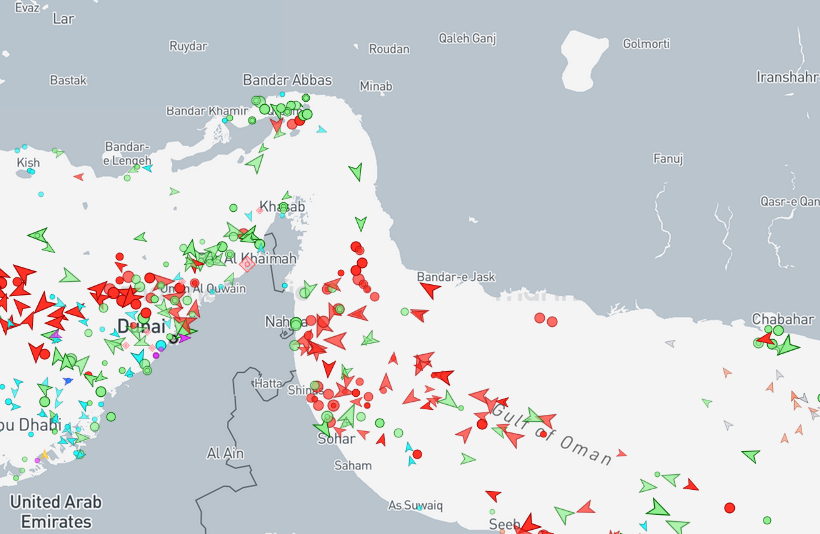
Live satellite imagery shows that at the time of writing few vessels attempted to make the crossing.
Disruption could last ‘years’
In a sign of the fragility of the deal, Israel said it would continue its assault on Lebanon after the ceasefire was announced, despite Pakistan’s prime minister having previously said that the agreed ceasefire covered “everywhere including Lebanon”.
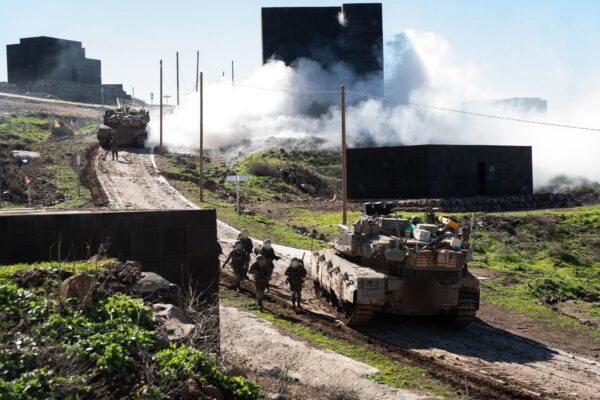
Kuwait United and the United Arab Emirates, two US-allied countries, said Wednesday morning they were targeted by Iranian drones, a message later confirmed by Tehran.
“Let us be clear. A ceasefire is a pause, and the joint force remains ready, if ordered or called upon, to resume combat operations,” said Dan Caine, the US’s highest military official, on Wednesday.
Even if the ceasefire holds, global energy supply disruptions are likely to persist for years.
Qatar accounts for roughly one-fifth of global LNG supply, and its energy minister Saad al-Kaabi has said Iranian strikes damaged liquid gas facilities, enough to sideline 17 percent of the country’s export capacity for up to five years.
Pakistan’s prime minister has invited delegations from Iran and the US to Islamabad for talks on Friday. Trump’s special envoy Steve Witkoff, son-in-law Jared Kushner, and vice-president JD Vance, currently in Hungary, are all expected to attend.
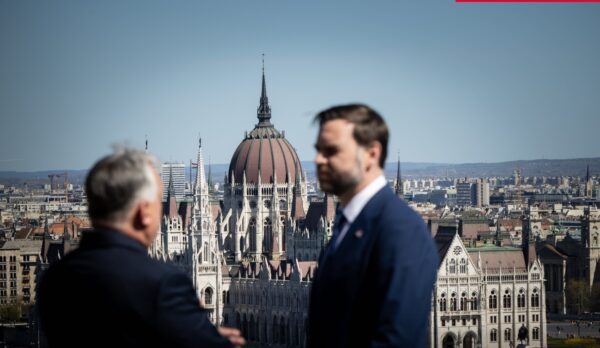
“We support these diplomatic efforts,” EU leaders and Canada’s Mark Carney said in a joint statement on Wednesday afternoon. “We call upon all sides to implement the ceasefire, including in Lebanon.”