
A ceasefire deal between the US and Iran has plunged Lebanon into deadly confusion. As Israel continues strikes despite the announcement, Europe’s diplomatic calls for restraint face a grim reality: an escalating conflict beyond Lebanon’s control and Netanyahu’s government largely ignoring international pressure.
 Léa Marchal



Production: By Europod, in co-production with Sphera Network.
EUobserver is proud to have an editorial partnership with Europod to co-publish the podcast series “Briefed” hosted by Léa Marchal. The podcast is available on all major platforms.
You can find the transcript here if you prefer reading:
Doubt looms over the Middle East ceasefire.
After more than a month of war, the United States and Israel, on one side, and Iran on the other, agreed to a ceasefire late Tuesday into Wednesday.
But while the deal was supposed to cover the entire region, Israel has continued to strike southern Lebanon — raising alarms not just in Lebanon, but across Europe as well.
So what can we expect for Lebanon in the days ahead?
On Tuesday night, a car parked in the streets of Sidon, in southern Lebanon, was targeted in an Israeli airstrike. At least eight people nearby were killed, and 22 were injured.
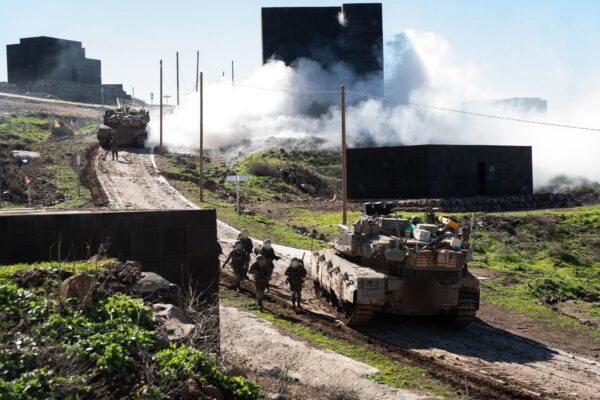
Just hours later, a thick column of smoke rose over the city of Tyre, further south, after another Israeli attack.
These strikes add to a long list of Israeli military operations in Lebanon in recent days. According to Lebanese authorities, more than one thousand five hundred people have been killed so far.
Wednesday morning’s attack on Tyre was especially shocking because it came after the ceasefire announcement, which was supposed to include Lebanon.
The ceasefire was declared just before 2 AM Wednesday by Pakistan’s prime minister, who had been overseeing the negotiations. He emphasised that Lebanon was part of the agreement.
But just hours later, Israeli prime minister Benjamin Netanyahu officially contradicted that claim.
The confusion is… total. On Wednesday, Lebanon’s economy minister, Amer Bisat, went on television to demand clarification from all parties involved.
His country is paying the price for a conflict between Israel and Hezbollah that has been raging since the 1980s. Hezbollah is a heavily armed militia, stronger than Lebanon’s own army, and widely seen as Iran’s proxy.
For minister Bisat, Lebanon has been dragged into a war by forces completely beyond its control.
What are the Europeans saying?
The European Commission has called on Israel to halt all attacks on Lebanese territory. The spokesperson for the European External Action Service stressed the need to respect Lebanon’s territorial integrity and sovereignty.
A call that was echoed hours later by several European countries, alongside the prime ministers of Canada and the UK. Together, they urged all parties to implement the ceasefire in Lebanon as well.
They’ve asked those involved to “engage in swift negotiations to achieve a lasting peace in the coming days.”
The EU’s top diplomat, Kaja Kallas, was in Saudi Arabia on Wednesday. Her goal? To show Europe’s support for countries in the region and contribute to de-escalation efforts.
But with negotiations still up in the air, it’s unlikely Israel will bow to European demands — just as it ignored previous international calls for restraint in Gaza.
Israeli prime minister Benjamin Netanyahu has made it clear before: he intends to occupy southern Lebanon long-term, even after the war ends. Israel’s ultimate goal, for decades, has been to eradicate Hezbollah.
In the short to medium term, Israel plans to establish a security zone stretching from the Lebanese-Israeli border and extending about 20 kilometres into Lebanon. The aim? To prevent Hezbollah from launching rockets, drones, or missiles into Israeli territory.
As for US president Donald Trump, he’s stayed silent on Lebanon’s fate. Just as he did in late March, when three UN peacekeepers from UNIFIL— the United Nations Interim Force in Lebanon — were killed, with partial blame placed on Israel.
In the end, European diplomacy seems powerless to influence the situation in Lebanon, as in so many other conflicts.