
At $44bn [€38bn], more development aid was sent to Ukraine than to the whole of sub-Saharan Africa in 2025, as overall official development assistance slumped by 23 percent.
 Benjamin Fox




Cuts to development aid by the EU institutions and member states were among the main causes for a 23-percent collapse in aid spending in 2025, dropping aid to its lowest levels in a decade and the lowest fall in a single year since records began.
Official development assistance slumped to $174.3bn (€148bn) in 2025, according to preliminary data published on Thursday (9 April) by the Paris-based Organisation for Economic Development and Cooperation (OECD).
Official development assistance (ODA) has dropped from $223.7bn in 2023. More cuts are expected in 2026 and 2027.
The drop, which is the largest since ODA figures started to be collected, takes ODA to levels last seen in 2015.
The figures announced by the OECD are actually higher than the cuts briefed to journalists by civil society groups earlier this week.
“In this challenging environment, the significant decline in official development assistance highlights the need to maximise the impact of available resources, and to use them more effectively to unlock new sources of investment,” said OECD secretary-general Mathias Cormann in a statement.
He added that the US-Israeli war against Iran “represents a significant risk for global growth and food security”.
While the early decision by US president Donald Trump to close the USAID agency last year grabbed most of the headlines, and led to a 56.9 percent drop in US aid, much of USAID’s budget has been repackaged via other instruments such as the ‘America First Global Health’ scheme, a series of bilateral agreements with African countries.
Funding from the EU also cratered.
The level of total ODA by EU institutions declined by 13.8 percent in 2025, and ODA from the 23 Development Assistance Committee (DAC) countries that are EU members fell by 9.8 percent, reaching its lowest since 2017.
That is on top of an 8.6 percent decline in 2024.
Last year, Germany, France, Finland, Sweden and Belgium cut their aid budgets by a cumulative sum of €7bn. The Netherlands has also set out plans to cut its development budget by €9bn between 2025 and 2029.
A large chunk of aid spending has been shifted to increase defence budgets, as EU countries scramble to raise defence spending to two percent of GDP, the level mandated by Nato, amid US president Donald Trump’s threats to end military support in eastern Europe.
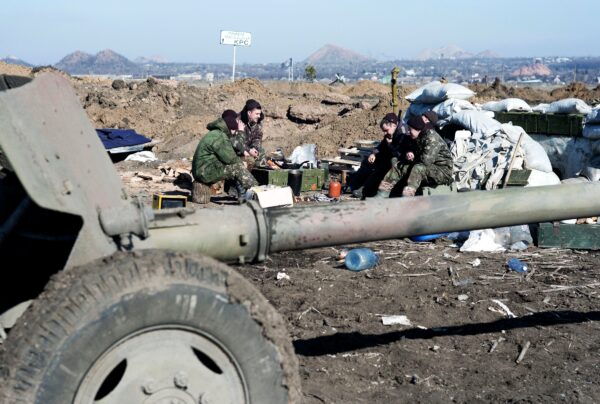
“Rich countries are writing a blank cheque for war while abandoning the world’s most vulnerable. Prioritising an economy of war over an economy of care makes the world less secure for everyone,” said Matthew Simonds, senior policy and advocacy officer for the European Network on Debt and Development (Eurodad).