As Stefano Gabbana steps back from his eponymous brand, Manfredi Ricca asks what happens when a brand’s identity is split in two.
 Manfredi Ricca



Thursday 16 April 2026 5:14 am | Updated: Wednesday 15 April 2026 5:24 pm
As Stefano Gabbana steps back from his eponymous brand, Manfredi Ricca asks what happens when a brand’s identity is split in two
Ben & Jerry’s, Hewlett Packard, Procter & Gamble. As Charles Darwin once said, those who learned to collaborate have prevailed. A harmonious co-founder relationship is the core component of a successful business, alongside creating a strong brand, but it isn’t easy to find. In fact, 65 per cent of startups fail due to co-founder conflict. When a partnership aligns in values and vision, it needs to be cultivated.
So, when a partnership has thrived across four decades, what happens to a business when its DNA is split in two? In the case of Dolce & Gabbana, with Stefano Gabbana stepping away from business leadership after 40 years, it indicates the beginning of a new – and somewhat uncertain – chapter for the brand. The company has described his departure as “part of a natural evolution of its organisational structure and governance”, but at a time when the brand is struggling, will this new era provide an opportunity to breathe new life into the company, or be a final, faltering step towards the end?
Unlike many other brands – that aren’t named after their founders – the Gabbana name is intrinsically linked to the business. Brand equity is tightly tied to personality. Dolce & Gabbana is a fusion of both founders – Gabbana will forever be at the heart of the brand’s DNA, which makes his resignation tricky to navigate from both a public perception and a brand equity standpoint.
What comes next for Dolce & Gabbana?
In this next chapter, Domenico Dolce and the two co-CEOs – seasoned industry executive Stefano Cantino and Alfonso Dolce – will need to define a new vision for the business very clearly. What does this change in leadership mean for the house’s vision and ambitions? What will Dolce & Gabbana’s role be in an industry in flux and uncertainty? The answers to these (and other) questions will need to create confidence in a business that has struggled to perform.
#mc_embed_signup { background: #fff; clear: left; font: 14px Helvetica, Arial,sans-serif; width: 100%; max-width: 600px; margin: 20px 0; } #mc-embedded-subscribe-form { margin: 20px 0 !important; } .newsletter-form-flex { display: flex; gap: 0; align-items: center; margin-top: -10px; } .newsletter-form-flex input[type=”email”] { flex: 1; padding: 2px 10px; border: 1px solid rgb(18, 22, 23) !important; border-radius: 12px 0 0 12px !important; } .newsletter-form-flex input[type=”submit”] { padding: 4px 10px !important; margin: 0 !important; background-color: rgb(18, 22, 23) !important; color: rgb(255, 255, 255) !important; border: 1px solid rgb(18, 22, 23) !important; border-radius: 0 12px 12px 0 !important; } .newsletter-banner-content { margin-bottom: 15px; } .newsletter-banner-content h2 { margin: 0 0 10px 0; font-size: 18px; font-weight: 600; } .newsletter-banner-content p { margin: 0 0 10px 0; line-height: 1.5; } .newsletter-banner-content ul, .newsletter-banner-content ol { margin: 0 0 10px 20px; } .newsletter-banner-content a { color: #0073aa; text-decoration: none; } .newsletter-banner-content a:hover { text-decoration: underline; } .newsletter-banner-content img { max-width: 100%; height: auto; margin: 10px 0; } #mc_embed_signup #mce-success-response { color: #0356a5; display: none; margin: 0 0 10px; width: 100%; } #mc_embed_signup div#mce-responses { float: left; top: -1.4em; padding: 0; overflow: hidden; width: 100%; margin: 0; clear: both; }
Dolce & Gabbana grew in popularity during the 1990s with cone bras, corset looks and tailored black dresses. But it has struggled in recent years. In March, the company was reported to have appointed a financial adviser as it prepared to enter talks with creditors, with around £391m of bank debt after a round of refinancing in 2025.
It is a similar story for the luxury sector overall. Interbrand’s 2025 Best Global Brands report saw many luxury brands declining in value, from Louis Vuitton down by 4.9 per cent in brand value to Gucci falling by 35 per cent. Only a few came through unscathed, such as Hermès, which managed to grow its brand value by over 17 per cent. And the outlook for the future remains uncertain, heightened by the war in Iran, as the Middle East is a key market for luxury brands.
When the individual most associated with a brand’s vision – in this case, a founder – steps away from the business, there is a risk of perceived instability. Gianni Versace’s tragic death in 1997 brought a chapter of extraordinary cultural influence to an end. While not being the founder, Tom Ford’s departure from Gucci in the early 2000s eroded the edge the brand had built in the so-called Tom & Dom era (Domenico De Sole was CEO at the time).
Read more Dolce & Gabbana co-founder quits and mulls selling stake A masterclass in managing a founder split
However, in the case of Dolce & Gabbana, with one half of the duo remaining at the helm, Domenico Dolce will represent continuity in the brand’s unmistakable uniqueness, combining his 40-year legacy with a vision to evolve the business to a more rounded lifestyle player.
So far, this is proving to be a masterclass in how founders should handle a split. No one likes a messy breakup, and it can be detrimental to a brand when disputes and lawsuits are thrown into the equation.
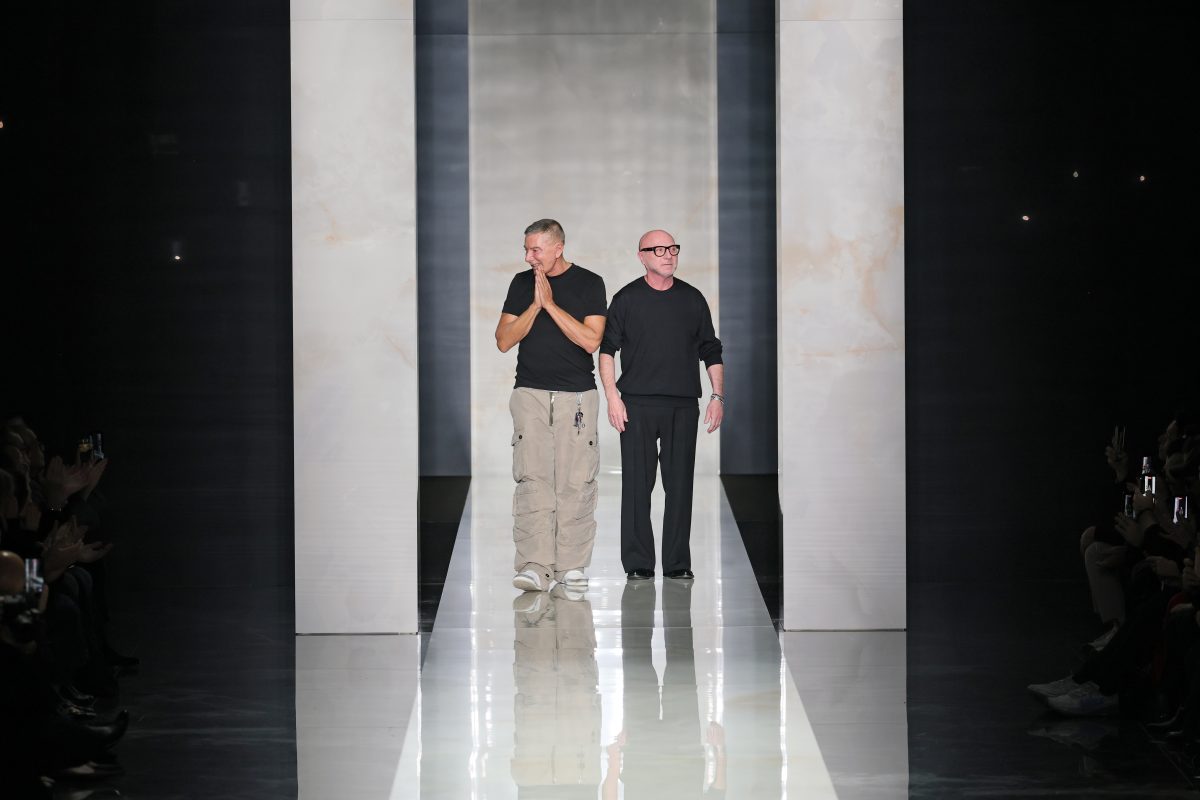
Evolution and transition – not dispute – need to be the message. With both founders showing a united front during the Dolce & Gabbana womenswear show in Milan in February, they have made it clear that there’s no behind-the-scenes drama or upset, safeguarding the brand as a result.
Most thriving luxury brands are named after now-absent founders; Dolce & Gabbana are therefore not charting new territory and should embrace this new phase as a natural step in establishing the brand as a meaning system that is independent of the founders’ personalities and presence.
To that end, Gabbana’s departure is an excellent opportunity to define that meaning system – in a way, make the brand the vessel that carries the founders’ original vision forward, making it relevant to vastly different and fast-changing markets. To an extent, this is a time to change the conversation around Dolce & Gabbana from ‘who’ to a ‘why, what & how’ – codifying the brand’s extraordinary DNA in a way that sustains the house’s next chapter.
To find new growth, Dolce & Gabbana and the wider luxury market need to consider where sensible pricing, supply-chain discipline and design-led creativity all sit within the business. Now is the time for these luxury brands to put customer experience at the heart of their businesses and embrace genuinely new strategic thinking.
Stefano Gabbana’s departure marks a historical and critical milestone for this exceptional brand, borne of the boldness, originality and talent of two masters of Italian design. This is the time when Dolce & Gabbana must step up and be loyal to, but bigger than, the collaboration of Domenico Dolce and Stefano Gabbana. Its early success hinged on their Sicilian identity and creative vision. The brand now has the opportunity to translate this heritage into a new cohesive vision for a different stage in its life.
Manfredi Ricca is global chief strategy officer at Interbrand
Read more CreditNature and Stabiliti Partner to Embed Nature Finance into Everyday Economic Activity
Similarly tagged content: Sections Categories People & Organisations