
The commissioned announced Friday, that the EU and Canada have begun to negotiate a so-called ‘Digital Trade Agreement’, with the aim of boosting legal certainty and fair digital trade across the Atlantic.
 Owen Carpenter-Zehe



The EU and Canada have begun to negotiate a so-called ‘Digital Trade Agreement’ (DTA), alongside Europe’s clash with the US on digital regulation.
The DTA is to boost legal certainty and fair digital trade across the Atlantic Ocean.
Negotiations for the new deal were announced on Friday (6 March) and will build on the 2017 EU-Canada Comprehensive Economic and Trade Agreement.
The aim of the collaboration is to create digital consumer protection, add legal certainty for businesses operating digitally (for example, clarifying the legality of electronic signatures, contracts, and invoices), and to achieve fair digital trade, shielded from protectionist data or digital practices.
Talks officially began on Thursday, but the original idea for a digital trade agreement was first announced at an EU-Canada Summit in June 2025.
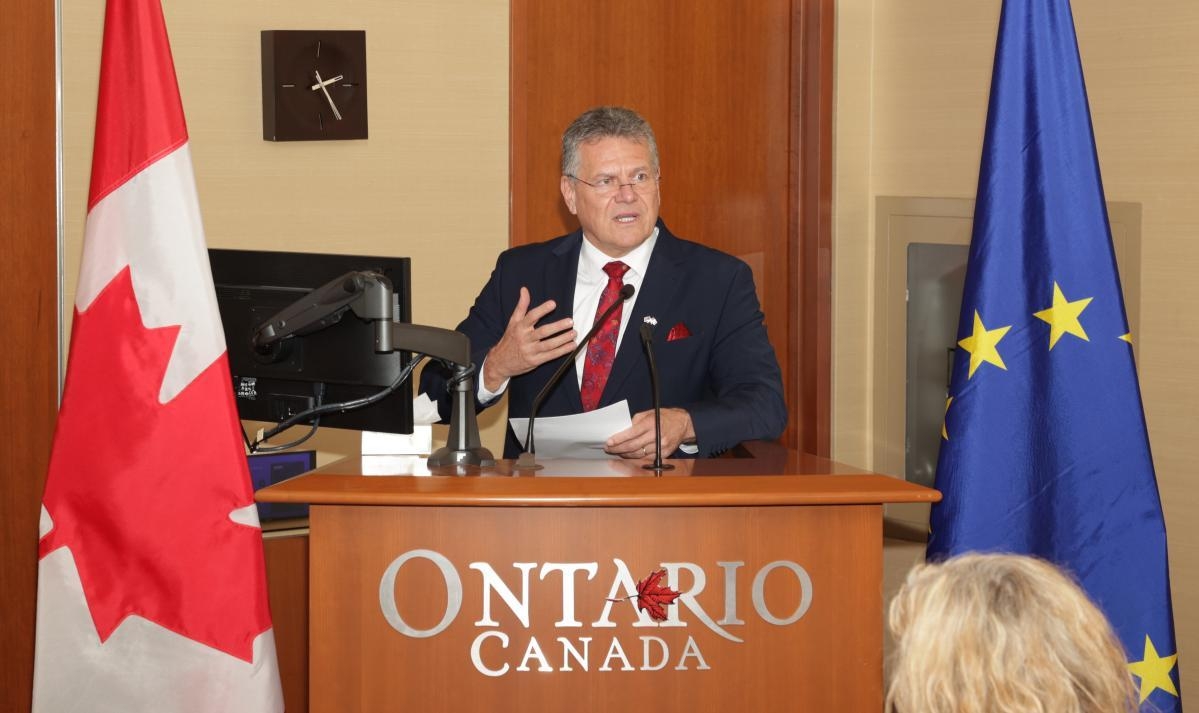
In a joint statement, the Canadian and EU trade commissioners said Thursday: “The DTA will establish a comprehensive, forward-looking framework for digital trade that enhances legal certainty for businesses, strengthens consumer protection in digital transactions, and promotes an open, free, and fair online environment.”
This potential digital collaboration marks another step toward strengthening ties between Canada and the European Bloc, amid hostility from the United States toward both.
In the digital arena, the EU has clashed with US tech giants on competition and taxation and US with social-media platforms on hate speech and disinformation.
And any legal and verbal battles aside, US president Donald Trump rattled Canada and the EU in strategic terms by making territorial claims to Canada and to the Danish island of Greenland.
The new DTA negotiations follow recent defence agreements between the two other transatlantic allies: Canada and the EU signed a Security and Defence Partnership at the June summit, and, in December, Canada joined the bloc’s joint defence procurement fund (SAFE).
Since the 2017 trade deal, trade in goods between the two has reached €81bn, €51bn of it in services.
And EU trade commissioner Maroš Šefčovič outlined why there needs to be more clarity around digital trade, saying on Thursday: “More than 40 percent of our €51bn in services trade is delivered digitally.”
Previously in 2023, the two parties also signed the Canada–European Union Digital Partnership, which established non-binding collaboration in areas such as artificial intelligence, cybersecurity, and international connectivity.