
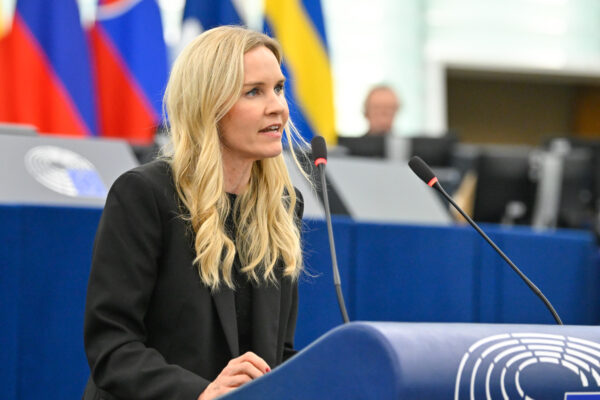
“We believe that technological giants are making a lot of good business in Europe, and also significant profits,” Siegfried Mureșan, a Romanian centre-right MEP, who is heading negotiations on the EU budget along with Portuguese S&D MEP Carla Tavares.
 Nikolaj Nielsen



US Big Tech operating in Europe could face an additional tax to help finance the EU budget, in a proposal set forward by lead European lawmakers that is likely to annoy Washington.
“We believe that technological giants are making a lot of good business in Europe, and also significant profits,” Siegfried Mureșan, a Romanian centre-right MEP, who is heading negotiations on the EU budget along with Portuguese Socialist & Democrats Carla Tavares.
“It is therefore justifiable that they contribute in form of taxation to the budget of the European single market, which enables them to do business here in Europe,” added Mureșan, from the European People’s Party.
Both MEPs were speaking to reporters in Brussels on Thursday (9 April) in the lead up to a critical vote this month that will set the parliament’s position to enter budget talks with the Council, representing member states.
Apple, Meta, Google, Microsoft, X and others are already under a regulatory and compliance pressure from the European Commission.
Last year, the commission slapped a €700m fine against Apple and Meta under is Digital Markets Act (DMA). In December, it hit X with a €120m fine for violating the Digital Services Act (DSA), sparking backlash from Donald Trump and his estranged acolyte, Elon Musk. US state secretary Mark Rubio described it as an assault against Americans.
The US counter-attacked by imposing visa entry bans on EU tech regulators behind the DSA.
Any such new tax would first have to be unanimously approved by EU states, and at a time when relations with Washington are at a historic low.
Online gambling
Digital tax aside, the two MEPs are also pushing for a levy on online gambling to generate new own resources as part of a long-term seven year budget that they also want to increase by 10-percent above current European Commission proposals.
That would likely amount to some €180bn above the proposed nearly €2 trillion, posing serious questions on whether EU states are willing to cough up more money than initially anticipated.
Countries such as France, Poland and Spain are pressing for a larger budget, while frugal member states like the Netherlands remain wary.