Hungary and Slovakia risk delaying new EU sanctions on Russia, but Malta and Greece are falling into line, less than a week before Europe’s Ukraine-anniversary deadline.
 Andrew Rettman



Hungary and Slovakia risk delaying new EU sanctions on Russia, but Malta is falling into line, less than a week before Europe’s Ukraine-war anniversary deadline.
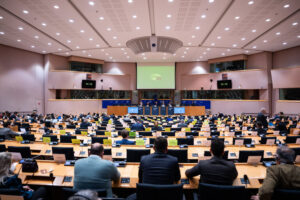
EU ambassadors will discuss the 20th-round sanctions proposal in Brussels on Friday (20 February), with a view to adoption by foreign ministers on 23 February.
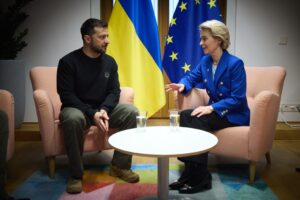
But when EU Commission president Ursula von der Leyen and other leaders travel to Kyiv the next day to commemorate the fourth anniversary of Russia’s full-scale invasion with Ukrainian president Volodomyr Zelensky, they still risk going empty-handed as things stand.
EU maritime powers Malta, Greece, and Spain have been unhappy about plans to introduce a full marine services ban on Russian ‘shadow fleet’ oil tankers, diplomats said.
They had been seeking an EU deal with other countries in the G7 club, which also includes Canada, Japan, the UK, and the US, before they gave the green light.
The marine services ban was to be the centrepiece of the 20th round, along with new individual blacklistings, a crackdown on Central Asian sanctions busters, and Russian crypto trading.
And some diplomats had worried Malta, Greece, and Spain would be a “bigger obstacle” than other objections from the Kremlin-friendly Hungary and Slovakia.
They had been saying that the ban would not be “implantable” without G7 coordination.
But the Maltese foreign ministry, for one, indicated on Thursday that there was a looming breakthrough.
“Our latest position is that we are fine with the proposal as it is currently on the table. I confirmed internally just now,” a Maltese diplomat said.
Hungary and Slovakia declined to say what they did not like about the proposed new sanctions.
But one EU diplomat told this website on Thursday: “Certainly, Hungary have raised objections to certain [individual] listings”.
The best-known name in the proposed new blacklist is the Russian president of the FIDE world-chess federation, Arkady Dvorkovich, who has close Kremlin ties.
“Slovakia have publicly expressed views that more sanctions will undermine [Ukraine] peace efforts … they and Hungary might also be seeking assurances on energy,” the EU diplomat added, referring to their ongoing imports of Russian gas, oil, and nuclear fuel.
A second EU diplomat said: “We perceived a stance [from Hungary and Slovakia] that could aim at making it difficult for the package to be agreed by the 24th [of February]”.
A third EU diplomat said: “It’s a very important date, but it’s also important to have a strong sanctions package”.
“Ambassadors will meet as many times as necessary this week to achieve it,” a fourth diplomat added, with some previous Russia sanctions talks sometimes also going to the wire, via snap ambassadors’ meetings on the mornings of foreign ministers’ arrivals in Brussels.
A fifth EU diplomat said von der Leyen would feel silly on her Kyiv trip if the deadline failed.
“It [no sanctions deal] would be a big problem,” he said.
“After four years of war, symbols, such as visits, flag-waving, and nice statements, aren’t worth anything to Ukrainian people any more,” the EU diplomat added.
But a sixth diplomat said: “I’m rather sure there’ll be a package, whatever the content”, alluding to potential EU concessions to Hungary or Slovakia.
Rubio boosts Russia’s EU friends
The EU sanctions haggling is taking place in parallel to US-brokered Russia-Ukraine peace talks, but there is no sign of an imminent ceasefire deal.
US secretary of state Marco Rubio also visited Bratislava and Budapest this week, in what might embolden their leaders to stand up against the EU consensus.
“We have to have dialogue with the Russian president, Vladimir Putin,” said Slovak prime minister Robert Fico alongside Rubio on 15 February.
The Hungarian prime minister, Viktor Orbán, said in his Rubio press briefing the following day: “We shall not provide money for Brussels in order for them to send that to Ukraine”.
Meanwhile, EU foreign ministers will also discuss proposals for Russian concessions on Ukraine circulated by EU foreign affairs chief Kaja Kallas at next week’s meeting.
Her two-page plan said the EU should press Russian president Vladimir Putin to forego international recognition of conquered Ukrainian land, reduce his military, return abducted Ukrainian children, face accountability for war crimes, and stop Russia’s ‘shadow fleet’ oil smuggling.
But one EU diplomat said Kallas’ plan would make no difference to Putin’s maximalist ceasefire demands.
“Does it [the Kallas plan] matter?,” he asked.