Hungarian journalist Alinda Veiszer reflects on the dismantling of public media, the pressures placed on reporters under Orbán’s system, and the stubborn forms of creative resistance that emerged.
 Márk Finta



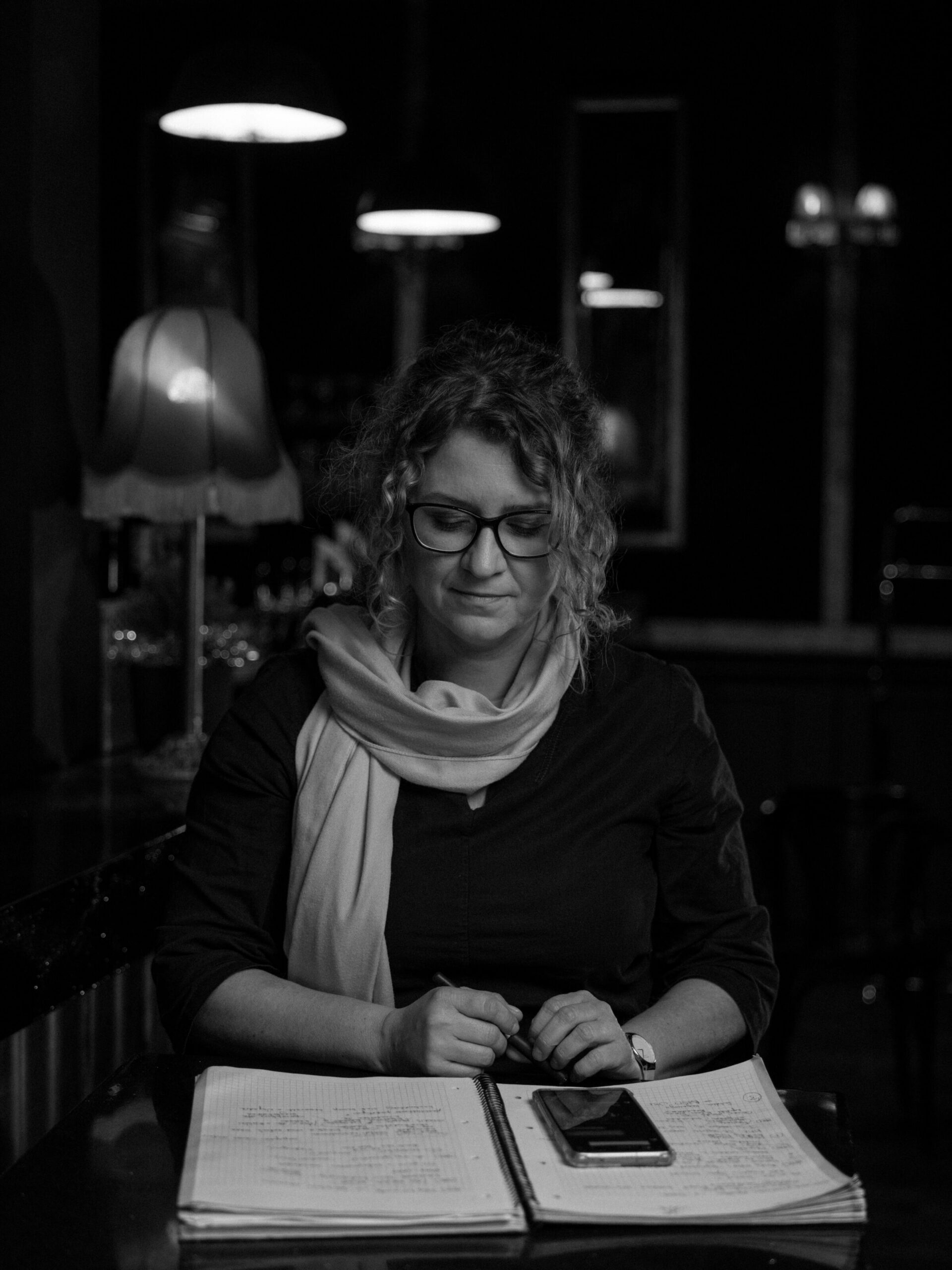
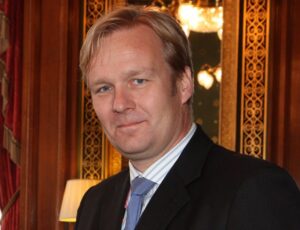
Alinda Veiszer is a Hungarian television editor, presenter, journalist, and author. She became known at a time when she was working in Hungarian public media. In recent years, she has run her own channel on Patreon, where she publishes conversations with some of the best-known figures in Hungarian public life and the arts.
In 2010, when the Fidesz era began, you were 29 or 30, a Prima Primissima media prize winner, and a newly published author. Where in life did you see yourself at that point?
I remember that when I received the Prima Primissima award, I felt it would play a very important role in my life. I thought that the prize would protect me: my integrity, and the legitimacy of my professional standing at a public service broadcaster.
Compared with that, it was very striking to realise that not only did it fail to protect me in the long term, quite the opposite: If I really wanted to preserve my integrity, then I had to go up against all those who were taking over public media at the time.
I’m not saying there were no islands left, because there were; the takeover was not yet complete. But it became harder and harder. It was a huge disappointment to discover that you can receive this enormous distinction, something you can only ever win once, and professionally it means nothing. In fact, it bred more envy — something I still sense to this day — than it brought any actual benefit.
How did you experience the fact that the prize did not protect you?
I learned very quickly that it would not protect me: People were falling all around me. You would think that if many people believe you know what you are doing, they would not interfere in your work. But demands came very quickly: how I should ask questions, what I must not ask, whom I must not invite on. It was obvious that this had to be resisted, and that the situation could not be sustained for long.
So it protected me from nothing. You can’t say ‘look, I have this prize,’ because it counts for nothing. You can’t hold your horse up in front of yourself — because back then they actually gave you a horse statue, which is funny in itself, because it was so big you couldn’t put it anywhere.
In a journalist’s life it is not at all normal that one moment they can do their work freely, even be rewarded for it, and the next moment people are interfering and making demands. Did this come as a shock to you, or could you fit it into the world that was taking shape?
It’s interesting, because I did stay at public media a little while afterwards. Not for long, because that was when my elder child was born, and I stayed home with him for a while. Then, after that, they no longer had any intention of keeping me on.
Several people tried, in one way or another, to rescue me. At the time Szilveszter Ókovács was head of Duna TV — he now runs the Hungarian State Opera — and he called me to say that, although we saw the world differently, he wanted to work with me, and wanted me to be able to work freely. Except that by the time I got there, he was already gone.
Zoltán Rockenbauer was also my boss at public television for a short while, and he too gave me complete freedom. So there were people who, for a time, tried to hold an umbrella over us.
When they disappeared from the picture and those arrived who were much more willing to serve the system, there was no defending against it. Suddenly, I found people scribbling in my running order, crossing questions out. I always laughed at that, because they really seemed to think I simply read my questions out from the running order.
So the tension was obvious. It didn’t hit me like a cold shower, because I had read about censorial systems, I knew something like this could happen. My great heroes are the people of the democratic transition, the ‘samizdat’ publishers. I had spoken with so many of them. I knew such a thing could exist. I just hoped I would never have to experience it myself.
By temperament, every prohibition immediately provokes resistance in me. If someone says something is forbidden, then I know that’s exactly what must be done. Of course, that mentality contains plenty of room for error: Out of sheer stubbornness, you can end up running headlong into a wall. I didn’t run into the wall, because the period was too short, but whenever someone said ‘you should not invite that person,’ we immediately invited them on the next programme.
You can’t work like that for long.
Did you feel vulnerable? That this situation could eventually collapse on top of you?
Of course. It came down on me very quickly. I will never forget when they asked me to host a programme on Dankó Radio — which is a station devoted to Hungarian folk music. I said fine, I would work out a series. I wanted to open it with Ádám Nádasdy, because he and his daughter Vilma were then touring with an evening of folk songs. Ádám Nádasdy is a linguist, Shakespeare translator, poet, a capital-C conservative bourgeois figure, who also speaks openly about being gay, including in his literary work.
I will never forget the way they looked at me: ‘Of course, Ádám Nádasdy.’ And then they tightened things further: The programme couldn’t go out live, and Ádám Nádasdy couldn’t be a guest. In the end, we got to the point where they said I would be allowed to record links introducing the songs — but not live, only prerecorded. If those were approved, they could be broadcast. By then, it was ridiculous. I told them I knew nothing about these songs — could I not work in an area I actually understood? But there was no answer to that.
It became clear very quickly that there would be no consensus. It was a serious struggle. The feeling of vulnerability came later and it stemmed from the fact that I didn’t know what would happen to me, what freelancing would bring. At that point, I had no experience of what it meant to go to commercial television. More broadly: Were there any paths at all? There hardly were. I could easily have bled out there in 2012. I know exactly what vulnerability feels like: When you think there is a road in front of you and suddenly it disappears, and you have to cut a new one through the jungle yourself, with no path there. Over the past 16 years there have been many such uncertain, vulnerable moments.
Going back to the time when they started instructing you or intruding in your work: Did they not feel embarrassed?
The aim was for me to say no. Then they could open disciplinary proceedings against me. But by then I was more experienced. I did not say no; I always proposed something else instead. They did launch disciplinary proceedings against me, more than once, and every one of them failed. In the end they simply signed a document in my place. They wanted me to resign, but I lasted so long in this game that someone eventually got impatient and signed for me. After that they did not torment me any further; we simply agreed that I would leave immediately by mutual consent.
These kinds of industry tricks are familiar enough. But when you come face-to-face with the nature of the whole mechanism – ‘doesn’t it occur to you that we’re adults, and yet this is what we are doing,’ I thought?
At the time there were many nobodies there who have since vanished from the scene: They did their duty and moved on. The nobodies were hurting the somebodies; the spineless were hurting the principled. That offended my sense of justice.
It is very strange when, years later, one of the people who once sat opposite you on the side doing the tormenting suddenly reappears and sends you a friend request on Facebook. And you sit there at your computer thinking: ‘What exactly am I supposed to do with this?’ Or when, on a staircase, you run into the senior manager who once told you that you were “a bit too urban for public service broadcasting” — which, I think, was a coded way of saying too Jewish. That you were not ‘folksy’ enough. Then, one day, this person suddenly appears in front of you and, of course, they can’t look you in the eye, for obvious reasons, but there you are on the staircase facing someone you despise from the bottom of your heart. Am I meant to signal that, or should I be ‘cultured European Alinda’, who chats politely, or simply looks away and says nothing?
When you encounter people who actively helped destroy the Hungarian press — at [news website] Origo, say — because your children happen to belong to the same community somewhere, what do you do? Do you walk over and slam your hand down on the table and say: ‘Who do you think you are? Get out’? Or do you just avoid looking over there and sit at the next table instead? These questions came up years later, and it is very hard to respond to them well.
Do you manage to respond well in those situations?
I had to decide. Anyone who had been a close friend and betrayed me, I told them to their face, I settled accounts with them, and I ended the relationship. Those who were not close friends, who merely betrayed our profession — I think life punishes them. I look away and I do not greet them. I treat them as air. That’s my strategy. I didn’t have a better one.
Do you long to return to public service broadcasting?
What we left behind will never exist again, but I long for a public service broadcaster that was public service in a genuinely 21st-century sense. To build a good public service broadcaster — that’s something I long for. For what’s going on there now, obviously not. Who would want to be part of this?
I have many ideas about how it could be done brilliantly, even though many people say there’s no need for public broadcasting at all. We have now got to the point where public broadcasting has managed to debase itself so profoundly, professionally and in terms of quality, that I find it hard to defend its right to exist. Those who say ‘This is what we are spending billions on?’ are right. If this is what we are spending billions on, then there is a very serious problem.
If we assume the answer is yes, that public service broadcasting is needed, can the current system be transformed, or is it more like in Game of Thrones when Daenerys Targaryen says “Dracarys” and everything has to be burned to the ground?
I would be cautious with that. But it has to be done in a completely different way. With a very strong online presence, as an umbrella organisation. This linear-broadcasting public-media model is definitely not what’s needed. There are plenty of models; you can reach westward, I have studied how it’s done elsewhere.
I think it can’t be demolished entirely; there are certainly things that must be preserved. But in a news division, for example, I think everyone who took part in this has become discredited.
The situation may be a little different in cultural departments. I know people who have simply kept their heads down in public media for 16 years. The ‘I do not deal with politics’ type. I do not regard them as champions of morality, but I accept that this strategy exists too.
This raises the question of whether such a deeply polarised society is capable of sustaining or absorbing a genuine public media institution?
I think we go wrong by approaching it exclusively from the angle of politics, from the angle of the news desk. The moment we say ‘public media’, we immediately start thinking about which parliamentary faction will not turn up and will not give interviews, and from then on the news programme becomes one-sided. I don’t think that is where we should start.
I think the nation is culture. Culture is what makes the nation.
But culture too is politicised.
It is politicised because it has something to reflect on. I can really only speak about Budapest, because this is where I consume theatre — but if you go to the Vígszínház or the Örkény [theatres] and watch three or four productions, I don’t believe you only meet people of one kind or another.
I really do think that good culture could be the foundation on which a nation might be built. And public service broadcasting ought to create that shared national ground that makes people tune in.
Except that what public discourse talks about today, for example, is that in an alternative theatre production someone appears to be beaten to death and the character appears to resemble a politician, and that fills the press, as though culture were merely a pretext for us to fall once again into some trap of polarisation, or as though this society longs to tear itself apart along cultural fault lines too.
I don’t agree with that. I think there’s a deep tradition of reading between the lines. That’s the exciting thing that took shape under Kádárism [Hungarian socialism] and continues under a similarly oppressive system: reading between the lines.
Good theatre is inherently political in the sense that it always sends a message, always wants to make some kind of statement. What you are describing, to me, is only the surface. Let me give you a very good example, one that’s very vivid for me: @LL3t4rgIA at the Vígszínház, directed by Attila Vidnyánszky Jr. Anyone who goes to see it will feel part of a generation, a generational mode of thinking. Let me mention another name too, Jakab Tarnóczy. In almost all his productions you understand something about a generation, about yourself, about public life.
I think the surface is this idea that ‘we are killing one another’. But you can leave the surface behind, because that’s not the central question.
The central question is that you go to new premieres again and again and see what the Örkény Theatre thinks about [the play] Momo, or what the Katona József Theatre thinks about [the musical] Chicago. I don’t think it is quite so political. It really would be possible to create a shared national basis grounded in culture.
Let’s look at films. Let us look at [director] Ildikó Enyedi’s ‘Silent Friend’. Let’s look at [director] László Nemes Jeles’s ‘Orphan’. These are not ‘political’ works, they’re simply beautiful films we can be proud of. If all of us see them, or if we make it possible for many people to see them — and that would already be a public service task — then we have a basis: We can be proud of two directors who are currently winning awards one after another.
There have been massive attempts to dominate the cultural sphere through a political regime, but very strong cultural achievements have nevertheless emerged in this period. How have these free spaces, these islands, managed to survive and create with such force?
You know, there is this bon mot from [Hungarian director] Béla Pintér: “The previous government gave money, the current one gave topics.”
And on the other hand, I think it’s like journalism: You can’t be a good journalist if you don’t doubt. If you don’t think freely, if you aren’t open to a great many ideas, if you don’t test your own ideas against other people’s. You cannot be a good journalist if someone writes down on a piece of paper how you are supposed to ask questions, or tells you what to say and think. That simply won’t work; we see that every day.
Why is it that billions are pumped into propaganda and nobody wants it? Because it’s not interesting. Because if what you want to say can be said on one channel, there is no need to say the same thing on 122 channels.
I think the same is true of culture. The late [Hungarian choreographer] Novák Tata once said to me in an interview — you can still watch it on YouTube — that in reality those who create cultural products can’t be ‘illiberal’. It’s a difficult question, and the word itself is divisive, but there’s something in it: Anyone who can’t think freely enough, who can’t grasp the reverse side of things, who can’t search for principles or build them into their work, will never be good at this.
If my only aim is to discredit [former Hungarian president] Árpád Göncz through a film — as there has been an example of — I can do that. The actors may carry out their tasks honourably, but in reality I am creating a didactic moral tale. Who cares about a didactic moral tale?
But if Nemes Jeles makes Orphan, then you can begin to think that one of the main characters may in fact be the Kádár regime itself [referring to communist-era Hungarian president János Kádár] to, that the little boy may be the Hungarian people, who rebelled against Kádár in 1956, and that the tension between them may reflect that historical conflict, in which Kádár ultimately suppressed us by bringing the Soviets back. That is far more interesting than some finger-wagging ‘come on, Hungarians, 1956’ morality tale. That’s the difference.
For that you need freedom, and free thought can never be extinguished — we can see that. If there’s no money, they’ll make it without money.