

While reporting often focuses on drones and front-line shifts, the dire living conditions and malnutrition facing Ukrainian soldiers have recently gained renewed attention.
 Tomáš Vasilko



Every day, the Ukraine Battlefield update newsletter offers a clear look at how the war is unfolding on the ground, highlighting key developments along the frontline and the shifting dynamics of the conflict. This offers readers regular and detailed information to better understand the implications of the war for the country and the whole continent.
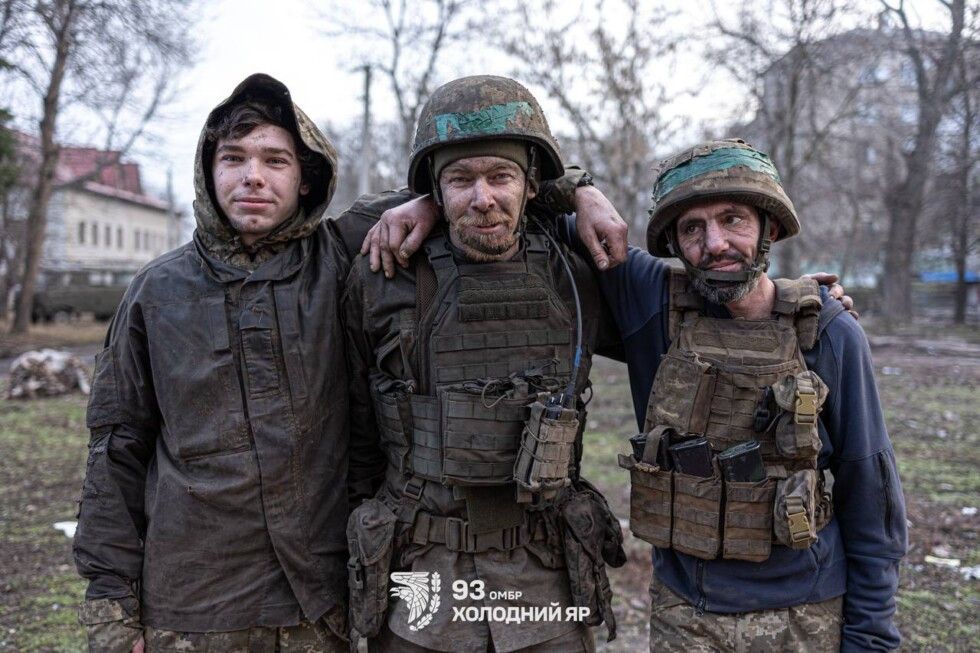
In this column we regularly report on shifts at the front, new technological improvements to drones, and videos of attacks. But perhaps we have given too little space to the perspective of Ukrainian soldiers and the conditions in which they have had to live and fight for more than four years.
Their plight was returned to the spotlight after photos were published of emaciated soldiers from the 14th mechanised brigade who were not receiving enough food at the front.
Since January this year, Ukraine has had an office of the military ombudswoman, headed by Olha Reshetylova. The task of this office is to receive complaints from Ukrainian soldiers and their families, to try to verify them and, where possible, to remedy them.
It is an advisory office to the president, but when something is going wrong, she can call commanders and try to improve the situation for the soldiers who have complained.
Reshetylova has given a lengthy interview to Ukrainska Pravda, in which she spoke about her first 100 days in the post. During that time, her 20-member team received more than 5,500 complaints, of which over a thousand had to be dealt with through inspections.
The case of starving Ukrainian soldiers at the front was rare, she said, and there had only been one similar case last year.
“After my intervention, thanks to the efforts of the 92nd brigade, it was possible to unblock this position, water and food were delivered to the soldiers, and they were taken away for a week of recovery,” she said.
It is quite common for Ukrainian soldiers to end up at zero line for many weeks, sometimes even months. In the interview, Reshetylova said that this had a very negative effect on their psyche and was also militarily inefficient.
“At present, we are preparing an extensive study of the psychological state of fighters during long-term stays at positions. We see that after 40 days, people no longer care whether they survive or not – they become completely apathetic. Every commander should take this information into account. Any deployment lasting longer than 40 days cannot be effective,” she said.
Reshetylova added that there is a rule in the Ukrainian army that a soldier should stay at the front without rotation for a maximum of 15 days. However, this is not observed at all.
“It is a dead provision that no one respects, which again leads to there being no limits at all. And some commanders do not feel responsible for the fact that their fighters have been sitting in trenches and cellars under partial encirclement for a year or even longer,” she said.
Her words were shared and commented on by several military experts. US analyst Rob Lee wrote that the main reason soldiers had to stay so long at zero line was a shortage of manpower, from which Ukraine has long suffered.
The second reason, however, was that under current conditions, with drones everywhere, the rotations themselves were very dangerous. Many soldiers preferred to stay in their shelters rather than risk returning to their unit.
“There have been situations where relatives requested that soldiers be withdrawn from their positions. At the command level, a decision was taken to unblock these positions, additional assault groups were assigned there, which, with great effort, cleared these positions and developed logistical routes. But the soldiers then began to refuse to leave because they believed it was safer for them to stay at the positions,” the ombudswoman said in early April.
The negative impact on mental health and performance during long stays at the front is nothing new. Studies from past wars have shown the major effect of lengthy front-line deployments on the mental state of soldiers.
“This largely corresponds with US studies from the Second World War, which claim that the combat performance of soldiers starts to decline after 30 days of continuous fighting at the front, and after 60 days, they were basically emotionally exhausted. The total number of possible days at the front, including rotations, was 140 to 240,” Finnish analyst John Helin from the Black Bird Group wrote.
He also shared a table from the study showing that emotional exhaustion sets in after 45 days.
This largely aligns with the US studies from WW2 which posit that a soldiers combat capability starts to suffer after 30 days of continuous frontline combat and after 60 they were essentially emotionally exhausted.
Total possible frontline days with rotations was 140-240. https://t.co/DfZsvHq0mp pic.twitter.com/H3UWUYPxdQ
— John Helin (@J_JHelin) April 27, 2026
Reshetylova said that maintaining contact with family helped to preserve good mental health for soldiers at zero line. She presses commanders to pass on any message from families to the soldiers at the front by any means possible, whether by a recorded message played over the radio or a written letter delivered by drones.
“We have had cases where a company commander read letters and messages from families to soldiers over the radio. Because they are in military isolation and do not know what is happening to their families, it has a very strong impact on morale,” the ombudswoman said.
Her words were confirmed by the case of military medic Serhii Tychshenko, alias Viter, who spent 471 days at the front near Soledar. He was evacuated in October 2025.
The messages from home that they received on a USB stick were “a huge moral support”, said Viter. “And not just for me but for everyone. The guys told me: ‘We live from video to video.’ It would have been very hard for me if I had had no contact with my family,” he said to Radio Svoboda.
The ombudswoman mentioned a case when soldiers called her to say that one of their comrades had had a nervous breakdown at his position and decided to walk straight towards the Russian lines. “We contacted the battalion commander, who called in aerial reconnaissance, which spotted this person directly in a minefield; with the help of a drone they evacuated him from there and handed him over to specialists,” she told Ukrainska Pravda.
Most of the cases she handles, however, are those where soldiers did not receive the pay they were entitled to, were wrongly registered as having left their positions without permission, or were complaining about their commanders.
Although the danger of rotations is undeniable, the main reason soldiers have to spend long weeks or even months at the front is a shortage of troops. This was also stated by Viter.
The ombudswoman also acknowledged problems with mobilisation. According to the ministry of defence, 1.6 million Ukrainians are evading service in the army. According to her, a fixed-term service could be introduced, for example for two or three years, which could help bring new people into the armed forces.
Above all, however, she said the state had to improve its communication towards these people and persuade them. Examples of war crimes in the territories of Ukraine under occupation should be the argument for why the country must be defended. Russians had been trying to conquer Ukraine for 400 years and that was unlikely to change any time soon, she added.
“Mobilisation should therefore be based on a strategic vision according to which we should be a militarised society in which everyone should be ready to join the army,” the protector of the rights of Ukrainian soldiers added for Pravda.
Ukrainians have again attacked the Russian town of Tuapse, about 460 km from the front on the shore of the Black Sea. They hit the refinery on its territory. Social networks again circulated videos of smoke rising above the town. It was reported that locals heard at least ten explosions.
In this column we regularly report on shifts at the front, new technological improvements to drones, or we bring videos of attacks. But perhaps we have given too little space to the perspective of Ukrainian soldiers and the conditions in which they have had to live and fight for a fifth year now.
Talk about them started again after photos were published of emaciated soldiers from the 14th mechanised brigade who were not receiving enough food at the front.
Since January this year, Ukraine has had an office of the military ombudswoman, headed by Olha Reshetylova, who had previously held a similar position. The task of this office is to receive complaints from Ukrainian soldiers and their families, to try to verify them and, where possible, to remedy them.
It is an advisory office to the president, but when something is going wrong, she can call commanders and try to improve the situation for the soldiers who have complained.
Olha Reshetylova has now given a lengthy interview to Ukrainska Pravda, in which she speaks about her first 100 days in the post. During that time, her 20-member team received more than 5,500 complaints, of which over a thousand had to be dealt with through inspections.
As she said to Ukrainska Pravda, such a case of starving Ukrainian soldiers at the front was rare and she had to deal with it only once – last year (still in another role).
“After my intervention, thanks to the efforts of the 92nd brigade, it was possible to unblock this position, water and food were delivered to the soldiers, and they were taken away for a week of recovery,” she said.
It is quite common for Ukrainian soldiers to end up at zero line for many weeks, sometimes even months. In the interview, Olha Reshetylova said that, according to her research, this had a very negative effect on their psyche and was also militarily inefficient.
“At present, we are preparing an extensive study of the psychological state of fighters during long-term stays at positions. We see that after 40 days, people no longer care whether they survive or not – they become completely apathetic. Every commander should take this information into account. Any deployment lasting longer than 40 days cannot be effective,” she said.
Yet, according to her, there is a rule in the Ukrainian army that a soldier should stay at the front without rotation for a maximum of 15 days. However, this is not observed at all.
“It is a dead provision that no one respects, which again leads to there being no limits at all. And some commanders do not feel responsible for the fact that their fighters have been sitting in trenches and cellars under partial encirclement for a year or even longer,” she said.
Her words were shared and commented on by several military experts. For example, US analyst Rob Lee wrote that the main reason soldiers had to stay so long at zero line was a shortage of manpower, from which Ukraine had long suffered.
The second reason, however, was that under current conditions, with drones everywhere, the rotations themselves were very dangerous. Many soldiers themselves preferred to stay in their shelters rather than risk returning to their unit.
“There have been situations where relatives requested that soldiers be withdrawn from their positions. At the command level, a decision was taken to unblock these positions, additional assault groups were assigned there, which, with great effort, cleared these positions and developed logistical routes. But the soldiers then began to refuse to leave because they believed it was safer for them to stay at the positions,” the ombudswoman said back at the beginning of April to the RBC website.
The negative impact on mental health and performance during long stays at the front is nothing new. Studies from past wars have already shown the major effect of lengthy front-line deployments on the mental state of soldiers.
“This largely corresponds with US studies from the Second World War, which claim that the combat performance of soldiers starts to decline after 30 days of continuous fighting at the front, and after 60 days they were basically emotionally exhausted. The total number of possible days at the front, including rotations, was 140 to 240,” Finnish analyst John Helin from the Black Bird Group wrote.
He also shared a table from the study showing that the stage of emotional exhaustion sets in after 45 days.
This largely aligns with the US studies from WW2 which posit that a soldiers combat capability starts to suffer after 30 days of continuous frontline combat and after 60 they were essentially emotionally exhausted.
Total possible frontline days with rotations was 140-240. https://t.co/DfZsvHq0mp pic.twitter.com/H3UWUYPxdQ
— John Helin (@J_JHelin) April 27, 2026
Ombudswoman Reshetylova said that maintaining contact with family helped to preserve good mental health for soldiers at zero line. She presses commanders to pass on any message from families to the soldiers at the front by any means. Whether it is a recorded message played over the radio or a written letter delivered by drones.
“We have had cases where a company commander read letters and messages from families to soldiers over the radio. Because they are in military isolation and do not know what is happening to their families, it has a very strong impact on morale,” the ombudswoman said.
Her words were confirmed by the case of military medic Serhii Tychshenko, alias Viter, who spent 471 days at the front near Soledar. He was evacuated in October 2025.
The messages from home that they received on a USB stick were “a huge moral support” for him. “And not just for me but for everyone. The guys told me: ‘We live from video to video.’ It would have been very hard for me if I had had no contact with my family,” he said to Radio Svoboda.
The ombudswoman mentioned a case when soldiers called her to say that one of their comrades had had a nervous breakdown at his position and decided to walk straight towards the Russian lines. “We contacted the battalion commander, who called in aerial reconnaissance, which spotted this person directly in a minefield; with the help of a drone they evacuated him from there and handed him over to specialists,” she told Ukrainska Pravda.
Most of the cases she handles, however, are those where soldiers did not receive the pay they were entitled to, were wrongly registered as having left their positions without permission, or were complaining about their commanders.
The ombudswoman also acknowledged problems with mobilisation. According to the ministry of defence, 1.6 million Ukrainians are evading service in the army. According to her, a fixed-term service could be introduced, for example for two or three years, which could help bring new people into the armed forces.
Above all, however, she said the state had to improve its communication towards these people and persuade them. War crimes in the Ukrainian territories under occupation should be the main argument for why the country must be defended. Russians had been trying to conquer Ukraine for 400 years and that was unlikely to change any time soon, she added.
“Mobilisation should therefore be based on a strategic vision according to which we should be a militarised society in which everyone should be ready to join the army,” she added.
Ukrainians have again attacked the Russian town of Tuapse, about 460 km from the front on the shore of the Black Sea, hitting its refinery. Social networks again circulated videos of smoke rising above the town. It was reported that locals heard at least ten explosions.
Russian official sources claimed that the town was hit by “falling debris” from drones, but the Russian channel Two Majors wrote about “falling debris” in quotation marks.
The Ukrainian account KiberBorošno stated that the Ukrainians had hit at least four oil storage tanks. This time they directly struck the refinery area, which is among the ten largest in Russia, with a capacity of 240,000 barrels per day. Previously, Ukrainians had hit oil tanks outside the refinery complex (on the map on the right). The two sites, however, are separated by just a single road.
Tuapse is currently the Russian town most hit by the war. Ukrainians have hit its oil storage tanks three times in the past two weeks. After last Monday’s attack, the oil burned for several days, causing an environmental disaster. An “oil rain” fell on people in the town, and oil slicks appeared in the sea and the river.
When the fire was extinguished, satellite images showed that at least 24 oil storage tanks at the site outside the refinery had been destroyed, more than half.
Ukrainians are trying to ensure that this refinery – one of the most technologically advanced in Russia, where the diesel and heating gasoline produced are intended mainly for export – ships out as few products as possible following the rise in global oil prices caused by the war in Iran and the blocked Strait of Hormuz.
The situation in the town of Kostyantynivka is getting worse every day. The OSINT account Playfra wrote “Russian forces are pushing deeper; logistics are deteriorating and the bombardment is more intense and more frequent”.
Russian forces are bombing the town, effectively trying to raze it to the ground, and are pushing most strongly from the village of Ilinivka to the south-west of the town, according to the Playfra account.
In the east they are trying to get into Novodmytrivka and into the eastern parts of the town. The front