Drugmaker had stalled large-scale projects in England but has now pledged investment at two sites, announced by Keir StarmerBritain’s biggest drugmaker AstraZeneca has said it will invest £300m in the UK in a surprise U-turn after pausing large-scale projects last year.The drugmaker had pulled back investments in Britain after becoming
 Julia Kollewe



Britain’s biggest drugmaker AstraZeneca has said it will invest £300m in the UK in a surprise U-turn after pausing large-scale projects last year.
The drugmaker had pulled back investments in Britain after becoming disillusioned with the business environment, including the availability of new medicines on the NHS and drug pricing.
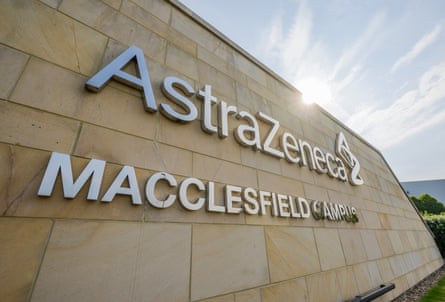
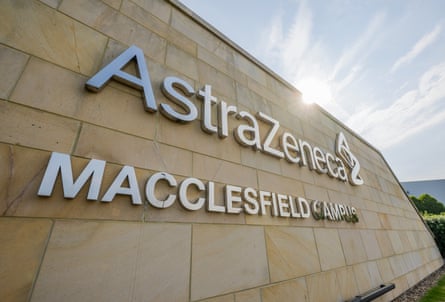
On Wednesday it said it would invest in two existing locations, unfreezing a paused £200m expansion in Cambridge and pouring £100m into its Macclesfield site.
Keir Starmer announced the investment in the House of Commons, saying it would protect jobs.
AstraZeneca will complete the construction of an office building on its Cambridge campus, near its headquarters, called the Disc. It will also build a “lab of the future” that will use digital and data tools to advance drug development at its Macclesfield site, according to Pascal Soriot, the company’s chief executive.
This will create new scientific jobs in Macclesfield, but AstraZeneca was unable to say how many. In Cambridge, the company will move people from several other buildings into the new office, named after Rosalind Franklin, whose X-ray crystallography work was vital to cracking the structure of DNA. This includes scientists who do data analysis and molecular scientists who also do desk-based work.
Last September AstraZeneca paused the £200m investment in Cambridge, which followed the scrapping in January of plans to invest £450m in its vaccine manufacturing facility at Speke, Merseyside. The company blamed a cut in government support after months of negotiations.
AstraZeneca employs 10,000 people in the UK, including more than 4,000 in Cambridge and a similar number in Macclesfield, 2,000 across London and Luton, and 400 in Speke.
Starmer said the investment was “made possible by the pharmaceutical arrangement we have struck with the United States to future-proof thousands of jobs in Macclesfield and in Cambridge. That is a major vote of confidence in the UK, and Labour’s plans to strengthen our economy.”
The UK struck a deal with the US in December over pricing, which will lead to lower prescription drug prices in the US, where medicines have historically been far more expensive than elsewhere, as well as higher NHS spending on medicines. In return, UK pharmaceutical companies will be spared trade tariffs.
Soriot thanked the UK government “for their effort to improve access for patients, including four new [drug] approvals since the beginning of the year, and we look forward to further enhancing the access and the reimbursement environment and build a strong life sciences sector”.
Liz Kendall, the science secretary, said: “This investment is another significant vote of confidence in our science community and backs British research to do what it does best – develop the drugs, treatments and innovations that improve lives.”
Susannah Streeter, the chief investment strategist at Wealth Club, an investment platform, said: “This is super encouraging and it does seem as though there is a sense of momentum returning to the pharmaceutical industry in the UK.
“The restart of the Cambridge expansion … is highly symbolic. It demonstrates how the government has been working hard behind the scenes to try and make the UK more attractive to big pharma.”
However, the move is dwarfed by the $50bn the drugmaker is investing in US research and manufacturing, announced last October, and its $15bn drive in China.
Earlier on Wednesday, AstraZeneca and GSK both reported strong sales of cancer drugs, despite GSK taking a hit in the US potentially linked to “scepticism” over vaccines from Donald Trump’s administration.
AstraZeneca posted an 8% increase in revenues to $15.3bn in the three months to March, including 16% growth in oncology and a 15% rise in rare disease treatments.
Cancer drugs now make up nearly half of total sales. The company sees potential for 25 blockbusters – medicines that generate more than $1bn in annual revenue – by 2030, and has an ambition to achieve $80bn in sales by then.
Meanwhile, GSK reported a 5% rise in sales to £7.6bn, with 28% growth in cancer drug sales, such as Jemperli for womb cancer. Vaccine revenues were up by 4% with the shingles jab Shingrix notching up £1bn in sales for the first time.
GSK is shifting its focus towards cancer, HIV and respiratory drugs, and these specialty medicines are expected to grow in low double digits in 2026. However, it forecast that vaccine revenues would either fall slightly or remain stable this year, with slower take-up in the US, where health secretary Robert F Kennedy Jr, a vaccine sceptic, has promoted unproven treatments such as steroids for measles outbreaks.
Streeter said: “Lower vaccine uptake in the US is a real headwind and [a] more sceptical public health environment could dampen demand further and increase uncertainty about the rollout of future vaccine programmes.”
GSK expects total turnover to grow between 3% and 5% this year, and stuck to its target of £40bn sales by 2031.
Luke Miels, GSK’s new chief executive, has reorganised the company’s lab teams and hailed a “Darwinian process” to ramp up research and development, with the drugmaker “seeking knowledge outside as well as inside”. He has announced several deals since taking over from Emma Walmsley at the start of the year.
The Association of the British Pharmaceutical Industry said it had been a “remarkable month for UK life sciences”. Since the Anglo-US drug pricing deal, companies have invested £1.4bn in UK life sciences, including £500m by Belgium’s UCB Pharma and $500m (£370m) by Bristol Myers Squibb of the US.
Last week, Boehringer Ingelheim, a German pharmaceutical company, announced a £150m AI centre in King’s Cross in central London, with the first 50 AI experts to move in by the end of 2027.