
A summit on Sudan’s future, jointly hosted by the EU on Wednesday, will gather dozens of the African country’s civilian political leaders as its civil war enters its fourth year.
 Benjamin Fox



An EU-hosted summit on Sudan in Berlin on Wednesday (15 April) is set to focus on the country’s political future after three years of civil war — despite the absence of the two armed groups in the conflict and with no end of the war in sight.
Around 50 civilian politicians and civil society leaders are set to attend the Berlin summit, but the Sudanese government, which is supported by the Sudan Armed Forces, one of the rival militias fighting the war, has boycotted the meeting after claiming that it was not invited to participate.
The most prominent attendee in Berlin is former prime minister Abdalla Hamdok, who heads the Somoud coalition, and led a transition government that was toppled by the leaders of the militia groups now fighting the war.
“The only assured way is to go through a political process that will address the root causes of the conflict,” he told The National before traveling to Berlin for the conference.
“We have been saying from day one, there is no military solution to this war, and none of the belligerents will be able to achieve outright victory on the other,” he added.
The meeting is being hosted by Germany, the African Union, the European Union, France, the United Kingdom and the United States, known as the Quintet.
In a statement on Tuesday (14 April), the Quintet expressed “grave concern at the continued deterioration of the situation in Sudan”.
It added that the gathering of civilian leaders was designed to create a “political dialogue aimed at ending the war and laying the foundations for a peaceful political transition.”
Quintet officials say that the invitations do not give formal status to any of the political leaders in Berlin.
Stalemate
The civil war between the Sudan Armed Forces and the Rapid Support Forces started in April 2023 after a dispute between their leaders; general Abdel Fattah al Burhan and general Mohamed Hamdan Dagalo.
The two generals had previously worked together to topple Hamdok’s civilian-led government in 2022.
Although the SAF has made recent territorial gains, partly because of reduced ams supplies from the UAE to the RSF since Iran blocked access to the Strait of Hormuz, there is no prospect of a swift end to the war.
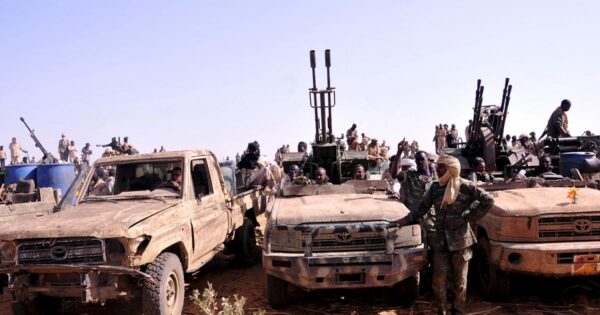
Last year, the RSF, which controls most of north and western Sudan, launched a parallel regime to the official government in Khartoum which is supported by the SAF.
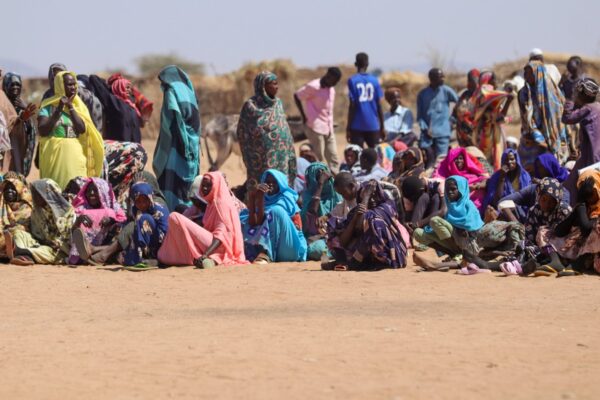
Though both sides have committed atrocities in a war that has killed more than 400,000 people, in February, a United Nations expert group concluded that the RSF had committed genocidal acts during its eighteen month siege of El Fasher, the capital of North Darfur.
But despite the claims of genocide and the death toll, the war has been overshadowed by the wars in Ukraine and the Middle East.
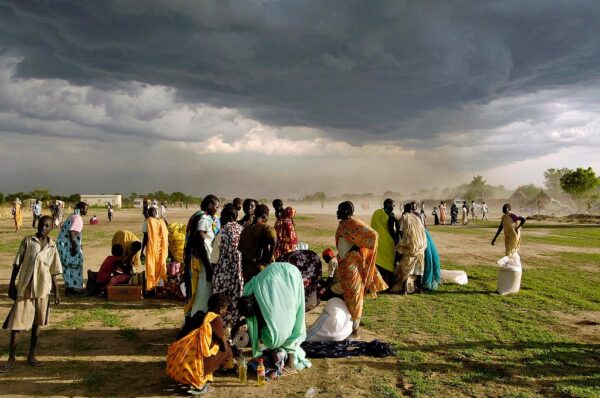
Little progress was made at last year’s Sudan summit in London. Donor fatigue meant that UN agencies received only 40 percent of the funding needed for humanitarian aid, leaving a gap of roughly €2.2bn. Aid groups say more than 33 million people now need assistance
“Yet another year in Sudan has been marred by widespread war crimes, massive displacement of civilians, and an ongoing flow of weapons into the hands of abusive warring factions,” said Mohamed Osman, Sudan researcher at Human Rights Watch.
“The conference in Berlin should not be another box-ticking exercise, but instead finally galvanize international momentum to deter further atrocities, advance justice, and protect civilians, including local aid workers,” he added.
The war’s stalemate has been partly caused by regional players on the Horn of Africa, including Egypt, Turkey, the United Arab Emirates and Saudi Arabia backing different sides.
Sanctions
The EU says that it has maintained a neutral stance, and imposed sanctions on both the SAF, RSF and their allies.
In late January, EU foreign ministers agreed to sanction another five senior players in the RSF, including Algoney Hamdan Dagalo Musa, younger brother of RSF leader Hemedti.
Two allies of the SAF were also added to the EU’s sanctions list including Al-Misbah Abu Zaid Talha, the Commander of the Islamist militia Baraa bin Malik Battalion.
The SAF, for its part, has urged the EU to designate the RSF as a terrorist organisation – a move that has been resisted by Brussels.
EU officials say that they have raised concerns about the UAE’s support for the RSF with Dubai.
Though the EU Commission is still in talks on a trade deal with the UAE, and had originally hoped to finalise an agreement by the end of 2025, progress has been slowed because of political opposition to the UAE’s role in Sudan.