
The former head of the Serbian State Security Service, Jovica Stanisic, sentenced to 15 years in prison for wartime violations in Bosnia and Croatia, has apologised for his crimes and requested early release.
 Lamija Grebo



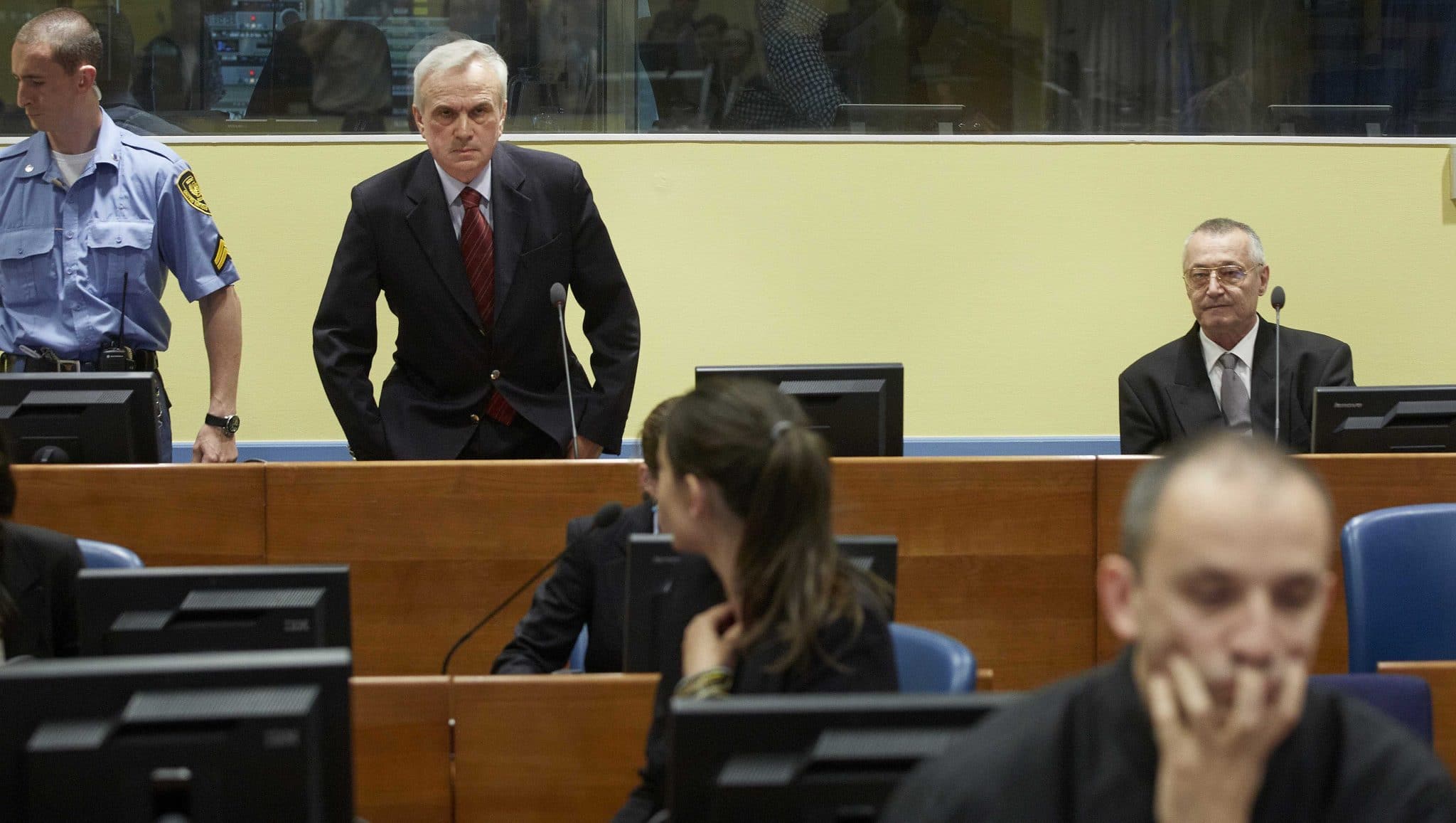
The UN-backed International Residual Mechanism for Criminal Tribunals announced on Wednesday that Jovica Stanisic has requested early release after serving a total of ten years in detention since he first surrendered to the Hague war crimes court – two-thirds of his 15-year sentence.
“Stanisic is not seeking sympathy, but only a certain understanding and a little mercy. He is 76 years old and in bad health. An early release would allow him a small but invaluable final period of life at home with his wife and son and in his community. In contrast, the denial of this request would most likely condemn him to a lonely death in a remote prison,” the request states.
Stanisic was convicted, alongside Serbian State Security official Franko Simatovic, of bearing responsibility for crimes committed by Serbian fighting units during the 1990s wars in Bosnia and Croatia as part of a ‘joint criminal enterprise’ to force out non-Serbs.
The verdict, the last to be handed down by the UN court in Yugoslav war crimes cases, said they were guilty of bearing responsibility for murders, deportation, inhumane acts and persecution.
Both men were powerful and widely-feared figures in the security apparatus of Slobodan Milosevic’s regime in the 1990s. Their trial began in 2003 and lasted for two decades – the longest-running case from the Yugoslav wars.
Stanisic lawyers stated in the request that the crimes of which he was convicted as part of a joint criminal enterprise were undoubtedly serious, but not as grave as others convicted by the Hague Tribunal who have been granted early release after serving two-thirds of their sentences, as is permitted if agreed by judges.
Stanisic’s request includes a statement in English from the former Serbian security chief, in which he says that although crimes were committed on all sides in the 1990s conflict, those that affected him most deeply were crimes committed by Serbs, particularly crimes that were justified as “retaliation for crimes committed against my people in the past”.
“I deeply regret these and apologise for my crimes, especially following the verdict delivered by the MICT [Mechanism for International Criminal Tribunals] after 20 years of legal proceedings, regarding my participation in a joint criminal enterprise,” Stanisic wrote.
He said that he accepts the verdict handed down in his trial.
“I believe that there are still a considerable number – and not only among my people – who respect my contribution to a peaceful and civilised resolution of the conflict in the former Yugoslavia,” he added.
His lawyers stated in the request that if released, Stanisic will respect any condition that would prohibit him from making any public statements regarding his crimes or any aspect of the conflict, and would act according to court’s instructions with the aim of promoting peace and reconciliation.
“He has always fully accepted that Serbs committed crimes against innocent victims, and he has no intention of denying this truth now or in the future. Indeed, he accepts that the crimes by Serbs were committed, and they were a tragedy for Croatian and Bosnian victims, as well as for Serbia,” his lawyers said.