
The EU talks partnership. It negotiates extraction. That contradiction is no longer sustainable.
 Francois Sennesael



Brussels has a favourite word when it talks about Africa: partnership. It appears in every communiqué, every summit declaration, every Global Gateway press release. It is invoked so often that it has begun to lose meaning.
Because beneath the rhetoric, the reality is straightforward: Europe wants Africa’s minerals, and it is not yet offering a deal that matches what African governments are asking in return.
As the EU scrambles to secure the raw materials needed for its green and digital transitions – cobalt from the DRC, copper from Zambia, manganese from Gabon, rare earths across the continent – it is behaving less like a partner than like a procurement office with a foreign policy budget. African governments have started saying so. Publicly.
The delivery problem
When the EU launched Global Gateway in 2021, it framed it as Europe’s answer to China’s infrastructure push: up to €30bn by 2027, mobilised across public and private finance, to deliver projects rooted in transparency and mutual benefit.
Four years on, the gap between promise and delivery is increasingly difficult to ignore.
Funding has been slow to materialise, conditionalities remain complex, and much of the model still depends on private capital that follows commercial logic rather than development or industrial priorities.
For many African finance ministers, Global Gateway looks less like a new paradigm than like export finance repackaged in the language of solidarity.
The contrast with China is not subtle.
Beijing has built ports, railways and processing facilities, not always perfectly, not always on favourable terms, but visibly and at scale.
Europe’s offer, by comparison, rests on standards and values. But standards without infrastructure are a hard sell.
The minerals contradiction
This matters because Europe’s own policy framework depends on African supply.
Under the Critical Raw Materials Act, the EU has set binding targets for extraction, processing and recycling by 2030. Meeting them will require stable access to external supply chains…many of them in Africa.
At the same time, African governments are no longer willing to play the role Europe seems to assume. Across the continent, resource-rich countries are pursuing explicit industrial strategies aimed at capturing more value domestically.
Zambia’s president, Hakainde Hichilema, has made the country’s position plain: it will not remain a raw copper exporter.
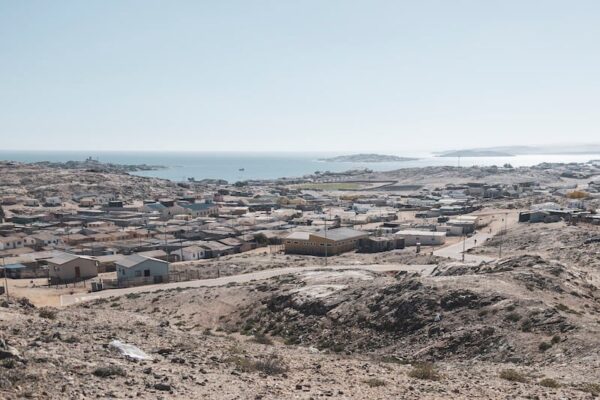
Namibia is betting on green hydrogen, not upstream supply.
The Democratic Republic of Congo has repeatedly signalled that exporting unprocessed cobalt is no longer the endgame.
These are not bargaining positions. They are long-term strategies shaped by decades of watching resource wealth leave with limited domestic return. They also give African governments leverage — and alternatives.
Europe can engage with that shift, or compete with partners that already are.
What partnership would actually mean
The EU is not without assets. It offers a large and predictable market, regulatory stability, technological expertise, and the prospect of long-term offtake agreements that can achor investment. These are meaningful advantages.
But turning them into a genuine partnership requires choices Brussels has so far avoided.
First, it means backing industrialisation, not just extraction – including co-investment and co-ownership in processing capacity on African soil.
Second, it means fixing market access. Trade arrangements, including under existing agreements, must allow African value-added products to enter Europe without prohibitive barriers.
Third, it means sharing control. Initiatives like Global Gateway cannot remain European-designed frameworks to which African partners are invited; they need to evolve toward joint decision-making.
Finally, it means confronting a basic inconsistency.
The EU cannot demand urgent supply while maintaining procedures and conditionalities that take years to navigate. If speed matters, the offer has to change. If the conditions are non-negotiable, then the timelines are.
Europe’s window is closing
African governments are not standing still.
The African Continental Free Trade Area is laying the groundwork for regional industrial policy. Gulf states are actively competing for investment partnerships. And in a more fragmented geopolitical landscape, options are multiplying rather than shrinking.
Europe still has a window to position itself as a preferred partner. But the urgency lies in Brussels, not in Lusaka, Windhoek or Kinshasa.
Africa has the resources. It has the strategy. Increasingly, it has the alternatives.
What it is waiting to see is whether Europe can match its rhetoric with an offer that reflects that reality.
So far, it has not. And if that does not change, Europe will not lose Africa’s goodwill – it will lose access.