

The humanitarian catastrophe is a consequence of a prolonged European abdication: the refusal to hold a belligerent Israeli government and an erratic American administration to account when doing so mattered. That failure is not just a shameful moral lapse. It is strategic self-harm that has left the European continent exposed,
 Sven Kühn von Burgsdorff




Europeans find themselves paying the price for a catastrophic failure of statesmanship.
The violent reverberations of the unlawful and illegitimate attack on Iran by Israel and the US, causing economic shockwaves, geopolitical instability, and an escalating humanitarian catastrophe, are not an unbidden natural disaster.
They are also a consequence of a prolonged European abdication: the refusal to hold a belligerent Israeli government and an erratic American administration to account when doing so mattered. That failure is not just a shameful moral lapse. It is strategic self-harm that has left the European continent exposed, divided and diminished.
A firmer, earlier European response might have reshaped incentives in Washington and Tel Aviv alike.
If EU capitals had coordinated a credible set of severe penalties tied to Israel’s violations of international law, those actions could have given constituencies in the US, other OECD partners and in the Middle East, notably in the Gulf, political cover to act differently.
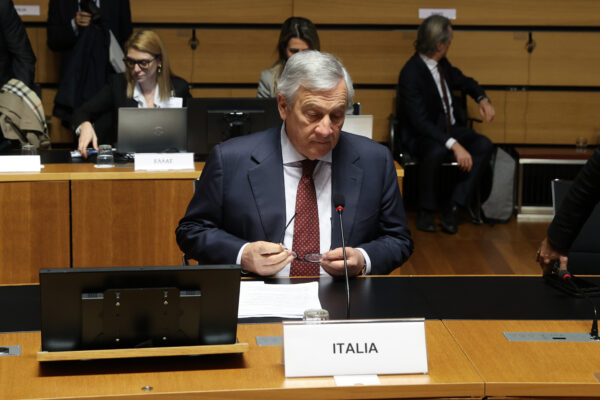
Instead, by remaining fragmented and reactive, the EU and its member states forfeited their leverage as the world’s largest trade bloc enjoying trusted partnerships across the globe. Those assets should have been employed to create critical engagement and demonstrate deterrence.
The costs of disregard for Europe when Israel and the US decided to attack Iran, are painful and immediate.
The economic fallout caused by disrupted oil and gas flows, soaring energy prices and supply-chain shocks, is hitting European households and economies hard.
The political fallout is probably worse: a deepening sense that Europe cannot protect its own interests and values, and a dramatic weakening of the rules-based order it once championed.
Moreover, Iran’s counterattacks on Gulf countries and the closure of the Strait of Hormuz led to a windfall gain of billions of dollars for Moscow.
Indeed, the sad irony of this Middle East mayhem, ultimately triggered by Netanyahu cheerleading Trump into a reckless military adventure against Iran, is that the one benefiting most happens to be Europe’s foremost adversary, Vladimir Putin.
Adding insult to injury, governments in the EU are blamed now at home for the economic downturn caused by the war with Iran, with the nationalist far-right opposition credibly challenging the ruling parties, not least in France and Germany.
Finally, the assault on Iran and Israel’s continuing attacks on Lebanon, Gaza and the West Bank have also made the prospect of a durable settlement, notably between Israelis and Palestinians but also among regional rivals, even more remote.
Extremist Israeli government appeased
Start with the most obvious, and most consequential, dereliction of Europe’s leaders: the tolerance, and sometimes even complicity, of European capitals for Israel’s drift towards an Israeli government where the far-right became the dominant player.
This has been in the making for some time, but notably prime minister Netanyahu has openly pursued policies that consolidate power domestically by courting extremist parties, further enabling violent settler expansion in the West Bank and the blatant neglect of Palestinian rights.
Those practices are integral to a political project that, under the false pretense of national security, mixes ethno-nationalism, brutal settlement expansion and lawless impunity for those committing crimes against the Palestinians.
Israel’s war on Gaza, which is on trial for genocide before the ICJ, is the most shocking display of an unhinged, lethal Israeli assault on Palestinians.
Yet, with very few exceptions (notably Slovenia, Spain, and Ireland), European leaders, who pride themselves on being guardians of international law and human rights, largely treated those developments as regrettable collateral to maintain “strategic” ties.
That calculation was – and still is – wrong, cowardly and short-sighted.
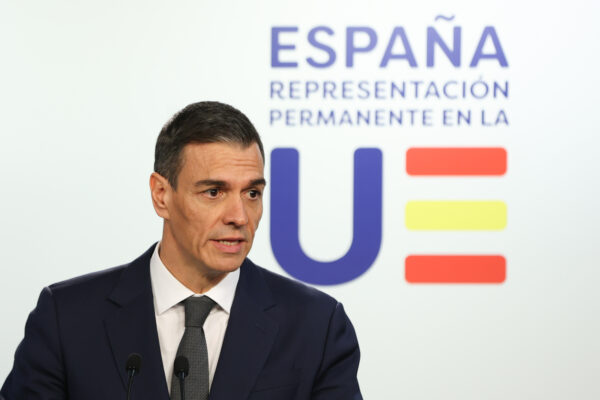
When a state’s ruling coalition is increasingly composed of hardline annexationists and supremacists, in other words, politicians who openly embrace methods and goals that violate international human rights and humanitarian norms, the international community cannot treat business as usual as if nothing is at stake.
The EU and its member states have clear levers at their disposal which are in full compliance with international and European law and politically feasible: suspend the Association Agreement with Israel, halt arms transfers, impose severe sanctions on extremist politicians, settlers and security actors credibly implicated in war crimes, and ban trade with and investments in Israel’s illegal settlements.
These measures would have been calibrated attempts to restore deterrence, exact significant political and economic costs on Israeli perpetrators and reassert normative boundaries.
Instead, Europe chose appeasement by neglect.
This failure matters for two interconnected reasons.
First, it removed any external constraint on a government that pursued escalating violence against a people under its occupation for domestic political ends.
Netanyahu’s pattern, relying on military confrontation and subjugation of Palestinians to rally support at home, scapegoat opponents, and distract from domestic crises, is well-known.
By failing to act decisively against his policies and practices, European powers effectively ceded a political veto on restraint.
Second, the EU’s inaction hollowed out its own soft power.
The Union’s credibility as a defender of international law depends on consistency. When Brussels proclaims the sanctity of human rights and international norms but avoids concrete consequences for repeated egregious breaches by an ally who, time and again, betrays the foundational values of this partnership, it signals that its principles are negotiable and subordinate to short-term political convenience.
A similar pattern played out with Washington.
Narcissistic and opportunistic president in Washington
From the first moments of Trump’s second presidency, European leaders seemed intoxicated with the idea of cultivating favour with a persona they assessed as narcissistic, uneducated and essentially opportunistic.
Instead of engaging in a frank and firm defence of European interests guided by strategic objectives, most European leaders excelled in an embarrassing display of transactional flattery, apparently out of fear that a mercurial US president might withdraw from Natop and let the Europeans deal with Russia on their own.
As Europe did not exact any costs on the US for pursuing its policy of imperial overreach, a self-centred and unreliable White House concluded that Europe was useful only when it bent, and dispensable when it did not.
The EU’s quick falling in line with Trump’s unfair trade deal represents an obvious example of this pattern of choosing tactical subservience over principled and strategic firmness.
European leaders could have taken a very different road, based on a sober assessment of how Trump’s ill-guided foreign policy decisions would likely impact what matters most to the US president: resonance with his MAGA base and the upcoming mid-term elections.
Key constituencies, including in the Republican party, would not take kindly to the painful domestic fallout of presidential decisions leading to a crippling trade war with Europe and China, and with the Middle East on fire because of a warmongering Israeli prime minister unscrupulously playing the White House for his domestic political agenda.
Yet, too busy with currying favours, both as a group and individually, Europe’s leaders never tried what could have made Trump possibly pause: an unambiguous show of unity and force, by drawing red lines and demonstrating willingness to retort when challenged, thereby letting a crucial window for shaping US policy getting close.
Russia and China, on the other hand, have unapologetically done so and continue doing it, with Putin even assuring Teheran only a few days ago of its strategic partnership with the Kremlin.
It would be presumptuous to hold that Europe had all the cards to prevent Netanyahu and Trump from their attack against Teheran.
However, by choosing not to act at all against Israel’s constant breaches of international law and face off Trump’s threats and extortions from the very beginning, European leaders confirmed Netanyahu’s and Trump’s long-held view: Brussels is merely a paper tiger.
What Europe cannot afford now is more evasive ambiguity.
The absence of meaningful action has already been paid for in so many lives lost, economic hardship, and global instability.
If European leaders want to reclaim influence and moral ground, they must accept that standing up to allies, when they violate core principles, is the price of protecting peace, prosperity and the rules that once distinguished Europe on the world stage.
Failing that, European leaders will continue to be mere bystanders to great power politics and watch brutalised regions outside Europe spin beyond their control while they lament the consequences of choices they made themselves.