
Powerful property and farming firm Grosvenor Group says knock-on effect of Iran war could arrive next yearFertiliser shortages caused by the Iran war have driven up costs for UK farmers by up to 70% and will have a “dramatic” impact on food prices globally next year, according to one of
 Julia Kollewe



Fertiliser shortages caused by the Iran war have driven up costs for UK farmers by up to 70% and will have a “dramatic” impact on food prices globally next year, according to one of Britain’s most powerful property and farming companies.
Mark Preston, executive trustee of the 349-year-old Grosvenor Group, controlled by the Duke of Westminster, said fertiliser “was already quite expensive” before the 50% to 70% surge in prices since the start of the Iran war in late February.
The effective closure of the strait of Hormuz – which Iran’s Islamic Revolutionary Guard Corps said on Wednesday could soon reopen – has throttled global supplies of fertiliser, crucial to growing food crops.
Preston said that, although UK crops were unlikely to be affected this year as most fertiliser had already been used, the knock-on effect could arrive next year. “Farmers are not buying that fertiliser, they’re sitting on their hands and hoping things will improve, which they probably won’t,” he said.
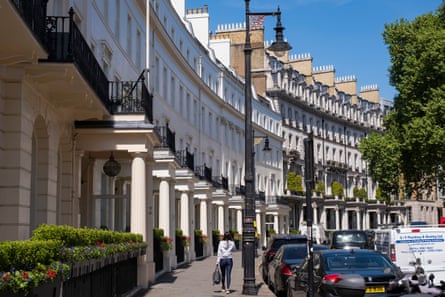
The multibillion-pound company owns one of the UK’s leading farms – a dairy and arable holding in Cheshire, England – as well as rural estates in Lancashire and Scotland plus swathes of Mayfair and Belgravia in central London.
In Cheshire, the company produces millions of litres of milk for customers including Tesco and Müller from the sprawling Eaton estate, where the Duke of Westminster has traditionally resided, since the 1400s.
“It’s going to be a very, very dramatic problem for the world, not just the UK in terms of food, just because so much fertiliser comes through those straits,” Preston said. “But farmers can probably do more spring cropping next year rather than winter cropping. So they’ve got a little bit more flexibility.”
The magnitude of the increase in food prices will depend on when the strait of Hormuz, an important shipping passage where about 1,600 vessels are stranded, opens again.
Preston said: “The concern is at least as much, if not more, around food and fertiliser than it is around oil, because there are alternative sources of oil. There aren’t very many alternative sources of nitrogen, for the production of fertiliser.”
The strait’s closure has cut off flows of liquefied natural gas, an important input for nitrogen-based fertilisers such as urea. The impact on Grosvenor will be limited, Preston added, because the organisation does not use much fertiliser and relies on cow dung, where possible.
His remarks came a few days after the head of the world’s largest fertiliser company Yara International warned that the war in the Middle East could cause food shortages and price rises in some of Africa’s poorest and most vulnerable communities.
Research by Opinium this week found that 80% of Britons are worried about the rising price of groceries, which stems from retailers passing on cost increases to consumers.
Grosvenor posted an 18% decrease in underlying profits to £70.5m last year, affected by its North American operations. Its UK property business remained a bright spot, however, with 97% occupancy; its biggest project ever, the revamp of South Molton Street in central London including offices, shops, a hotel and 33 homes near Oxford Street, which is due to be completed next year.
Owned by the duke, Hugh Grosvenor, 35 – one of Britain’s richest men with an estimated wealth of £9.56bn and godfather to Prince George – the company has an ambition to build 700 social homes in north-west England. So far, 69 have been constructed near Chester and Ellesmere Port, with a further 120 to be built this year.
The group paid out dividends of £53.7m to the duke’s family and its trusts, up from £52.4m in 2024. Grosvenor paid total taxes of £248m, against £107.4m in 2024, including £200m in the UK. This is largely because of UK property sales, which increased personal taxes on income and gains by £61m and corporate income tax payments by £71.9m.
Grosvenor has been investing more in flexible office space, and last week started work on its first directly managed flexible workspace outside London, in Manchester’s Northern Quarter.
James Raynor, chief executive of the company’s property arm, said about 23% of its offices in London were flexible workspace, and “well over 90% occupied, so it’s performing very well”.