
Critical week for global economy as banks expected to issue warnings over conflict driving up pricesBusiness live – latest updatesThe world’s most powerful central banks are poised to hold borrowing costs unchanged this week amid growing concerns over the unfolding inflation shock from the Iran war.In a critical week for
 Richard Partington Senior economics correspondent



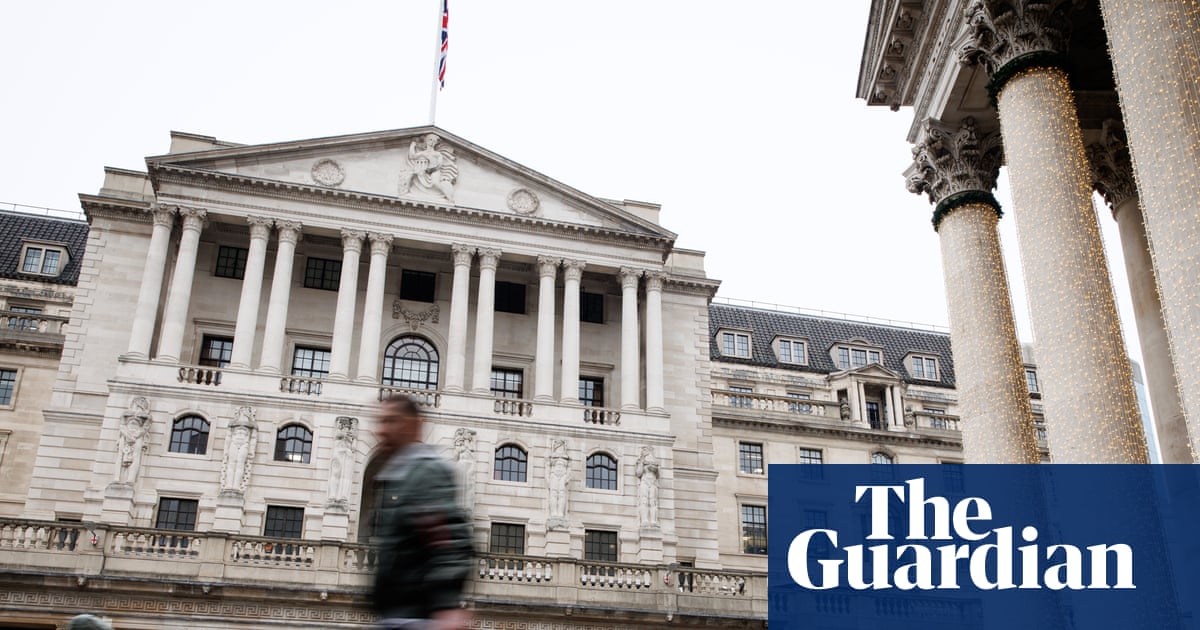
The world’s most powerful central banks are poised to hold borrowing costs unchanged this week amid growing concerns over the unfolding inflation shock from the Iran war.
In a critical week for the global economy, each of the central banks in the G7 are expected to issue warnings over the risks from the Middle East war driving up prices for households and businesses.
Financial markets are braced for signals from the central banks of the US, Canada, Japan, Britain and the eurozone on the prospects for interest rates amid concerns that a prolonged conflict could force them to keep borrowing costs higher for longer.
“Another week of no fighting, no deal and no energy flows, another week that pressure on inflation and supply chains continues to build,” said Wei Yao, an analyst at the French bank Société Générale.
“We will probably see all the major central banks sticking to the strategy of ‘keep clam but stay vigilant’. Communications will be the focus.”
In what is expected to be Federal Reserve chair Jerome Powell’s final meeting in charge, the US central bank is widely expected to keep borrowing costs unchanged on Wednesday as the Middle East war stokes inflationary pressures in the world’s largest economy.
Financial markets are also pricing in an almost 100% chance of the Bank of England, European Central Bank, Bank of Japan and Bank of Canada holding rates.
City traders give an outside probability of the UK central bank raising borrowing costs by a quarter-point. Last month the Bank kept rates on hold at 3.75%.
Susannah Streeter, chief investment strategist at Wealth Club, said officials at Threadneedle Street were set to be “super wary”.
She said: “While price pressures are clearly mounting, the economy is set to struggle and that could limit the chances of inflation becoming embedded. So, while they are likely to indicate that a fresh hike could be ahead, there are unlikely to be any kneejerk moves, until there’s more clarity about the length of the Iran conflict.”
It comes as Rachel Reeves, the UK chancellor, prepares to give speeches in May and June to outline the government’s approach to emergency energy support as the Iran war has driven up costs for households and businesses.
With Keir Starmer’s government under pressure after the revelations over the appointment of Peter Mandelson as Britain’s ambassador to the US, the Financial Times reported that the chancellor would restate Labour’s commitment to economic growth and sound government finances.
Labour faces a tough round of local elections next week, amid speculation that Starmer’s critics within the party could move to replace him.