
PRISTINA – Fifteen days remain until the constitutional deadline for electing a new president, but there are still no indications on the political scene that a consensus can be reached on the issue, KoSSev reports. The Constitutional Court has set April 28 as the deadline for electing the president. Otherwise,
 EWB
EWB



PRISTINA – Fifteen days remain until the constitutional deadline for electing a new president, but there are still no indications on the political scene that a consensus can be reached on the issue, KoSSev reports. The Constitutional Court has set April 28 as the deadline for electing the president. Otherwise, Kosovo will head to elections, which must be held within 45 days.
The opposition has accused Prime Minister Albin Kurti of lacking interest in finding a solution and of pushing the country toward new elections. Meanwhile, the ruling parties have consistently stated that a solution must be reached and that a new electoral process should be avoided.
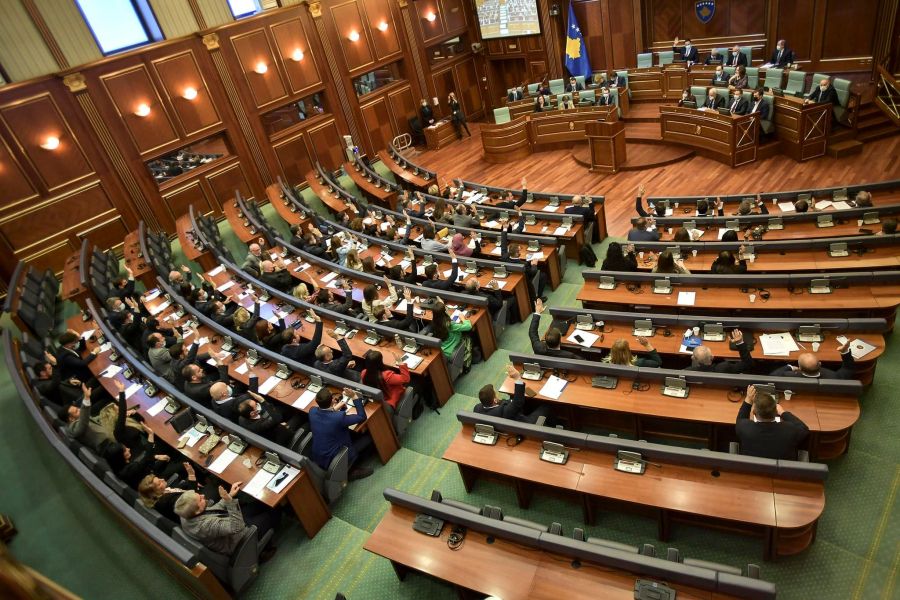
Currently, Vetëvendosje hold 66 seats in the Assembly, Democratic Party of Kosovo (PDK) 22, the Democratic League of Kosovo (LDK) 15, and the Alliance for the Future of Kosovo (AAK) six. A total of 80 votes are required to elect the president in the first of two rounds.
Two Vetëvendosje candidates remain in the race, but during the session held on 5 March, they failed even to secure a quorum to begin the voting process.
Last Monday, a meeting between Lumir Abdixhiku and Albin Kurti took place, but no agreement was reached. The PDK requested that any potential Kurti-Hamza meeting be formally proposed in writing, while Abdixhiku announced that he had already met with Bedri Hamza. PM Kurti has not yet invited AAK leader Ramush Haradinaj to a meeting.
Analyst Afrim Kasolli told Koha that political parties have entered a cycle of excuses aimed at creating the perception that they do not bear responsibility for the failure to elect a president.
“The Democratic League suffered significant losses in the December parliamentary election. As a result, this traumatic experience appears to be shaping Lumir Abdixhiku’s political actions, as he seeks to present himself to the public as the leader least responsible for other actors’ inability to provide the country with a new president”, Kasolli said.
Analyst Arbnor Sadiku said that Self-Determination bears responsibility for the failure. However, he noted that a new electoral cycle could benefit the LDK.
He emphasized that a potential alliance between former President Vjosa Osmani and Abdixhiku within a competing political entity would pose a challenge to Kurti’s Self-Determination.
“We would have one bloc led by Mr. Abdixhiku and Vjosa Osmani, and another bloc led by Mr. Kurti and other parties such as the Democratic Party and the Alliance, resulting in a fairly strong electoral race,” he said.