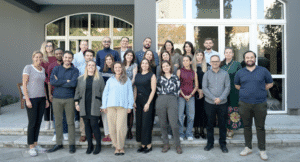

Algorithmiq, a Helsinki-based quantum software company, has become the sole winner of a €1.7 million ($2 million) prize from Wellcome Leap, a US nonprofit founded by the Wellcome Trust to accelerate breakthroughs in human health. The company secured this prize for being the first and only contestant to demonstrate quantum
 Rahul Raj



Algorithmiq, a Helsinki-based quantum software company, has become the sole winner of a €1.7 million ($2 million) prize from Wellcome Leap, a US nonprofit founded by the Wellcome Trust to accelerate breakthroughs in human health.
The company secured this prize for being the first and only contestant to demonstrate quantum computing’s potential to simulate complex therapeutics, thereby opening a credible path to near-term quantum advantage in health.
The award marks the conclusion of Wellcome Leap’s Quantum for Bio (Q4Bio) challenge, a 2.5-year, €42.3 million ($50 million) programme that challenged research teams globally to demonstrate biology and healthcare applications on emerging quantum hardware.
According to the Finnish company, it developed the winning quantum computing framework based on three simultaneous requirements: executability on current hardware, relevance to biologically meaningful systems, and validation against state-of-the-art classical methods under realistic resource assumptions.
Alongside Algorithmiq, the finalists included teams led by Infleqtion, the University of Nottingham, Harvard University, Stanford University, and the University of Oxford.
Dr Sabrina Maniscalco, CEO and co-founder of Algorithmiq, said, “Algorithmiq is the first, and the only team in Q4Bio, to deliver a scalable end-to-end computational framework that combines quantum computing and AI for real therapeutic problems, demonstrated on up to 100 qubits. It shows that quantum computing can already tackle scientifically meaningful drug-development questions under real hardware constraints.”
Founded in 2020 by Dr Maniscalco, Guillermo García-Pérez (CSO), Matteo Rossi ( CTO), and Boris Sokolov (lead researcher), Algorithmiq develops quantum software that makes quantum computers useful, enabling breakthroughs in chemistry, materials science, and life sciences through physically meaningful, energy-efficient quantum computation.
Algorithmiq claims that its end-to-end quantum–classical workflow for chemistry simulations was deployed using up to 100 qubits on IBM hardware to simulate the activation pathway of a photosensitiser drug, currently in Phase II clinical trials. The results demonstrate a scalable path toward quantum advantage in drug discovery.
The company states that numerous use cases have been proposed for quantum computing, but it remains unclear whether this emerging technology offers advantages over classical state-of-the-art methods for these applications.
Demonstrating the latter has been the key challenge in the field over the past decades. Algorithmiq claims that its results show that quantum computing can deliver meaningful value for real-world drug development and discovery, rather than abstract benchmarks.
The winning multidisciplinary team was led by quantum software company Algorithmiq, with quantum computing support from IBM, and biological expertise from the Cleveland Clinic. The project was led by Dr Sabrina Maniscalco with co-principal investigators Dr Ivano Tavernelli of IBM and Dr Vijay Krishna of the Cleveland Clinic. The effort was supported by IBM and by the Cleveland Clinic’s Quantum Innovation Catalyser programme.
The winning team’s work centred on photodynamic therapy (PDT), an emerging cancer treatment that employs light-activated drugs to target and destroy tumour cells. This approach offers notable patient advantages, including fewer harmful side effects compared to conventional therapies. The discovery of new photosensitisers for PDT has been hindered by the lack of reliable data.
The team demonstrated that such data can be efficiently obtained and integrated into an active learning AI loop to generate novel drug candidates. The impact of this work extends beyond photodynamic therapy and is applicable to broader use cases across healthcare and the life sciences.
Dr Vijay Krishna, lead Cleveland Clinic researcher, added, “As home to the first quantum computer dedicated to healthcare research, Cleveland Clinic helped define and anchor the biomedical challenge in clinically relevant use cases. This award reflects the value of combining that expertise with excellence in algorithm development and hardware. By improving how we model light-activated drug behaviour, this work not only helps advance photodynamic therapy but is also transferable to other light-dependent therapies and unlocks wider use cases across healthcare and life sciences.”
In addition to this award, Algorithmiq highlights several other achievements, including partnerships with Microsoft and IBM, and the introduction of the Quantum Advantage Tracker (in collaboration with IBM and its partners), an open, community-driven benchmark designed to verify quantum advantage claims.
Algorithmiq has operations in Italy, Finland, the UK, Ireland and the US.