
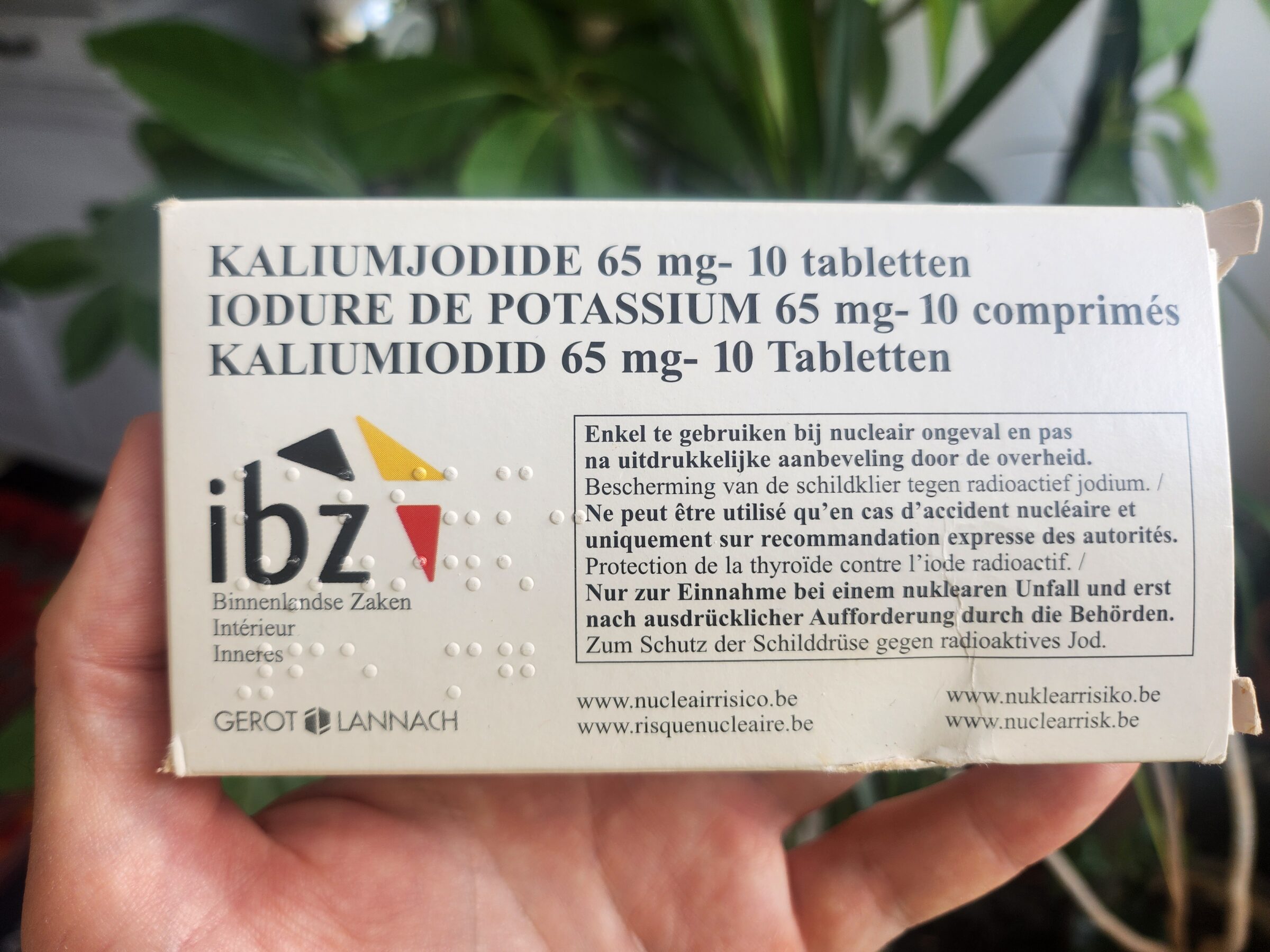
One nuclear expert told me he didn’t want to write an op-ed on the possible dangers of a meltdown of the Zaporizhzhia nuclear plant in Ukraine. He then added he’d stocked up on iodine tablets.
 Matt Tempest



For a couple of years, I’ve been trying (and failing) to get an opinion piece from a nuclear expert on what Europe could expect if the nuclear plant regularly being shelled on the frontline of the war between Ukraine and Russia goes “tits up” (to use the technical expression).
It’s spelled Zaporizhzhia. A nightmare for sub-editors, let alone a nightmare for Europe.
Like Chernobyl in 1986 (I was 13-years old at the time, and learning Russian at school), would it all depend on which way the wind was blowing? And when it rained?
It’s only anecdotal, of course, but the father-in-law of a schoolfriend of mine was walking back from a pub in north Wales a few nights after Chernobyl, missed the last bus, walked home, got drenched in the rain. Couple of years later he died of skin cancer on his back. Was he a victim of Chernobyl? Who knows? One thing’s for certain: he will never be included in any Chernobyl death toll.
344 farms in north Wales were under restrictions after the 1986 Chernobyl disaster — right up until 2011.
Wales is 2,500km away from Ukraine. 7,800 square kilometres of Ukraine and Belarus remain uninhabitable to this day.
I don’t have a panoply of nuclear experts at my disposal, and was met pretty much with a wall of disinterest, or stonewalling. “We don’t want to be alarmist,” said one (fair enough), whilst also informing me he had personally stocked up on Iodine tablets.
That was about a year ago, and the precarious situation in Ukraine hasn’t improved. In fact, it’s been added to.
In Iran — putting aside the separate worries about nuclear weapons — there is the Bushehr nuclear plant (with two more reactors planned there).
On 17 March 2026, the IAEA confirmed that a projectile struck the premises of the Bushehr plant.
Meanwhile, I get a regular flow of op-eds about how the fossil-fuel freeze out in the Strait of Hormuz, plus the climate crisis, presages a “new, golden era, a renaissance” of civil nuclear power, as it is both safe and zero-carbon (sort of).
This is a pitch I received recently (the author shall remain nameless, a journalist always protects their source).
Iran war silver linings–a greater push towards nuclear energy?
This article would argue that the war in Iran has produced a silver lining – greater interest in nuclear energy. From Italy to Belgium and even Germany, debates on nuclear power have been shifting at the national level. Ursula von der Leyen, who previously backed Germany’s nuclear phase-out while in Angela Merkel’s cabinet, recently called Europe’s retreat from nuclear power a “strategic mistake”. This is positive news because renewable energy alone is not sufficient to reliably meet all electricity demand–and nuclear power can help close this gap by providing a stable, low-carbon source of energy. Without a reliable source like nuclear, countries will continue to be forced to rely on fossil fuel imports to meet demand when renewables fall short.
I didn’t say this to this particular op-ed writer, but doesn’t the US bombing of Iran’s nuclear plant prove precisely the opposite of nuclear power being a ‘silver lining’?
It seems to me (a non-expert) that civil nuclear power is “safe”.
Safe, that is, provided we can rule out the following:
Human error (1986, Chernobyl) “Acts of God” (2011, Fukushima earthquake and tsunami) War (2022 Ukraine and 2026 Iran) Actually, can’t wait for “wars” to be banned, personally, that certainly would constitute a ‘silver lining’. 10,000-100,000 years of radioactive waste. (Ask yourself what the world looked like in 8,000 BC, and ask yourself how we would communicate with those people to warn them this stuff was dangerous – then project that forward to the year 12,026AD).
In 1957, the UK came very close to a nuclear disaster. The nuclear reactor at Sellafield (then called Windscale) caught fire, and narrowly avoided exploding. Had it detonated, the north and midlands of England would have been rendered permanently uninhabitable.
The British government of Harold Macmillan covered up the extent the accident, and censorship of the details lasted until 1983.