

The Pokemon and Matchattax cards you had when you were a kid could fetch big bucks now. From multi-million price tags to Premier League brand deals, Matt Kenyon digs into this unlikely new asset class. At a glance, it looked a bit like Comic Con. But in reality, Fort Knox
 Matt Kenyon




Thursday 30 April 2026 8:32 am
The Pokemon and Matchattax cards you had when you were a kid could fetch big bucks now. From multi-million price tags to Premier League brand deals, Matt Kenyon digs into this unlikely new asset class.
At a glance, it looked a bit like Comic Con. But in reality, Fort Knox would have been a better description. The vendors at the London Card Show, barely able to squeeze within the generous expanse of the Excel Centre, bartered furiously over trading cards originally marketed towards children.
But this business is no game. Back in February, a particularly rare Pokemon card of the character Pikachu – that particularly famous, yellow critter – was sold by the YouTuber Logan Paul for £12m. I was convinced that the sale must have been some pique of performance art, like that banana taped to a gallery wall.
Within minutes of walking into the conference I got talking to Patrick, a twenty-something trading card vendor. He said he’s always had a healthy Matchattax collection – as many Gen Z and millennial lads did growing up – but he professionalised his operation as the cards’ value began to climb. Now, he’s formally set up as a vendor. It had been a good weekend for Patrick, who had made £80,000 by midday on the Sunday.
Five inches beneath the smudged display glass at his stand was an eye-catching pair of Lionel Messis. To my eye, they looked pretty much the same. But one was priced at £5,000, and another was listed for a mind-boggling £14,000. With the very slightest wear and tear, imperceptible to essentially anyone other than seasoned collectors, thousands can be knocked off the value of these rare cards.
#mc_embed_signup { background: #fff; clear: left; font: 14px Helvetica, Arial,sans-serif; width: 100%; max-width: 600px; margin: 20px 0; } #mc-embedded-subscribe-form { margin: 20px 0 !important; } .newsletter-form-flex { display: flex; gap: 0; align-items: center; margin-top: -10px; } .newsletter-form-flex input[type=”email”] { flex: 1; padding: 2px 10px; border: 1px solid rgb(18, 22, 23) !important; border-radius: 12px 0 0 12px !important; } .newsletter-form-flex input[type=”submit”] { padding: 4px 10px !important; margin: 0 !important; background-color: rgb(18, 22, 23) !important; color: rgb(255, 255, 255) !important; border: 1px solid rgb(18, 22, 23) !important; border-radius: 0 12px 12px 0 !important; } .newsletter-banner-content { margin-bottom: 15px; } .newsletter-banner-content h2 { margin: 0 0 10px 0; font-size: 18px; font-weight: 600; } .newsletter-banner-content p { margin: 0 0 10px 0; line-height: 1.5; } .newsletter-banner-content ul, .newsletter-banner-content ol { margin: 0 0 10px 20px; } .newsletter-banner-content a { color: #0073aa; text-decoration: none; } .newsletter-banner-content a:hover { text-decoration: underline; } .newsletter-banner-content img { max-width: 100%; height: auto; margin: 10px 0; } #mc_embed_signup #mce-success-response { color: #0356a5; display: none; margin: 0 0 10px; width: 100%; } #mc_embed_signup div#mce-responses { float: left; top: -1.4em; padding: 0; overflow: hidden; width: 100%; margin: 0; clear: both; }
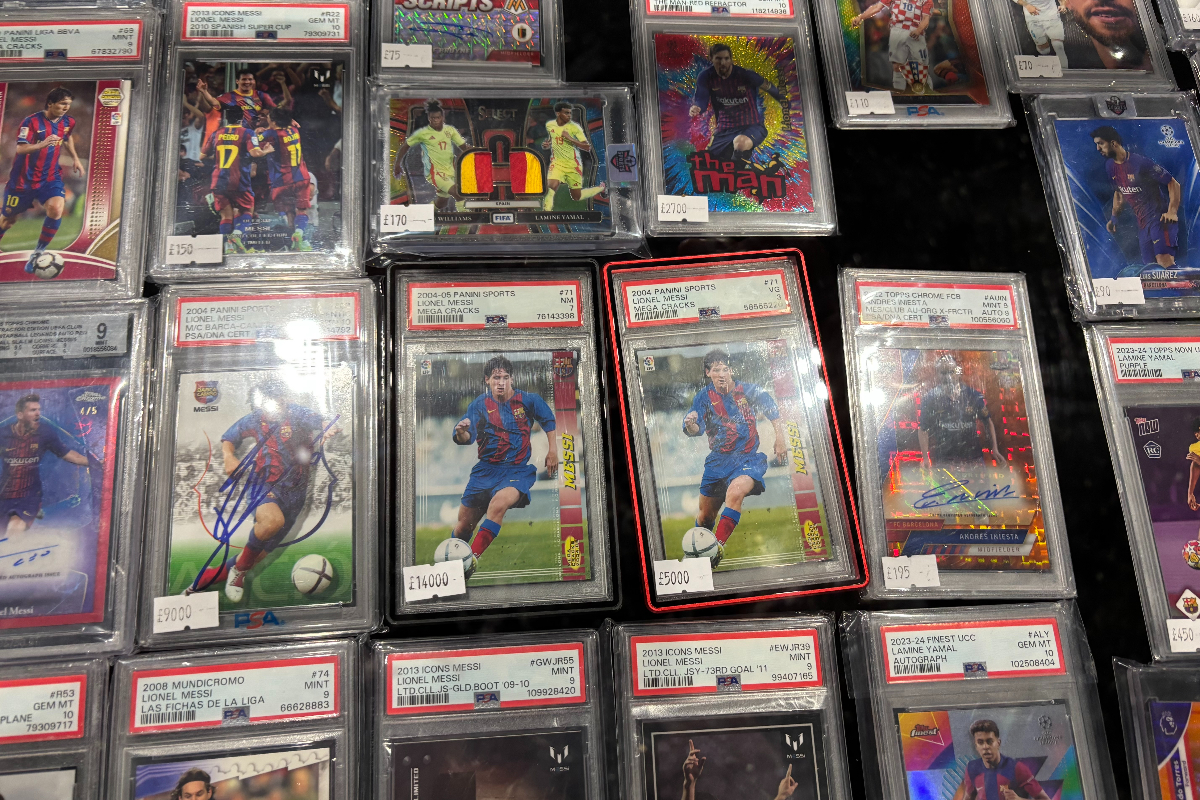 Two Lionel Messi cards, going for £5,000 and £14,000.
 For Patrick, one of 462 exhibitors at the conference over three days, the dilemma is about separating the sentimental attachment to the cards from their (considerable) market value. He puts it more clinically: “Which cards do you want to hang onto? And which do you liquidate to buy more stock to scale?”
His operation stunned me, but it soon paled in comparison to that of Suji and Lila, a young couple monetising Suji’s extensive childhood Pokemon collection. Lila told me that her partner was another recent convert to vending, and this was their first conference. On the Saturday, they sold a – deep breath – Pop 21 Legendary Collection Snorlax for £62,500.
Two friends of theirs were helping out, one of which was in a slightly tense discussion with a potential seller as they weighed buying a card into the collection. A man had approached the stall carrying a sturdy black plastic case with a striking resemblance to one of those safety deposit boxes for taking cash in and out of banks. He was touting his card for £875, to which one of the guys mumbled: “Don’t get upset if we undervalue it.”
Trading card conference is a brand deal paradise
The vendors were making the trading sound more like a hedge fund than a hobby. And this is what jars so much about this conference, the culture clash of a once geeky and amateur hobby set against major corporate partners. It’s a Ferrari World of e-commerce brand deals. Matchattax card-maker Topps had a stand with the real Premier League trophy. I asked where they got the replica from, and they told me that it is, in fact, the real one.
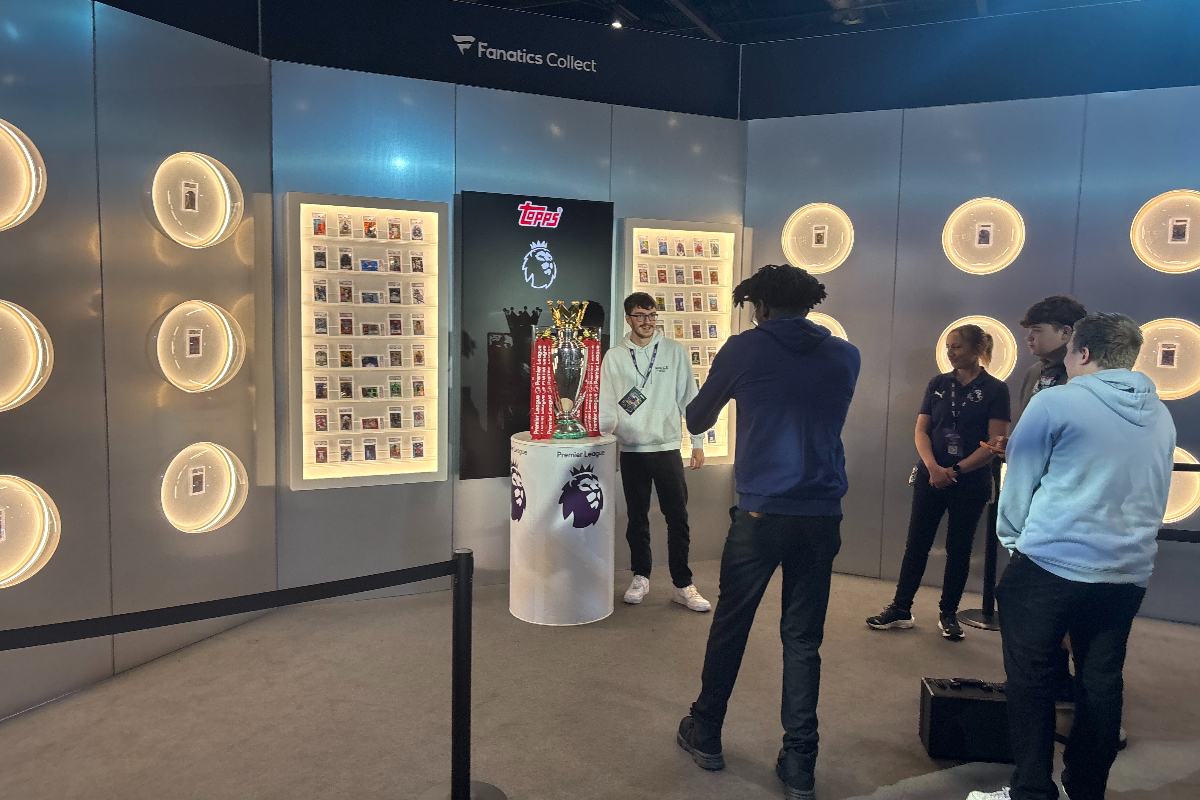 A football fan poses next to the real Premier League trophy.
 There was an atmosphere of overwhelming brand safety, and PRs in the room seemed to have the event on lock. When a breathless fan approached Joe Cole with a question at the keynote stage, he struck a safe note: “You’re a legend. How do you keep yourself motivated?” The Chelsea veteran nodded, sagely: “It’s a great question.”
But the question which struck me was: why? Clarissa Levi, who works in arts and heritage advisory for the law firm Wedlake Bell, suggested that this trading card mania reflects trends from the world of fine art: “The value of a work of art can be affected in unexpected ways by its fragility, but often when an object is scarce it is more valuable.
“This is as true of trading cards as it is of works of art. Cards are intended to be handled so cards in good condition will be rare and more highly prized.” This is perhaps what makes trading cards such a perfect asset for acquiring value: They are designed to be handled, sometimes roughly, and as such very few of them survive fully intact. And those that stay in immaculate condition find themselves fetching hundreds of thousands.
With great value comes great responsibility
There are drawbacks here, particularly when it comes to tax. While much of the charm of the conference comes from the adultification of schoolyard card trading, that very act of trading is itself taxable. According to Levi: “Trading cards attract Capital Gains Tax in the same way any personal possession does.”
“If you sell a card, or give it away, or even swap it for another card, this can give rise to CGT if its value has increased while you have owned it.”
And with some of the stratospheric leaps in valuation undergone by some of these cards, there comes the stress of securing and maintaining these fragile assets.
Levi said that when an art collection starts suddenly gaining value at speed, all sorts of questions can be thrown up: “Do they have a house alarm? Should valuable objects be kept locked away in a safe or kept on display? Should they be insured, and at what value? Is the art stored in appropriate conditions to preserve it?
“Value brings responsibility, often turning a collector into a custodian whether they planned it or not.”
I was reminded of the man with the double-padlocked card case, and of the secondary layer of conference exhibitors dedicated to selling elaborate security systems. Think: magnetic snap cases within binders within heavy duty carrying cases. It struck me that, for these vendors, a childhood hobby had become far more lucrative – and considerably more serious.
Read more London set for £12m boost as host of Tour de France Femmes team time trial
Similarly tagged content: Sections Categories People & Organisations