
“The Hungarian and Slovakian ambassadors briefly took the floor,” said one EU diplomat, as Hungary’s veto on a €90bn EU loan for Ukraine fell.
 Andrew Rettman



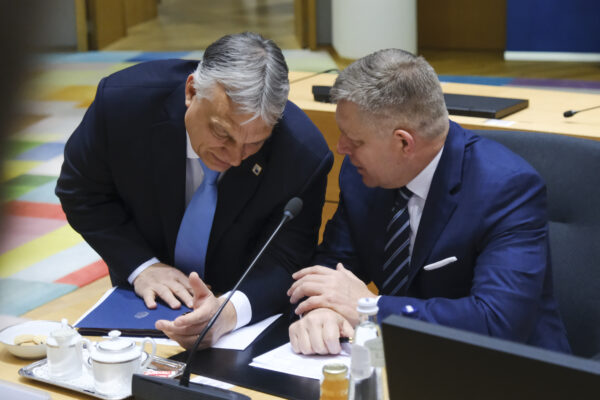
Hungary and Slovakia have lifted their Russia vetoes, marking the end of an era, with the next round of EU sanctions on Moscow to snap into place almost immediately.
The move, which legally comes into effect at 1PM on Thursday (23 April), marks the final collapse of outgoing Hungarian prime minister Viktor Orbán’s pro-Russian EU foreign policy after 16 years at the helm.
And despite it being a milestone, the EU-27 ambassadors took it with little ado in the EU Council in Brussels on Wednesday.
“It was a non-discussion item, but the Hungarian and Slovakian ambassadors briefly took the floor,” said one EU diplomat.
“They said they’d been true to their words [in lifting their vetoes], since they had promised they’d do it when the oil was flowing again, and now it’s flowing again,” he said.
The oil referred to a Russian oil pipeline, Druzhba, which Russia had bombed, but which Ukraine repaired.
“Druzhba began pumping this morning, but apparently oil travels very slowly, which means it hasn’t reached their borders yet, so we launched a written procedure [delay], which expires at 1PM tomorrow, assuming the oil will get there in the meantime,” he added.
“Let’s hope nothing bad happens in between,” he said.
The ambassadors also briefly discussed Ukraine’s “financial strategy” for spending EU funds, a second EU source said.
Orbán had been vetoing a €90bn EU loan for Ukraine arms purchases and budgetary support, while Slovakia’s prime minister, Robert Fico, had been vetoing the 20th round of EU sanctions on Russia, designed to harm its oil industry.
The EU Commission has already prepared the necessary contracts, memos, and financial strategies to start disbursing the loan funds immediately.
The 20th round of Russia sanctions can, in theory, also enter into force at any time from 1.01PM on Thursday, when the EU Council publishes them in its legal gazette.
Wednesday’s breakthrough coincides with an informal EU summit in Cyprus on Thursday and Friday, which Ukrainian president Volodomyr Zelensky is due to attend.
And EU Council chairman António Costa will “want to announce a fait accompli” on the loan and sanctions when they greet, the EU diplomat said.
Orbán is not going to the summit, but he is active on X, where he reacted to an EU court verdict on Tuesday, which overturned a series of his homophobic laws in Hungary.
The Brusselian steamroller is already in motion. Our patriotic government protected Hungarian children from aggressive LGBTQ propaganda. Now the Brusselian empire strikes back. We will not give up the fight for the soul of Europe! https://t.co/y6S4W6psPD
— Orbán Viktor (@PM_ViktorOrban) April 21, 2026
“The Brusselian empire” sought to expose Hungarian children to “aggressive LGBTQ propaganda” and he would “fight … for the soul of Europe,” Orbán said.
He is also giving interviews to rightwing media, saying his Fidesz party ally, the Hungarian president, should not resign.
Hungary’s outgoing foreign minister Péter Szijjártó is said to be cooperating with the handover to his successor, Anita Orbán (no relative to Viktor), but he is keeping quiet and out of sight.
Orbán’s former spin-doctor-in-chief, Zoltán Kovács, has deleted himself from X and gone quiet.
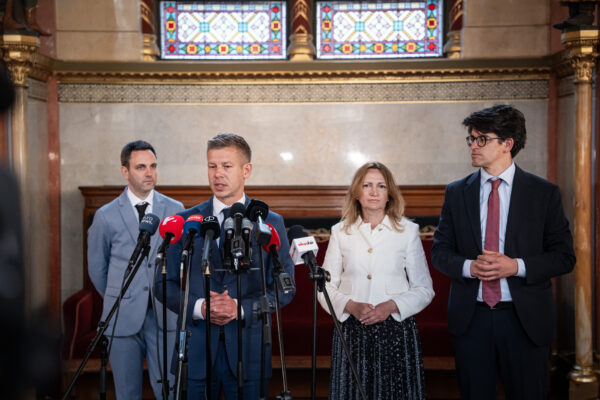
Meanwhile, new Hungarian prime minister, Péter Magyar, is also overturning Orbán’s exit from the International Criminal Court and is expected to give the green light for EU sanctions on settler extremists, degrading Orbán’s pro-Israel foreign policy.
The EU sanctions on Russia had initially been meant to be in place by the second anniversary of Russia’s full invasion of Ukraine, on 24 February.
“Quite some time has passed since … Our understanding has deepened, as has the need to put pressure on Russia — its industry, shadow fleet, and maritime services,” said Ukrainian foreign minister Andrii Sybiha.
Keir Giles, a British writer on Russia, told EUobserver: “Hungary’s election has provided the long-overdue laxative to dislodge Orbán, as the primary blockage obstructing the free flow of EU support for Ukraine”.