
The race has been a showdown between an experienced but visibly aged and increasingly authoritarian Orban, and a rock star-like newcomer Magyar with a rare talent for social media and endless energy to tour the country and reach out to the remotest parts of Hungary.
 Edit Inotai



Internationally, an Orban defeat, even if narrow, would bring a huge sigh of relief in most European capitals, where governments will welcome a Hungarian administration that ceases to act as a Russian ‘Trojan horse’ within the bloc.
“There is a strong hope in European capitals and among the European elites that change is possible in Hungary,” the foreign policy expert Szelenyi says, although cautioning that Tisza will not always align with Europe either, especially not on Ukraine or migration. “[But] they are expected to act as a more reliable and constructive EU partner.”
On the other hand, Orban’s broader right-wing populist alliance is visibly alarmed at the possibility that it could lose its most prominent model, which has been cherished mostly for being able to retain power for 16 years – a fairly unique achievement in contemporary politics, which is largely the result of Hungary’s special electoral system, a combination of winner-takes-all system in the individual constituencies plus an overcompensation for the strongest party.
Orban has increasingly enjoyed taking centre stage internationally, hosting the Hungarian edition of the US’s CPAC, a recent gathering of the Patriots for Europe party family in the European Parliament, as well as welcoming US Secretary of State Marco Rubio and Vice President JD Vance – all within roughly the past month.
“Orban’s defeat would be a psychological blow for the Patriots, a very versatile movement largely held together by Orban and the belief that he is an unbeatable,” says Szelenyi.
While the largest party in the Patriots for Europe grouping is France’s National Rally, financially speaking it is mostly supported by Hungary. “This financial bloodline could also falter in the coming years if Orban is defeated,” Szelenyi says.
Orban’s admirers pay less attention to the economic mismanagement under Fidesz over the past 16 years. Hungary, once counted amongst the strongest of the newer EU member states, has fallen behind in multiple economic indicators and did not fully capitalise on the opportunities offered by EU membership. “I believe these populist parties pay little attention to the economy; they are full of political slogans, but very rarely take on government responsibility,” Palocz argues.
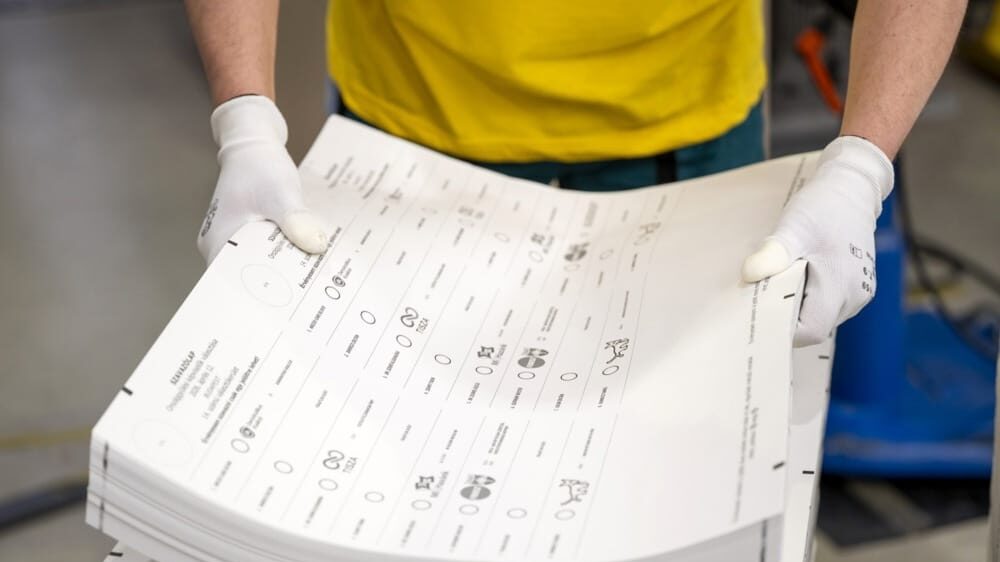
For Orban to concede defeat, Magyar would need a decisive victory. While last-minute vote buying and voter manipulation are expected, large-scale election fraud remains unlikely.
Sunday will no doubt be a long day, with preliminary results arriving late and potential recounts expected in closely contested districts. Votes from abroad may delay final results until midweek.
If Tisza wins by a narrow margin – the most likely scenario – Fidesz is expected to adopt an aggressive opposition strategy, seeking to undermine the inexperienced government while leaving it to implement difficult and potentially unpopular economic reforms.
“I don’t see Orban voluntarily withdrawing from politics,” Szelenyi says. “The stakes are simply too high, especially financially, and particularly for the Orban family.”
But she also sees eager young Fidesz members jostling to take control of the party.
Should Orban win the election, the frustration of Hungarian society could further exacerbate, and many expect an exodus of young Hungarians from the country.
“This could also lead to a collapse of the economy,” economist Eva Palocz warns, referring to investors and credit rating agencies that are mostly hoping for political change.
Hope is on the horizon, but for many people – both inside and outside of Hungary – it is still not easy to imagine a Hungary without Orban.