
While Viktor Orbán’s government was the most vocal and frequent spoiler of principled EU external action, it was by no means the only one. And it won’t be the last, unless all EU governments realise the unanimity rule is incompatible with a principled and efficient foreign policy, and get rid
 Claudio Francavilla



In power for 16 years, Hungary’s outgoing prime minister Viktor Orbán was notorious for abusing his government’s veto power to taint the European Union’s foreign policy with the same anti-rights, illiberal agenda he implemented at home.
But while his government was the most vocal and frequent spoiler of principled EU external action, it was by no means the only one.
And it won’t be the last, unless all EU governments realise the unanimity rule is incompatible with a principled and efficient foreign policy, and get rid of the veto power once and for all.
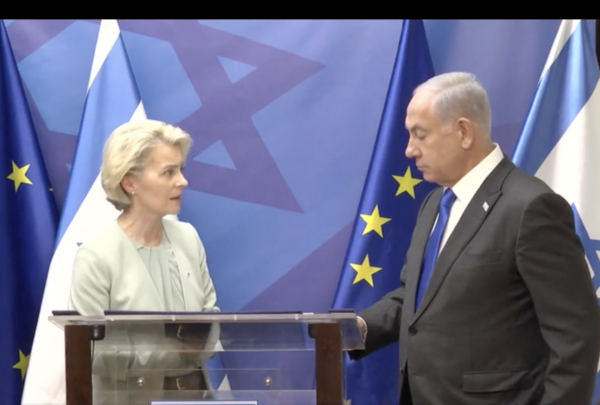
Under Orbán’s rule, Hungary prevented or delayed EU support to Ukraine, thwarted sanctions against war criminals and rights abusers and watered down or blocked EU statements criticizing his allies in Moscow, Cairo, Tbilisi, Beijing, and Tel Aviv.
At the UN, the EU was at times unable to speak with one voice because Hungary blocked common declarations.
In 2022, Hungary sabotaged EU leadership for UN monitoring of Russia’s rights record, and a resolution eventually presented by the other 26 EU member states.
Cold War optimism fades
The foreign-policy provisions in the EU treaties were agreed to at a time of post-Cold War optimism, democratic consolidation and overall cross-party support for human rights.
EU governments decided that subjecting the bloc’s foreign policy to consensus — essentially to protect national sovereignty — would work just fine.
In 2011,when they established European External Action Service (EEAS), they tasked it with coordinating and implementing — not leading — EU foreign policy, on which each state retained veto power.
More than a decade later, that decision has proven highly regrettable.
Despite the unanimity rule, EU member states have managed to secure many decisions on targeted human rights sanctions or other accountability measures on Russia, Ukraine, Belarus, Myanmar, North Korea, Afghanistan, Syria, Venezuela, or Guatemala.
The EU and member states collectively also are the leading donor on humanitarian aid, and support many individuals and civil society groups at risk.
Veto-fear = unambitious statements
But with an increase in governments that include far-right and other parties less wedded to human rights and rule of law, EU foreign ministers’ conclusions have become a less frequent occurrence, issued at the price of race-to-the-bottom compromises to secure unanimity.
Fearing vetoes, the EEAS tends to propose unambitious draft conclusions and statements, aimed at securing consensus among member states instead of achieving impact on the ground.
The veto rule has also exposed the bloc to external interference and manipulation.
Any foreign government knows that all it takes to thwart EU action is persuading just one of 27 governments.
Orbán’s Hungary has been accused of acting as Russia’s Trojan horse, while China has long banked on investments in central and eastern Europe to discourage tough EU action on its abuses.
As a result, the EU has increasingly struggled to deploy some of its most powerful tools to prevent and address egregious human rights violations: targeted sanctions, arms embargoes, leadership on UN initiatives and the suspension of bilateral deals, all require unanimity.
The costs of the EU’s veto-enabled selective paralysis are reputational, as well as human and economic.
As the EU remains incapable, to date, of even acknowledging—let alone addressing — Israeli violations of the laws of war in the genocidal Gaza campaign, people across the Arab region reportedly see China as more committed to international law than the EU.
In Europe, hundreds of thousands have repeatedly taken to the street to protest the bloc’s inaction on Gaza, and a petition urging the suspension the EU-Israel Association Agreement is collecting record numbers of signatures.
Many European leaders are aware of the untenability of the veto rule in foreign policy.
Takes unanimity to drop unanimity paradox
Shortly after Orbán’s defeat, European Commission president Ursula von der Leyen reiterated her call for a shift to qualified majority voting (QMV) in foreign policy.
The EU’s hjigh representative, France’s president, Germany’s foreign minister and many others have long made similar calls: so far in vain.
It takes unanimity to drop unanimity, and several EU states do not want to forego veto power which they may well see as vital to their own interests, notwithstanding how its misuse is to the detriment of core EU priorities.
Several ideas for EU foreign policy reform have been floated, including setting up a EU “Security Council” or folding the EEAS into the Commission. But both would require treaty change, and even if approved, if unanimity remains the rule, proposed policy action would still face potential vetoes, preserving the untenable status quo.
A less invasive option would be more frequent resort to “passerelle clauses”: the EU Treaty allows member states to (unanimously) decide to act by qualified majority voting on specific foreign policy issues.
It’s a patch, but may well be the only viable game in town.
An opportunity to move that way is just around the corner: member states are about to negotiate the new EU Action Plan on Human Rights and Democracy: a guideline document including specific human rights commitments for EU and member states’ foreign policy.
When the previous one was adopted in 2020, former foreign affairs chief Josep Borrell proposed a decision to implement it by qualified majority voting, but no consensus was reached.
Six years later, with Orbán gone and human rights facing unprecedented challenges globally, a new attempt would be warranted; and arguably stands a higher chance of success.
A decision to implement the Action Plan by QMV, also supported by a human rights network in Brussels, would allow the EU to react more swiftly and impactfully to human rights abuses, reduce double standards, and lift obstacles for more consistent action at UN human rights forums.
It could restore confidence and ambition on human rights within institutions, in line with the EU’s treaty obligations. And it could be a building block toward eventually replacing unanimity with qualified majority voting, moving away from an institutional set-up built for failure when other big military and economic powers act on the whim of the strongman in charge.
Member states should realise that they have more to gain than lose by ditching the veto power.
Years of Orbán vetoes hopefully taught them that much.