
Emergent’s Wingman lets users manage and automate tasks through chat on platforms like WhatsApp and Telegram.
 Jagmeet Singh



Emergent, an Indian startup known for its vibe-coding platform, has launched “Wingman,” a messaging-first autonomous AI agent, as it expands into a growing category of software that runs in the background to complete tasks — popularized by tools like OpenClaw and Claude from Anthropic.
The Bengaluru-based startup initially gained attention for its so-called “vibe-coding” platform, which competes with tools like Cursor and Replit and lets users without technical backgrounds build full-stack applications via natural-language prompts. With Wingman, Emergent is now pushing beyond creation into execution, aiming to let AI agents handle routine tasks across tools and workflows.
“The obvious next step for us was, can we help them not just build the software, but actually operate more autonomously through it?” said Mukund Jha, co-founder and CEO of Emergent. “You move from software that supports the business to software that can actively help run it.”
Emergent said more than eight million builders have used its vibe-coding platform to create and deploy software, with over 1.5 million monthly active users. Founded in 2025, the startup raised $70 million in January at a valuation of $300 million, with backing from investors including SoftBank, Khosla Ventures, and Lightspeed Venture Partners.
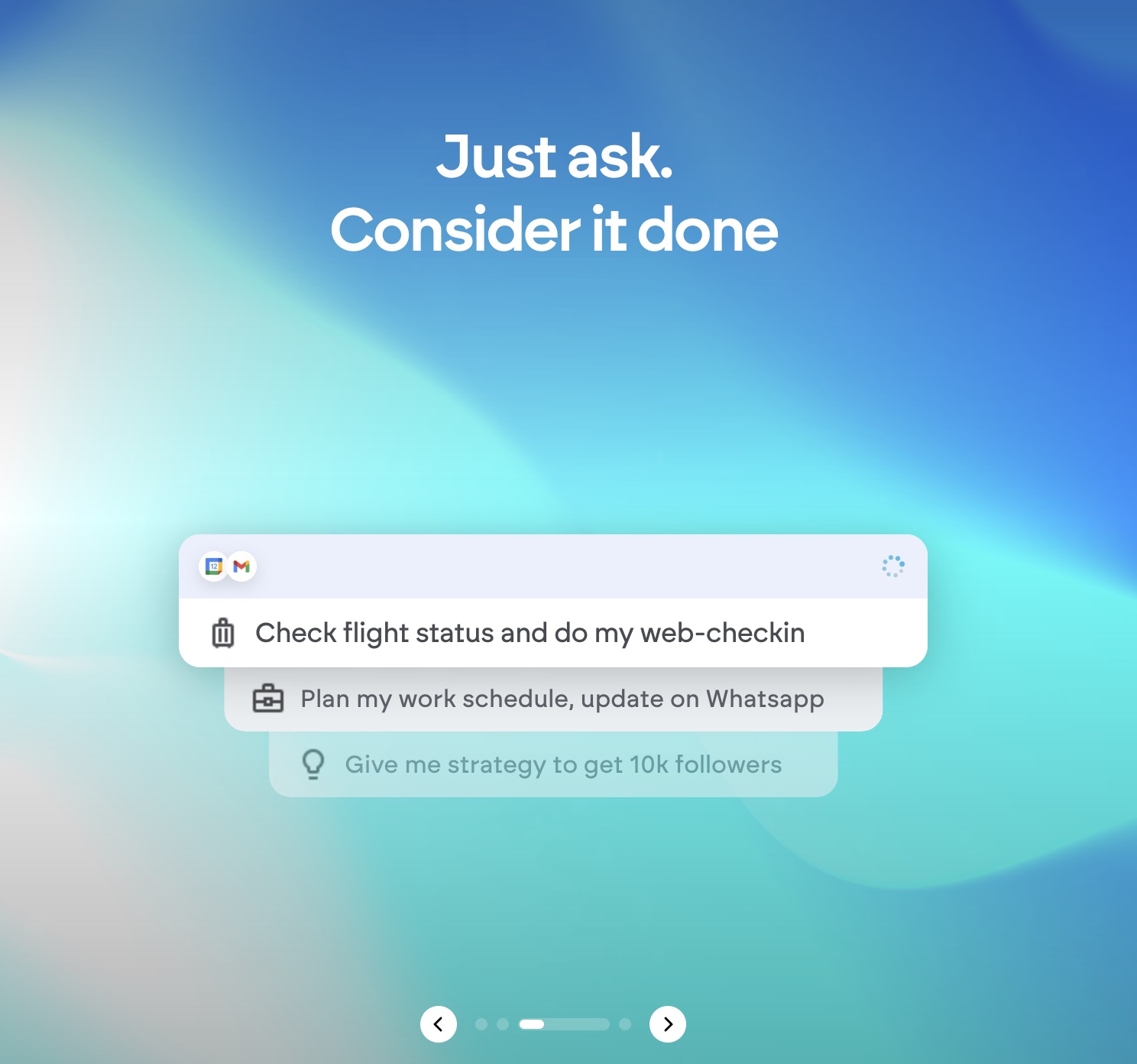
Wingman is designed to operate through messaging platforms like WhatsApp and Telegram, allowing users to assign and monitor tasks through chat. At the same time, the agent runs in the background across connected tools such as email, calendars, and workplace software. It can carry out routine actions autonomously but seeks user approval for more consequential steps, the startup said.
The launch comes as autonomous AI agents emerge as a key battleground in the industry, with a growing number of companies racing to build tools that can complete tasks on behalf of users. Projects like OpenClaw — previously known as Clawdbot and Moltbot — have gained traction among early adopters, while players including Anthropic and Microsoft are working toward addressing this space with their own agent-based systems.
Emergent is attempting to differentiate by embedding Wingman into messaging platforms such as WhatsApp, Telegram, and Apple’s iMessage, allowing users to interact with the agent via chat rather than adopting a new interface. The startup also introduced what it calls “trust boundaries,” enabling the agent to carry out routine tasks autonomously while requiring user approval for more consequential actions. This aims to address concerns around fully autonomous systems.
Jha told TechCrunch the decision to build Wingman inside messaging platforms was driven by how people already work. “A lot of real work already happens through chat, voice, and email — asking for something, following up, sharing context, making a decision,” Jha said. “Increasingly, they’ll be the main ways we work with agents too.”
Like many emerging AI agents, Wingman still faces limitations. Jha said the system struggles “around consistency in really ambiguous situations, messy edge cases, unclear goals, or workflows where a lot of human judgment is needed.”
Wingman is being rolled out with a limited free trial, after which access will be paid, with existing Emergent users able to use the agent through their accounts.