
In a strategic about-face, the Czech Republic is looking to join French President Emmanuel Macron’s initiative to build a pan-European nuclear deterrent.
 Tomáš Hrivňák



This story is a part of the weekly newsletter about economy, defence, and tech in the eastern flank of Nato, How we cee it.
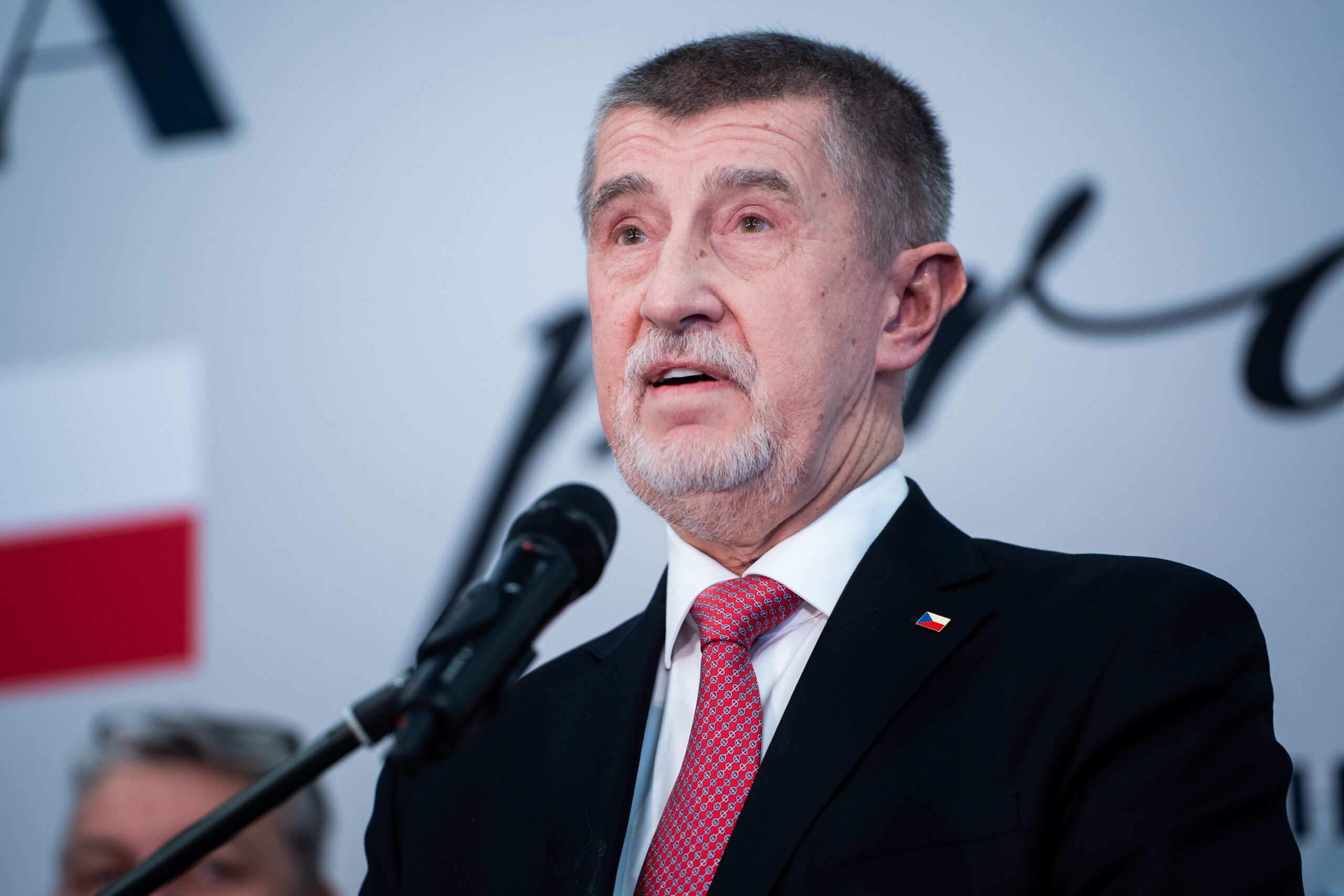
It has been just three years since Czech prime minister Andrej Babiš ran his presidential campaign on a platform of peace negotiations and pacifism. He warned that should his competitor, General Petr Pavel, win, he would drag the republic into war.
Much has changed since then. General Pavel went on to beat Babiš at the polls, and instead Babiš secured his position as the country’s most powerful executive politician, leading a new government.
He also appears to have abandoned his ideals of diplomacy as the sole deterrent against security threats. In the West’s increasingly fragmented defence architecture, Babiš is weighing options outside the box — and he is not the only one.
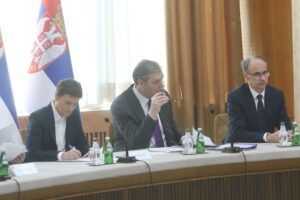
Over the weekend, Babiš confirmed that Czechia wants to join French President Emmanuel Macron’s initiative to build a pan-European nuclear deterrent. “We in Europe must, of course, have allies, and France is ideal for that,” the prime minister said in a video posted to social media.
He later added that Czechia could offer technologies, has good companies, and an excellent army. He acknowledged, however, that the project is in its early stages and will take time.
In March, when Macron first announced the initiative, the Czech government’s response had been cautious. Foreign Minister Petr Macinka said at the time that, since Czechia has no nuclear weapons, there was nothing to join. But international developments have prompted a change of tack.
“At the diplomatic level, we have already initiated interest in learning further details,” Macinka told Seznam Zprávy.
The greatest weakness of the French initiative remains a lack of specifics. In early March, Macron announced that France would tighten its nuclear doctrine, increase the number of warheads, and open a debate on whether its deterrent capability could also protect other European states. Concrete steps toward achieving this have yet to be made public.
Were Czechia to join the nuclear initiative, it would not automatically mean hosting nuclear warheads on its territory. Instead, it could cooperate with France in areas such as intelligence, radar capabilities, or planning.
Poland is also in talks to join the French nuclear umbrella. Prime minister Donald Tusk discussed the possibilities of nuclear cooperation during the first-ever Polish-French intergovernmental meeting in Gdańsk on Monday (20 April).
As Gazeta Wyborcza reports, when asked about cooperation on nuclear deterrence, Macron said that “work will continue in the coming months.” “We are exchanging information. Various solutions are possible. We have jointly decided that we will act on this issue in the coming months,” he said.
Why France is expanding its nuclear umbrella
Until now, Central European states have relied on American nuclear deterrence. The threats by US President Donald Trump to withdraw from or radically scale back its Nato commitments have force European allies — including those participating in Nato’s nuclear sharing program, meaning they host American nuclear bombs and maintain aircraft capable of carrying them — to search for additional insurance against an unpredictable Russia.
It was this opening that Macron seized when, in early March, he announced his policy of “advanced deterrence.” Beyond Poland and Czechia, Germany, the Netherlands, Belgium, Greece, the UK, and Sweden have also expressed interest in joining the new initiative.
Unlike the British nuclear program, France’s arsenal was never tightly integrated into Nato structures. This emphasis on strategic autonomy is a tradition that Macron is now building on as he opens the debate about a European dimension to French deterrence. Following Brexit, France is the bloc’s sole nuclear power.
The French arsenal — estimated at roughly 290 nuclear warheads and the fourth largest in the world — rests on two main pillars: a naval component of four Triomphant-class strategic submarines armed with M51 ballistic missiles, and an air component of Rafale fighter jets capable of carrying ASMP-A nuclear missiles.
The involvement of Central and Eastern European countries in the French initiative could also mean pressure for deeper defence cooperation — and purchases of French military equipment.
However, increased defence spending is something that Babiš’s government has struggled with. For example, it cut its financial participation in the Czech ammunition initiative — the crown jewel of Czech arms-trade diplomacy and a feat of logistical ingenuity in recent years.
The initiative had also been a critical lifeline for Ukraine, whose defence against Russia is central to European security.
After last year’s elections, Babiš’s ANO-led government decided it would continue participating in the so-called Czech ammunition initiative, but would not contribute any of its own funds. Through the initiative, Ukraine has received nearly two million rounds of large-caliber ammunition, accounting for roughly 45 percent of all Ukrainian ammunition supplies.
The volume of Czech military aid to Ukraine has, however, declined in recent months, and so has the total funding flowing through the ammunition initiative, as participating states, the largest of which include Germany, the Netherlands, and Denmark, have shown diminishing willingness to contribute.