
“He didn’t fall into Viktor Orbán’s culture war trap — like the opposition always did.” Hungarian political scientist Eszter Kováts explains the rise of Péter Magyar. The liberals and the mainstream rightwing European parties expect much more from him than he is ready to give, in her opinion. “But he
 Mirek Tóda




Let’s start with something surprising. We even wrote an article expressing worries about potential manipulation and what the reaction to Viktor Orbán’s defeat would be. In the end, he congratulated Peter Magyar quite early, and there was no big news about major manipulations. So, what happened?
That was probably one of the biggest surprises of the evening for many, even for the more optimistic camp, which I belong to. I had predicted he would concede, that he wouldn’t call in the military or police, and that he wouldn’t refuse to accept the election results. Still, I didn’t expect — and I haven’t seen anyone who did — that he would congratulate Magyar so early and make a very short, but graceful, concession speech. Also, in his concession speech, he didn’t blame Brussels, the Ukrainians, foreign interference, and so on. We expected he might say, “Okay, we accept the results, but it’s because of these outside forces.” But he didn’t. That goes even further than what the optimists predicted.
Having said that, it doesn’t whitewash his 16 years of rule. I don’t believe that just because he accepted defeat, it means Hungary was a functioning liberal democracy all along. But he does have a certain understanding of democracy — namely, majoritarian rule. In that sense, Orbán’s regime had a limit: he wouldn’t go against the majority of his people.
Why?
Either for moral reasons, or for practical reasons; the whistleblowing in the final weeks of the campaign showed that the police and military weren’t fully behind him. But even before that, you might remember that when Pride marches were banned, they took place anyway, and the police didn’t intervene. They didn’t even issue fines to the participants. So, there are limits built into the system.
Many people predicted that because Fidesz had a two-thirds majority and it was legally possible, they might change the electoral rules right up until the day before the election. People thought they might mess with winner compensation, lower the parliamentary threshold so smaller parties could get in, or redraw constituencies. They didn’t. There were also ideas — even a week before the elections, there was a false flag operation at the Hungarian-Serbian border. People speculated: is this just to raise the stakes and spread fear, or will it be used to claim, “We are in danger, we cannot hold elections”?
With hindsight, we can now say that all those fears proved to be paranoid.
I think this gives us enough reason for serious soul-searching, both in terms of the political analysis over the last few weeks—or rather, months—regarding how they would cheat, postpone the election, or turn Hungary into Belarus, as well as the broader debate about the nature of the regime itself. In political science, there has been a 16-year discussion about what the Orbán regime actually is.
But before we get to that question: what if Orbán was simply struck by the historical proportions of his defeat? It was the biggest turnout ever, and the biggest victory for the opposition.
That’s exactly what I’m saying. The limit of his will to power is the majority. He probably was impressed—not in the sense of being afraid, but realizing it was a clear sign. He understood: “Okay, my people don’t want me anymore.” You don’t have to look at it through a strictly intellectual or moral lens if you don’t want to believe Orbán has any limits; it could just be practical. I can’t read his mind, but he likely realized he couldn’t go against that many people. There was a limit. Hungary apparently isn’t Belarus, or Russia.
When did it all fall apart?
Fidesz definitely underestimated the danger Péter Magyar posed. They realized a year ago that it was more serious than they thought, and they had plenty of opportunities to intervene. Remember Orbán’s big speech comparing his opponents to bugs surviving the winter, saying they needed to get rid of the bugs? It was threatening language, but it didn’t catch on anymore.
They also announced a “transparency law” to make life impossible for NGOs and critical media. But as the investigative portal Direkt36 later revealed, they couldn’t get it passed because of internal resistance within Fidesz. Orbán probably wanted it, but it didn’t go through. Pride took place without violence or fines. We could already see moments where they could have become more repressive, but they didn’t.
However, I don’t want to be naive, especially given what happened in the final weeks. The testimonies from police and military figures showed that the secret services were indeed abused and misused to try and make TISZA fail. Obviously, in a functioning liberal democracy, secret services aren’t used to favor the ruling party. We also know about the massive resource asymmetry and media dominance. There was a documentary about vote-buying and how very poor people in marginalized regions were threatened. We can assume that took place this time, too.
So I’m not saying the system was harmless. They did everything they could to hold onto power, but there were limits from the onset. They never crossed a certain line. Those who were constantly fearmongering, saying “Just wait, they’ll turn into a dictatorship tomorrow”—it never materialized. So, we need to rethink this. What is a liberal democracy? I still wouldn’t classify Orbán’s regime as a liberal democracy. If we call it an illiberal democracy, I’m fine with that.
For Tisza, one of the main election slogans was “changing the system.” They promised it was finally time to achieve it. So, how should we define this Orbán system? Is it an illiberal democracy, or is it much more complicated?
I can’t summarize sixteen years of political science literature in three sentences, but many expressions have been used to describe Orbán’s regime. As I mentioned, some called it a normal democracy with huge legitimacy. Orbán himself called it an “illiberal democracy,” which, in a way, is true—not necessarily in the sense of being against liberal values, but against checks and balances.
When you have a two-thirds majority, you can switch off all the control mechanisms. The legislative, executive, and judiciary branches aren’t checking each other; they operate as one big family. This applies to the chief prosecutor, the budgetary council, the constitutional court president, and so on.
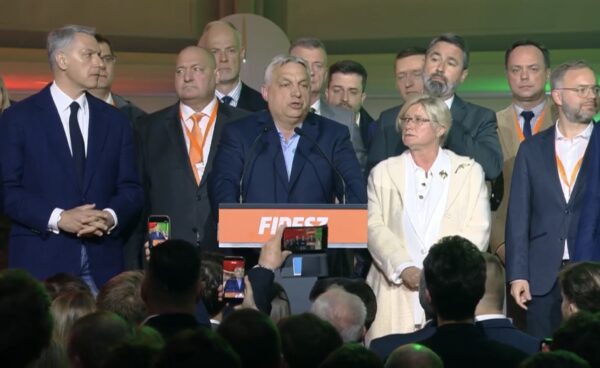
It also affects how they treat minorities. I don’t just mean sexual minorities, which became highly symbolic for the West, but political minorities — specifically, whether the opposition actually has a fair chance to compete for a change in government. Obviously, there was a massive resource asymmetry. Fidesz used state resources, public media, and government billboards disguised as “government information” for party campaigning. The playing field was completely uneven. That is undeniably illiberal.
Some people call it an electoral autocracy.
It’s a highly-debated field. Just this morning, some people were insisting that just because Orbán conceded doesn’t mean it wasn’t an electoral autocracy. And obviously, the system had authoritarian elements.
Think about the pressure people lived under and the fear. It’s an authoritarian element when you go to the media and have to weigh every single word because a short clip could be cut and used against you or the opposition party. Or when you’re threatened with losing your job, or your institution warns you not to speak to media outlets to avoid trouble.
But then trouble struck — where did they go wrong?
We also have to look at what was happening to poorer people. The urban intelligentsia in Budapest wasn’t the biggest loser of the system. The real issue was the neo-feudalism Orbán built, where the logic of loyalty ruled everything. You could only get public work in your village, or procurements for your small-to-medium enterprise, if you were loyal to the Fidesz mayor. I even heard stories of gym teachers being told to ask parents to photograph their ballots; otherwise, the teacher wouldn’t be allowed to teach sports to the kids the following week. This shows the intense pressure even ordinary people were under. I don’t believe these are just “bad people”; they were trapped in a feudal system of dependencies.
But again, elections were held and weren’t completely manipulated —despite arguments over mail-in votes from abroad. Ultimately, it wasn’t impossible to win. People used to say Fidesz couldn’t be defeated in an election. But it turned out that if you put in the political work and the people wanted it, it was possible. Probably it would have been possible for the opposition in 2014, 2018, or 2022, if they had been different.
However, Fidesz benefited from a massive economic upturn during those years. “It’s the economy, stupid.” Between 2013 and 2019, people genuinely felt they were better off: real wages were increasing, unemployment was decreasing, and inflation was low. That was a huge part of the system’s legitimacy. While the urban intelligentsia talked about the hollowing out of democracy from within, ordinary people felt economically secure.
Now itś totally different picture. Maybe that was why Orban’s recent campaign was almost entirely about a “Bad Ukraine” and a “Bad EU.” He couldn’t talk about the economy anymore because it isn’t doing well.
Exactly. That’s one of the main explanations for Magyar’s success. He might be a wunderkind who did things much better than others, but he also entered the scene in February 2024, after two years of recession. Hungary had arguably the highest inflation in Europe, and living conditions had deteriorated sharply.
Orbán couldn’t use the economy in his campaign. He constantly repeated that Fidesz had the most generous family support system, and he tried to appeal to young people by reminding them they were exempt from income tax under 25. That is a big deal, I agree. But if young people feel unfree, and they look at the ruling party and say, “These are just the boomers ruling the country telling us to be revolutionaries against Brussels instead of against them,” it just falls flat. That messaging wasn’t working anymore.
Orbán kept repeating his past achievements. In this campaign, he was still bragging about getting rid of the IMF. When did that happen? 2011! I think the economic reality was a massive blow to Fidesz.
So, can we say Magyar was the right guy at the right time?
Yes. If we look at the reasons behind his victory, there were definitely structural factors at play. Political economist Gábor Scheiring has written extensively about “Orbanomics” — Orbán’s economic model — and how it ultimately failed. It looked promising and worked as long as the global economy was booming, as the wealth somewhat trickled down to ordinary Hungarians. But in the long run, it didn’t ease Hungary’s dependency on foreign direct investment. It simply swapped Western investments for Chinese ones. Furthermore, unlike other countries, Orbán failed to reduce Hungary’s energy dependency on Russia.
So the economy was one aspect. The other was a massive political vacuum. The old opposition was morally, intellectually, and politically bankrupt. When the presidential clemency scandal broke, simple internet influencers organised a massive demonstration — drawing 150,000 people to the streets out of pure outrage. A few days later, the traditional opposition parties organised their own demonstration, and only 1,500 people showed up. That was February 2024. For many of us, that was the moment we realised the old opposition was finished.
Some opposition parties realized this quickly. For others, it’s been a sad story over the last two years as these five or six parties struggled to accept reality. Some still haven’t realised that the voters simply don’t want them anymore. It must be incredibly frustrating. These are people who, even if they couldn’t find the right political strategy, fought against Orbán’s regime for 14 years and made immense personal sacrifices. And suddenly, they were told: “You’re done. You have to go.” And by whom? By a guy who, just the day before yesterday, was a Fidesz insider.
That was his big advantage, in the end, right?
Actually, I saw several memes today joking that for Magyar, this is his fifth two-thirds majority win! They show him celebrating in 2010, 2014, 2018, 2022, and now this one, because back in 2022, he was still very close to Fidesz.
So you had this guy who saw the perfect storm: an economic crisis, a moral crisis within Fidesz, and a political vacuum in the opposition. He just stepped up and said, “Okay, I want it.” We can talk about his personality, but he’s had to endure a lot of heat over the last two years. If you aren’t built like a tank, you can’t survive that. You can criticise him — I certainly criticise him for some of the things that have come out, like the allegations of violence against his ex-wife or how he treats his colleagues.
There’s a “documentary” — and I say that in quotation marks because it’s essentially a propaganda film — even that very one-sided cheering film shows him how controlling and micromanaging he is. So, he might not be a ‘good person’, though we don’t necessarily need to judge him purely on a personal level. But you have to be a tank to accomplish what he did. As one famous Hungarian analyst often says, Magyar went ‘all in’. He didn’t have a Plan B, and he didn’t make compromises. From the very beginning, he simply said the entire old opposition had to go.
Can we say that maybe he has perfect political instincts?
Very much so. But that is an ambivalent statement because part of his “political instinct” comes from the fact that he was part of Fidesz. What we call instinct is partly insider knowledge. He knows exactly how the system works. He still has his informants and gets internal information, but fundamentally, he understands their playbook.
The old opposition very often fell into Orbán’s traps. For instance, when Orbán announced that Pride would be banned, the urban intelligentsia, the opposition, and EU elites reacted in a very predictable way: “Oh, this is an attack on the right of assembly and LGBTQI rights, we have to protest!” When that happened, I honestly thought, “Oh no, they killed it. Tisza is over.”
But what did Magyar do? He simply ignored the culture war trap. He continued his campaign and just said in one sentence, “We will restore the right to assembly.” He didn’t get dragged into a massive fight over LGBTQI rights. First, because he comes from a conservative background, so it probably wasn’t a difficult dilemma for him. Second, he understood that Fidesz’s goal was divide et impera—divide and conquer.
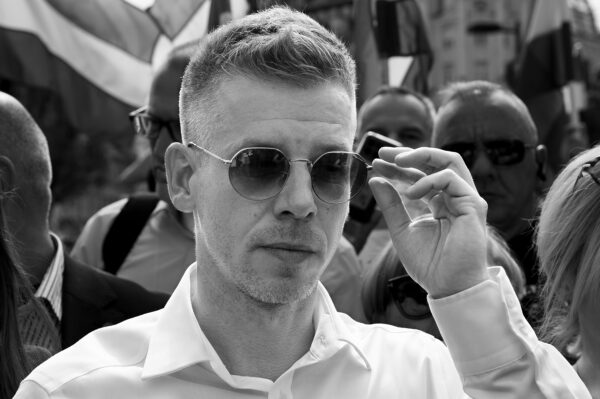
Fidesz wanted Magyar’s very broad and diverse electorate to turn on each other. If Magyar had strongly stood up for LGBTQI rights, the Budapest liberals would have cheered, but the conservative voters in the countryside — who were his main constituency and the reason for his huge victory — would have said, “Oh no, Orbán was right.” So, the liberals had to make a compromise. Some understood that this is simply how the political game works, hoping that he will quietly restore those rights later.
How should we describe him politically? Is he a nationalist conservative?