
As potentially seismic Senedd elections loom, competing parties have differing visions of how to reinvigorate the economyIt is afternoon rush hour on the M4 and drivers are yet again making slow progress around the city of Newport, often seen as the gateway to south Wales given its location between Cardiff
 Joanna Partridge in Newport



It is afternoon rush hour on the M4 and drivers are yet again making slow progress around the city of Newport, often seen as the gateway to south Wales given its location between Cardiff and Bristol.
Cars and lorries are stuck in gridlocked traffic in both directions on the approach to the Brynglas tunnels, where the road narrows to two lanes in each direction, while flashing lights warn motorists in Welsh and English of a ciw (queue).
Traffic jams may be an everyday reality for commuters and businesses trying to move goods around, but they have also become a hotly debated topic before the Senedd elections on 7 May, in a vote predicted to bring sweeping political change to the principality, and send Labour into opposition for the first time since devolution in 1999.
Congestion on this part of the M4 – the main route linking south Wales with England – has been complained about by businesses and commuters for decades, while a relief road around Newport has been proposed for almost as long. Motorists say tailbacks cost time and money, and make the country less attractive to potential investors.
Poor public services, and frustration over long waiting times for NHS treatment, rank top of the concerns for Welsh voters before the election, along with disappointment with transport services and infrastructure like roads, rail and buses.
“If there is an accident on the motorway, the whole of Newport is gridlocked,” says Rosemary, 81, waiting at the city’s bus station. “We could have done with that new relief road, it would have been a big help.”
The retired shop worker is dependent on buses to visit the shops and her daughter in a nearby town. “It’s not a very reliable bus service, it’s become really poor since the pandemic,” she says.
The six main political parties are split over how to tackle the tailbacks, and the issue prompted fiery exchanges during a leaders’ debate.
Two people in the running to become the next first minister, the leader of Plaid Cymru, Rhun ap Iorwerth, and Reform UK Wales leader, Dan Thomas, both support a new road, along with the Conservatives. Meanwhile, Labour, the Greens and the Liberal Democrats have declared themselves against.
After years of political indecision, soaring costs and opposition from environmental groups, the relief road project was finally scrapped by the Labour-led Welsh government in 2019, citing the projected £1.4bn cost, and the adverse impact on its planned location on the Gwent Levels nature reserve.
Opposition parties have criticised Labour for the £114m spend on the project before cancellation, although the party has pledged to improve public transport, cap adult bus fares and expand the “South Wales metro” rail electrification project. The network of tram-trains, able to run on rail and tram lines, is over budget, but scheduled to enter service shortly.
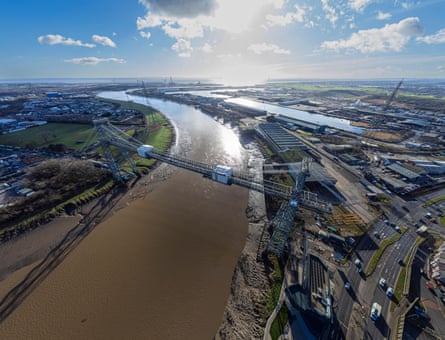
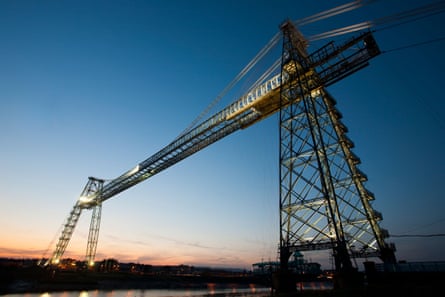
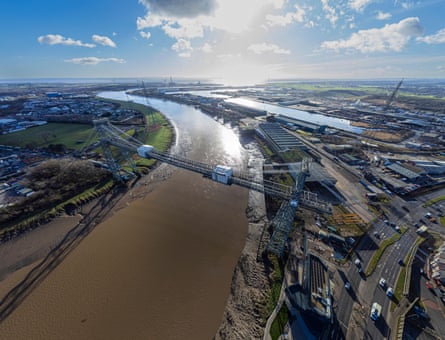
On a bright spring day, the sun glints off the river Usk that flows through Newport before reaching the Severn estuary and spanned by the transporter bridge, symbolising the city’s industrial heritage when huge quantities of Welsh coal and steel were loaded on to ships at its docks.
“The No 1 issue for my members is the M4, the congestion and uncertainty,” says Josh Fenton, senior policy manager at industry body Logistics UK. “The longer HGVs are sat in traffic, that’s adding to cost, making things more difficult, and potentially putting some businesses off setting up locally.”
Any new road would cost considerably more than the £1.4bn previously estimated, after recent construction cost increases and inflation.
The cost could be “potentially even up to £2.5bn and the Welsh government’s capital budget is about £3bn,” says David Philips, head of devolved and local government finance at the Institute for Fiscal Studies (IFS).
“Even if they were to do this over two terms, you’re looking at some £300m a year, which is 10% of the Welsh government’s capital budget. Then there’s lots of ambition for other things, like social housing, railways and investment in school and health facilities,” adds Philips.
The two parties topping the polls, Plaid and Reform, agree on the need for a new road, yet hold differing views on how to pay. At the Newport launch of Reform’s manifesto for the Senedd elections, party leader Nigel Farage said he would build a “toll road”, while Plaid have not laid out how they would fund the scheme.
“It comes with some kind of cost,” says Philips. “Either you need to borrow in an expensive way, or you need to cut back some other areas, or you need to raise additional revenue.”
Putting 1p on all rates of income tax across Wales could raise £400m a year, Philips calculates, although he notes “you could say this is for an investment in transport, but people in north Wales wouldn’t be very happy about that”.
Plaid and Reform also offer vastly differing visions for the Welsh economy: Reform has previously proposed reviving Wales’ industrial past, including coal mining and steel making, while Plaid has promised to increase public procurement from Welsh businesses and create a new national development agency.
Whoever runs the next government in Cardiff will face a “Welsh budget under significant pressure”, according to the IFS, amid a slowdown in increases in UK government funding, and a growing demand for health and social care, prompting the thinktank to call on the main parties to be “more upfront about fiscal reality”.
Back in the 1970s, when Wales began to lose mining and heavy industry, it had some success in attracting foreign investment, partly thanks to transport links offered by the M4. However, much of this investment proved temporary, and many large multinationals have come and gone in the intervening years, including carmaker Ford, which closed its Bridgend engine plant in 2020, as well as South Korea’s LG and white goods manufacturer, Hotpoint.
Transport infrastructure could now deter other overseas investors from setting up in Wales, according to Gareth Jenkins, executive chair of manufacturer FSG Tool and Die, located a quick – or sometimes slow – 20 miles up the road from Newport in Llantrisant, which is also home to the Royal Mint, producer of the UK’s coins.
FSG employs about 100 people, mostly specialist engineers who make the tools that allow Starbucks to produce reusable cups, McDonald’s to make plastic sauce pots, and Tesla to make battery cases for its electric vehicles, for customers as far afield as the US and Bolivia.
Roads are “generally a nightmare”, says Jenkins. “I can’t prove it’s affecting inward investment, but, if I was an investor, I’d be thinking: ‘Can I get a good building cheaply? Where can I get my people from? Can I move my stuff?’” says the plain-speaking Welshman, who previously advised the Welsh government on the manufacturing sector after the financial crisis.
Manufacturing still accounts for about a sixth of Wales’s economic output, the highest share in the UK relative to the economy’s size, according to industry body, MakeUK. The sector employs 138,000 people in Wales, vital for a country with lower employment and higher economic inactivity than any other UK nation or region apart from Northern Ireland.
“For manufacturing in Wales, there’s two routes out, one in the north, one in the south. It’s not acceptable to say ‘We’ve got what we’ve got and we’re not going to spend any more money on the M4.’ You’ve got to move goods around and it isn’t going to go from Cardiff airport and is very unlikely to go from Port Talbot docks.”
The Welsh government recently won a case over its £205m decade-long subsidy package for state-owned Cardiff airport, brought by its rival in Bristol. Companies such as FSG are calling for an expansion in the airport’s cargo operations beyond several weekly freight flights to China, launched in 2024.
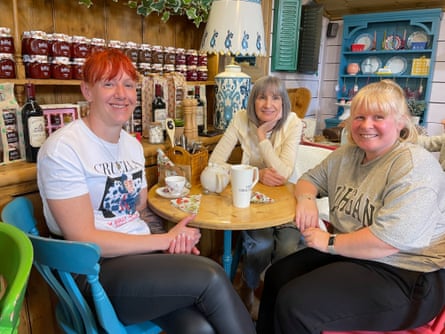
Public services and transport are the main concerns for Cheryl Tucker, and former colleagues Lisa Owen and Karen Jones, enjoying a coffee and a catch-up at a cafe around the corner from FSG.
Top priority would be more hospitals and improved medical care, Tucker says, adding “but you need a good road network to get to hospital or other places”.
Despite these frustrations, their disenchantment with politics means Tucker and her friends are not planning to vote in the Senedd election.