
Same-sex couples in Serbia and Bosnia and Herzegovina are still waiting for legal security in the event of sickness, unemployment, bereavement and parenthood.
 Nemanja Marinovic



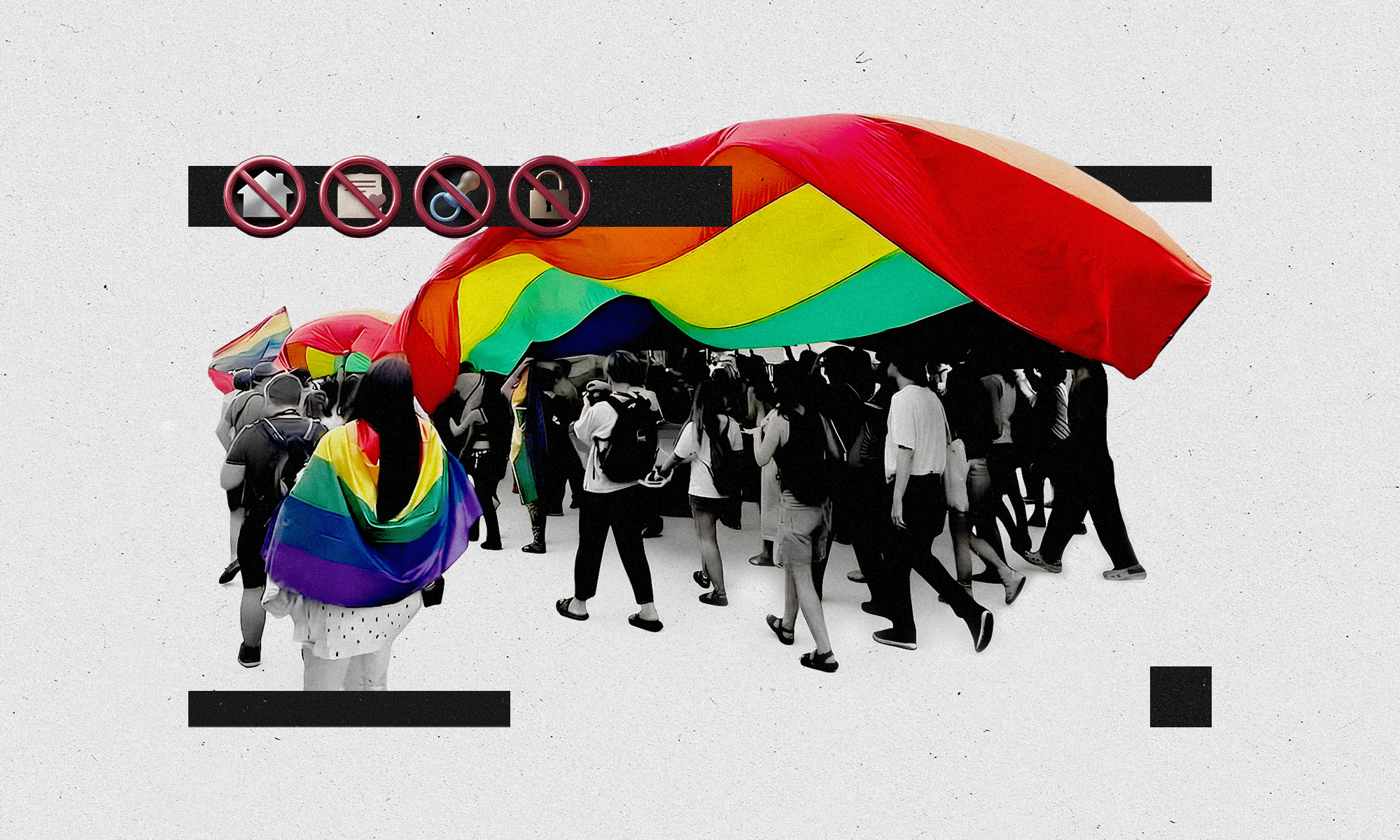
In Montenegro, the frontrunner to become the next member of the European Union, same-sex couples enjoy a range of rights once reserved only for married, heterosexual partners.
“Same-sex couples who enter a life partnership acquire the right to maintenance, inheritance of joint property and pensions, partner visits in hospitals and prisons, as well as in the social protection and health insurance system,” said Bastrica.
The law has effectively eradicated many of the insecurities that continue to pervade LGBTQ+ communities elsewhere in the Western Balkans.
The inability to inherit is considered crucial.
“All of us in same-sex partnerships think long-term, but none of us think about what happens in the event of death,” said Jelena Vasiljevic, executive director of NGO Rainbow Ignite in Serbia.
In the case of death, in Serbia only the primary family has the right to identify and bury the deceased. Their same-sex partner faces being completely excluded, as was the case with Marija [not her real name] when her partner died in a car accident.
The couple had been together for more than seven years, but Marija – who asked to be identified by a pseudonym – had no contact with her partner’s family. They buried her in her hometown, which Marija’s wife had long since left, and neither Marija nor the couple’s closest friends were informed.
Marija and her partner had access to each other’s bank account and shared their savings. But the day after her partner died, the bank account in her name was emptied, Marija told BIRN.
“Immediately before this whole situation, I had transferred a large sum of euros to her from my account, and the day after she passed, the entire amount was withdrawn from that same small place where she was born.”
Inheritance rights, which in the case of heterosexual couples are resolved automatically and ex officio, can only be exercised by same-sex couples if they plan in advance and are subject to often costly and lengthy administrative procedures. Most commonly, a will or lifelong maintenance agreement is drafted and signed, but even these have limitations.
“In the case of a will, there is a right to a mandatory portion for legal heirs, who can challenge part of the estate,” said Milena Vasic, a lawyer at the Human Rights Committee YUCOM.
The situation in Bosnia and Herzegovina is similar.
Mihaela, who asked to be identified only by her first name, and her partner of five years wanted to buy a house together in the suburbs of Banja Luka, in the north of Bosnia.
“Because same-sex partnerships are not legalised, it was impossible for both of us to be registered as owners,” she said.
In practice, Mihaela must wait 15 years – the duration of the mortgage – before she can transfer a share of the property to her partner. If their partnership were legally recognised, the property would be considered marital property and both partners would have equal rights.
In the event of death, in a same-sex couple, one partner can inherit from the other only on the basis of a will. And even that can be challenged.
“Even if a partner designates their partner as a testamentary heir, their legal heirs can object, challenge the will in court, and in that way either dispute the rights of the testamentary heir or secure for themselves the mandatory share, which amounts to one-third of what they would inherit by law,” said Filip Novakovic, a lawyer in Banja Luka.
One way to overcome this is through a lifelong maintenance agreement, exempting a property from inheritance. But even then, inheritance tax would apply, which in Serbia amounts to 2.5 per cent of the estimated value of the property.
“There is no possibility for same-sex partners to receive tax benefits, mandatory health insurance advantages, or social protection under the same conditions as married or unmarried heterosexual couples, and this constitutes systemic discrimination based on sexual orientation,” said Amil Brkovic from the Sarajevo Open Centre, an NGO.
Child’s unrecognised rights