The EU has relaunched contact with Syria after years of frozen relations. But what does it mean for Syrians in Europe?
 Léa Marchal



Production: By Europod, in co-production with Sphera Network.
EUobserver is proud to have an editorial partnership with Europod to co-publish the podcast series “Briefed” hosted by Léa Marchal. The podcast is available on all major platforms.
Find the full transcript below:
The EU has relaunched contact with Syria after years of frozen relations.
But what does it mean for Syrians in Europe?
What will be the impact on those who have sought refuge in Europe over the last two decades?
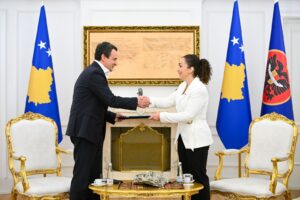
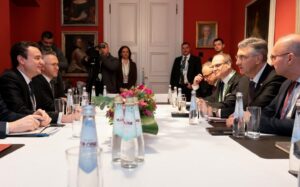
On 9 January, the new Syrian president, Ahmed al-Sharaa, welcomed António Costa and Ursula von der Leyen to Damascus, respectively the president of the European Council and the president of the European Commission.
This marked the relaunch of dialogue and cooperation between the EU and Syrian authorities for the first time since the fall of Bashar al-Assad.
Let’s quickly go back in time: before the war that broke out in Syria in 2011, the EU was among Syria’s largest trading partners.
Their relationship was governed by a cooperation agreement dating back to 1978.
But in 2011, the EU decided to suspend cooperation in response to the systematic and deadly repression of protests by the Assad regime.
Now, with the fall of Bashar al-Assad at the end of 2024, the EU and Syria have slowly opened a new chapter in their relationship.
Just a few months after Ahmed al-Sharaa was appointed president, the EU lifted almost all economic sanctions against the country.
Just a few days ago, the commission announced a proposal to revive the EU-Syria cooperation agreement. And as our Greek partner from the Sphera network, Popaganda, points out, this is a significant step for European external policy.
So what will change?
If the commission proposal is adopted, it should include humanitarian aid, avenues for deeper trade integration, assistance in reforming Syria’s business environment, and support for the country’s reconstruction.
The EU has also already mobilised more than €424m to support Syria’s socio-economic recovery and institution-building.
But another issue lies at the heart of this new political strategy: the future of Syrian refugees in Europe.
What will happen to them?
In a document outlining the new cooperation framework, the European Commission said it would work with Syrian authorities to facilitate the “safe, voluntary and dignified return” of refugees and displaced people.
This idea has indeed been at the top of the agenda in many discussions between European countries and Syria since 2024.
During the 14-year-long civil war that devastated the country, nearly a third of the population – more than 6.5 million people – fled Syria. More than one million made it to Europe and currently live on this continent, with half of them residing in Germany.
But since the ouster of Bashar al-Assad, the trend has reversed.
Between December 2024 and December 2025, over 1.2 million Syrian refugees and asylum seekers returned to Syria. They mainly came from neighbouring countries.
But this is less the case for those who were settled in Germany: among the 700,000 Syrians in the country, only 3,700 had returned to their home country as of November 2025.
This is not enough for Germany’s chancellor Friedrich Merz.
Three weeks ago, on 30 March, Friedrich Merz and Ahmed al-Sharaa agreed that eight out of ten Syrian immigrants living in Germany should return to their homeland over the next three years.
The Syrian president gave the following statement: “We are working with our friends in the German government to establish a ‘circular’ migration model that would enable Syrians to contribute to the reconstruction of their homeland without giving up the stability and lives they have built here, for those who wish to stay.”
While some of them are indeed coming back now that Bashar al-Assad is gone, not all of them are ready to make that choice.
Céline Schmitt, the United Nations High Commissioner for Refugees spokesperson in Syria, explained in the French daily Le Monde that the decision to return to Syria was — quote — “extremely courageous,” considering the scale of the destruction and the challenges people face.
Entire neighbourhoods and facilities are still in ruins, access to food, electricity, and clean water is limited, housing is lacking, and jobs are scarce.
And for some Syrians, going back is not an option because they do not trust the new government to lead a real democratic transformation.
Or worse, they hold the new authorities accountable for human rights violations, especially against the Kurdish minority, as we explained in episode 17 of this podcast.
Last but not least, many Syrian refugees in Europe have started building a new life here. They are now part of the local economy, and they would rather stay.
And with that, we wrap up this final episode of the week.