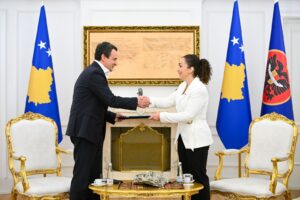

How ruthless or pragmatic will Hungary’s incoming prime minister be? We may get more of an idea this week when he meets with the pro-Orban leader of Romania’s ethnic Hungarian political party.
 Marc Roscoe Loustau



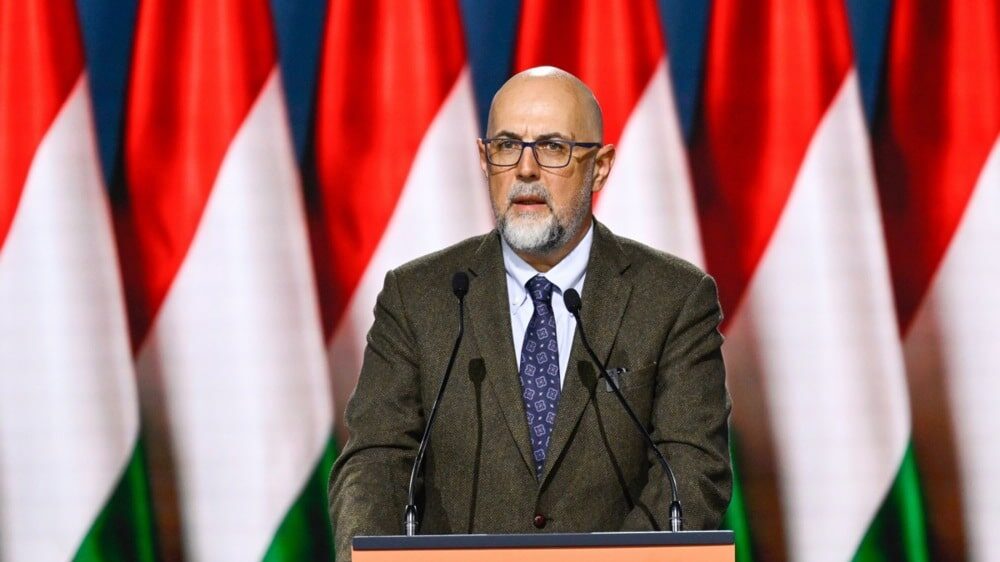
If Magyar decides to call for Kelemen’s resignation, it could set off a period of uncertainty and competition, not only within RMDSz but also among leaders of the Transylvanian Hungarian community’s other key institutions – especially the churches that in recent years have had to take a backseat to RMDSz.
To understand how this struggle might unfold, it’s important to trace the last 16 years of the Hungarian government’s Transylvania policy and how Orban used the system of financial subsidies to secure Transylvanian Hungarian institutional leaders’ allegiance even as the government pitted these institutions against each other. If Magyar is to make a real break with the past, he will need to get rid of this “competition for the symbols of loyalty” in favour of transparency.
Transylvania’s ethnic Hungarian churches historically played a key role in fostering ethnic identity and creating durable institutions for passing on Hungarian culture and language. This did not change during Orban’s 16-year rule; the leaders of Transylvania’s main Hungarian churches all received substantial funds from the government.
The Catholic and Reformed churches in Transylvania each have over 400,000 members. In Orban’s first decade in power, the Transylvanian Reformed Church benefitted most from government largesse. It received nearly 192 million euros between 2011 and 2022. While grants to Transylvanian Hungarian Catholic dioceses totalled 30 million euros during this same period,
Orban preferred to distribute funds to the Catholic community through a patron-client relationship he established with a prominent Franciscan priest called Csaba Bojte. When Orban came to power, Bojte was already well known for founding the Saint Francis Foundation, a network of orphanages. Between 2010 and 2022, Orban’s government gave Bojte over 50 million euros, allowing the foundation to significantly expand its activities.
These funds were turned primarily towards renovating churches and religious schools. Infrastructural repairs were a priority because these projects turned out tangible, easily publicised results. Ribbon cuttings and other inaugural events – during which Hungarian political figures appeared in photo ops alongside church leaders – became a regular feature of pro-government propaganda in both Hungary and Romania.
The government fostered “loyalty” competition among the Transylvanian Hungarian community’s different secular and religious institutions through its funding mechanisms. The main players were Kelemen as leader of the main political party, who competed against Bojte and other church leaders. Church leaders also competed against each other.
The currency in this competition was not only government funding but also access to government-controlled media. A church leader appearing alongside a high-level government official was a not-so-subtle message about belonging and loyalty. Honorary state awards were currency in this contest, signalling to whom one belonged as patron or client. Thus, in 2024, Hungary’s then-president Katalin Novak, a member of the Reformed Church, awarded Reformed Bishop Bela Kato with the Grand Cross of the Hungarian Order of Merit. Novak, herself a Reformed Protestant, praised Kato’s extensive work directing building repair grants for over 500 different projects. The elaborate ceremony on Budapest’s Castle Hill was covered extensively by the pro-government media.
Transylvania’s Hungarian church leaders, as a result, developed a strongly pro-government orientation, according to Transylvanian Hungarian podcaster Anna Kiss. “It’s not just that the average Transylvanian Hungarian churchgoer might encounter their clergy preaching straight from one of Orban’s speeches from the pulpit on a Sunday,” Kiss observed in a recent episode of her Mikozod podcast, “but also that some clergy actually adopted various elements of Orban’s propaganda, especially xenophobic narratives.”
Kiss, who was once active in the Reformed Church, counts the cost mostly in church leaders’ silence about pernicious social ills. She mentions their refusal to question the Orban government’s xenophobia, even though, according to Kiss, welcoming thy neighbour is a fundamental Christian tenet. The leaders of Transylvania’s historical churches also failed to speak up for children suffering neglect and abuse in Hungarian government-funded homes and schools.