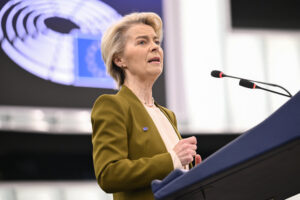

The German chancellor is casting around for someone to blame abroad as growth stalls and his popularity nosedives at home.
 James Angelos



Merz’s attacks on Brussels are part of a bid to placate German industry leaders, who blame excessive EU regulation for a loss of competitiveness. Four in five German firms complain that bureaucracy has increased over the past three years, according to a survey of 1,000 companies by the German Economic Institute. More than 90 percent want EU rules scaled back.
“Only as a strong economic hub can we be a strong international player,” Stefan Berger, a German conservative MEP focused on the economy, told POLITICO. “In this situation, it makes sense to look to Brussels, scrutinize some existing regulations and cut through unnecessary red tape so that European companies can focus more on production and less on paperwork.”
Merz’s attempts to pin the blame abroad have a great deal to do with his limited domestic options and sinking popularity. The chancellor this week, for the first time, fell to last place in polling firm INSA’s popularity ranking of Germany’s 20 most prominent politicians. Meanwhile, only 15 percent of Germans said they are satisfied with Merz’s centrist coalition, according to Germany’s benchmark ARD-DeutschlandTrend poll released early this month, a new low.
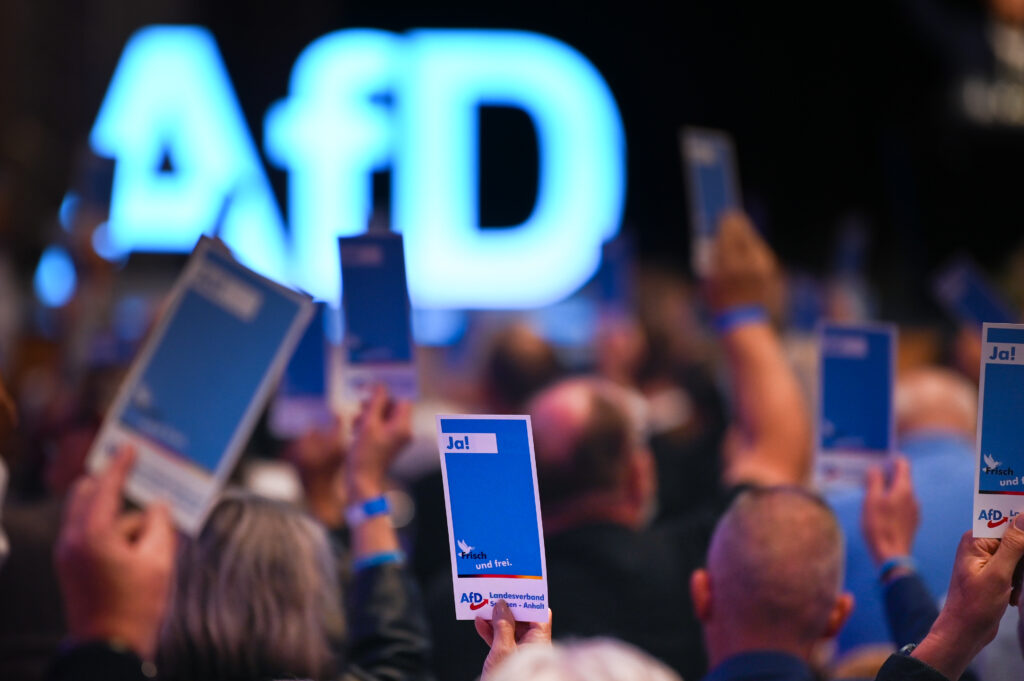
As dissatisfaction with Merz’s government grows, the far-right Alternative for Germany (AfD) party — which has been hitting the government hard on the economy and high energy prices — has surged to new heights in polls, and is now the most popular force in German politics, according to POLITICO’s Poll of Polls.
‘The cause lies with us’
The trouble for Merz is that he has no easy domestic political options for immediately stimulating Germany’s export-oriented economy in the face of strong global headwinds that have hampered growth, from the conflicts in Iran and Ukraine to Trump’s trade wars. Last week the German economy ministry slashed its growth forecasts for 2026 and 2027, citing the fallout of the war in the Middle East.
A historic move by Merz and his allies to unleash hundreds of billions of euros in borrowing for infrastructure and defense last year — widely referred to as an economic “bazooka” at the time — failed to produce the economic blast many in his centrist coalition had hoped for.