
Lack of clarity about funding and political commitment threatens to cloud the EU Commission’s ambitious Pact for the Mediterranean.
 Benjamin Fox



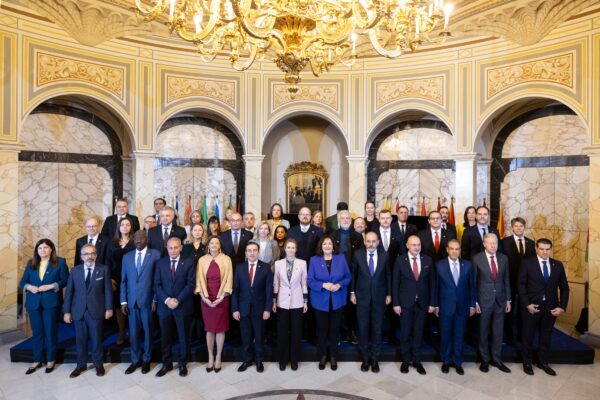
EU officials set out plans for the first 20 projects as part of the bloc’s Pact for the Mediterranean on Friday (17 April), including a Mediterranean University with campuses across the region.
One of the flagship projects when the European Commission first proposed the pact last October, the Mediterranean University has been earmarked for €11m from the EU budget.
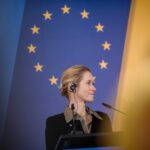
Commissioner Dubravka Suica said that the programme had been “welcomed with enthusiasm” by countries in the region. The action plan is a “working document” and will be updated twice a year, she added.
The commission says that the pact will eventually deliver over 100 initiatives which will directly benefit citizens and businesses. “This is just the beginning of our journey to a common Mediterranean space”, Suica told reporters on Friday.
Other early initiatives include plans for a Youth Parliamentary Assembly, enabling young, elected European and southern Mediterranean representatives to gather in a structured platform and contribute to regional policies.
The commission has proposed to allocate €42bn to the Mediterranean region in its next seven-year budget framework in order to fund the various initiatives but details on how much of this is new funding are unclear.
At its heart is a Trans-Mediterranean Renewable Energy and Clean Tech Initiative, which the EU Commission says will support the region’s energy transition and renewable energy trade.
Also among the early projects is a European firefighting response unit based in Cyprus that will, the commission says, support “the development of an all-hazards early warning system.”
That appears to be a reference to the spate of recent wildfires in a number of Mediterranean countries although there is little concrete detail on how it would work in practice.
Words not deeds?
But the lack of clarity has led some to question the EU commission’s level of commitment.
The pact is “timely but risks defaulting to short-term, piecemeal deals rather than the comprehensive partnerships Mediterranean countries require,” warned Tarek Megerisi of the European Council for Foreign Relations in a paper published on Thursday (16 April).
Megerisi added that the pact’s “menu” approach encourages governments to access individual EU programmes and that the commission should instead offer “investments, energy partnerships, visa programmes and infrastructure tailored to individual countries” if it wants to bring them closer to the EU.
The EU’s main policy priority with North African countries in recent years has been migration control, with the commission brokering a series of multi-billion euro ‘cash for migrant control’ deals with the likes of Egypt, Lebanon, Tunisia and Mauritania.
The commission says that the Mediterranean Pact will take a “whole of route approach to migration management” which, it says, “will enhance cooperation on preventing illegal migration, countering migrant smuggling and human trafficking, and scale up talent partnerships”.