There is no energy crisis in the world, and experts do not expect one in the near future, regardless of the fact that the Persian Gulf may remain closed for quite a long time, says Mikhail Krutichin.
 Petra Procházková



The panic is greater than reality warrants, thought a man who was born in Russia, lived through the Islamic revolution in Iran and has studied energy his whole life. Analyst Mikhail Krutichin believes that despite all the upheavals, wars and blockades, oil and gas will always find their way to us.
We also asked:
What could the blockade of Iran bring and how long can it last? What happens to an oil well when production has to be stopped? Why is Russia’s era as an oil superpower ending?
The US has not yet resumed bombing Iran, but has opted for a blockade. What can they achieve?
The blockade has to last long enough for Iran to get into such severe economic trouble that it helps bring down the regime. But note – this is a regime that, although significantly weakened and with virtually no military potential, has preserved all the institutions of state power. And above all, it still has an extensive and powerful repressive apparatus, which remains functional.
And does it have a leader?
The leader is gone. He does not exist. Personally, I think he is somewhere in a morgue. What kind of leader would he be if they did not show him to the nation and if some unknown faces read out messages from little slips of paper on his behalf? The conviction is growing that Iran simply has no leader.
Mikhail Ivanovich Krutichin
Iranologist, translator, energy expert, candidate of historical sciences. He studied Persian and Persian literature at Moscow State University.
In Iran in the 1970s he worked as a military interpreter, later as a correspondent for the TASS agency. Besides Tehran he lived in Cairo, Damascus and Beirut. Since the 1990s he has been engaged in analysis of energy markets, and headed the US magazine Russian Petroleum Investor. In addition to Russian, he speaks Persian, English, French and Arabic. He has lived in Oslo, Norway since 2022.
So who is running the country?
A few generals from the Islamic Revolutionary Guard Corps. It is a small military junta. All its members are fanatics, and they are all afraid of one another. If one of them happened to agree to a compromise deal with the US, they would most likely remove him quickly.
There was a suspicion that the speaker of parliament, Mohammad Baqer Ghalibaf, who is also a Guards general, agreed with some of the compromise points proposed by the Americans. He was immediately pulled out of the talks. It is probably no longer possible to negotiate with him now.
Do Iranian fundamentalists believe they can resist like this indefinitely?
They do not. We even already have information that talks were held among senior Iranian generals, and at those meetings, the words were spoken: “How much time do we have left?”
Before the Americans roll over them?
No! Before people take to the streets.
How to put a well to sleep
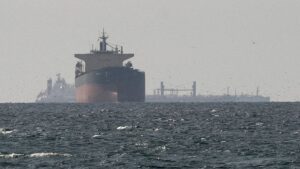
The fact that the blockade has stopped Iranian oil exports has, besides the lack of funds, another consequence – what to do with the extracted crude that you cannot get onto the world market?
They will soon have to significantly cut production.
Is it possible they will have to shut down most of the wells? What are the technical challenges?
They still consume some oil at home. Some of the refineries are still operating. But exports are paralysed. They are now storing oil intended for export in tankers and old reservoirs. They are looking for any storage capacity they can find, pouring it into everything it can be poured into.
But this emergency storage has its limits…
It does. That is why production in Iran is expected to fall by 1.5 million barrels a day in mid-May. Which is a really huge figure. (Today, Iran is estimated to be producing about 3.3 million barrels a day, editor’s note.)

So shutting down wells will come next?
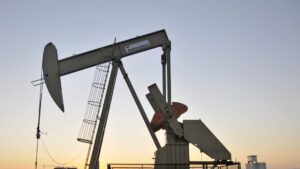
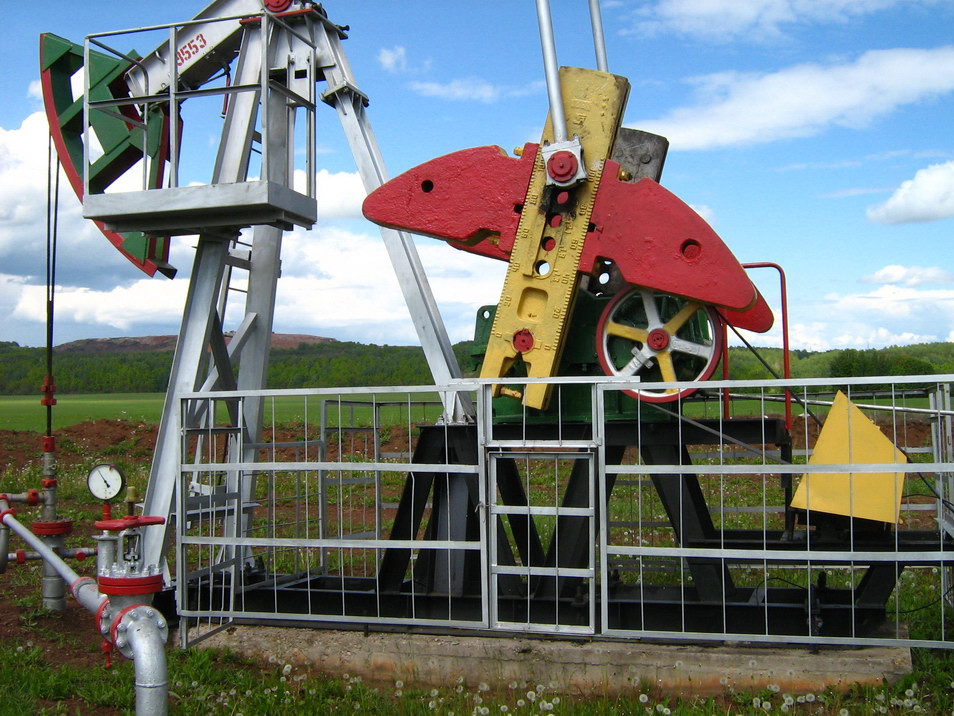
For now, they are reducing production, which we can clearly demonstrate because we see they have stopped injecting gas underground to maintain or increase pressure. The oil then rises under this pressure, is pushed upwards. It is a classic extraction technology.
The Iranians extracted oil this way using large volumes of gas. They do not know how to liquefy it, so they have plenty of it. Now too much, since they stopped injecting it into the wells. That is why they are flaring it, and of course we can easily monitor that.
For now, then, they are reducing production, but soon they will find themselves in a situation where they will have to shut the wells down.
Will it be possible to bring them back into operation after the war?
Probably not. They will have to drill new ones. But everything depends on the type of well. When oil is gushing like a fountain, there is naturally high pressure inside, so it is possible to mothball the well and later use it again.
But when it is an old well and underground pressure is low, it can easily happen that it will no longer be usable. Paraffins will settle on the walls and the oil will not flow. There are many such old wells in Iran. So it will be a huge blow for the country.
The loyalty of soldiers will be decisive
You say that the guardians of the revolution are afraid of what they are guarding – a revolution, an uprising. Is it likely that Iranians will once again take to the streets to protest against the regime, as they did this winter and many times before?
It is a question of when. When life becomes unbearable for them. That is exactly what the Americans are waiting for and counting on.
Have they placed their bet on the right card?
In Iran, the population is under enormous economic pressure. People are in a terrible situation. President Masoud Pezeshkian admitted: We have nothing to pay your wages with. There is no money.
The exchange rate of the national currency is collapsing. Recently, the dollar was selling for 1.6 million rials, now it is 1.8 million rials to one US dollar.
What is left of foreign trade operates on a “straight off the wheels” basis. If they manage to get a tanker with oil somewhere, they get paid and immediately spend the money, instantly buying whatever is most needed. According to what the junta says. But now, because of the blockade, they can hardly sell anything.
Unemployment is brutal. Seventy percent of oil and chemical plants have been destroyed. Small operations are closing too. Many people literally have nothing to eat.
The situation is very serious.
Will Washington have to wait days, weeks or months?
Hard to say. But if I had to make an estimate, about two months.
A revolution in the middle of summer?
Summer has its own potential in this case. In Iran, traditional hardships will become more acute. For the sixth year, there is a threat of severe drought. Reservoirs will again be empty, people will have their water and electricity cut off. Last year in Tehran, residents received water on ration, and the ration was negligible.
There has even been talk of possibly moving the capital elsewhere, or at least relocating part of the population to the countryside. So another fatal problem will be added.
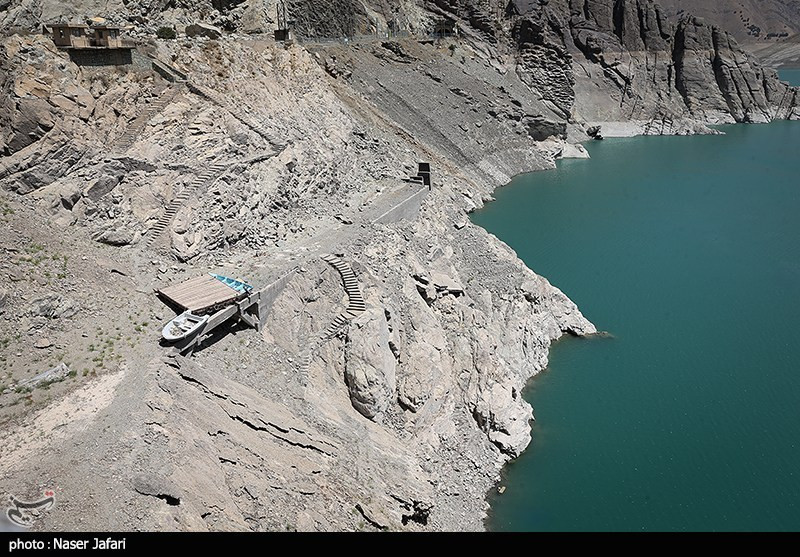 The almost empty Amir Kabir dam near Karaj, which supplies Tehran with water. Source: Nasir Jafari, Tasnim
Will people be so desperate that they will take to the streets even though they risk being shot or executed?
Yes. But there is another important point. For an uprising to succeed, part of the armed forces has to side with the citizens. The rank and file of the Islamic Revolutionary Guard Corps, soldiers of the regular army, the police, the armed men of the Basij (volunteer paramilitary units subordinated to the Guards, editor’s note) and other security forces.
Why would they do that?
Because they will stop getting paid. Many of them are not fanatics. They serve for money. And when they find out they will not get any, they may join the protesters. It is hard to predict, but there is such a chance. I think so also because I have already seen such a revolution in Iran when I worked there in 1979.
But what then? Iran is a huge country awash with oil and weapons. Is there any plan for whom to entrust with running it? Is there no danger of a bloody civil conflict?
It is better to stick to facts than to invent all sorts of hypotheses.
The US administration assumed it would replicate the Venezuelan model in Iran. That consists of the following steps: you eliminate the leader, you bribe the others. They then start working for you and promoting a policy in the country that is advantageous for America.
But the state system does not change.
After the Venezuelan success, the Americans thought that once they removed the spiritual leader, they would find some Ghalibaf there, who had similarly venal friends around him, and together they would pursue a pro‑American policy.
But it turned out that this is not how things work in Iran. There is no one in the country’s leadership who would enter into such a venture with the Americans.
Moreover, I believe that Iranians themselves would rebel against such a model. People today will not accept anyone from the old regime.
Do the Americans have some replacement for the Islamic spiritual leaders? For example Mohammad Reza Pahlavi, the son of the last Iranian shah?