
It is easy to forget that not all that long ago, Britain was one of the world’s biggest oil producers.
 admin
admin



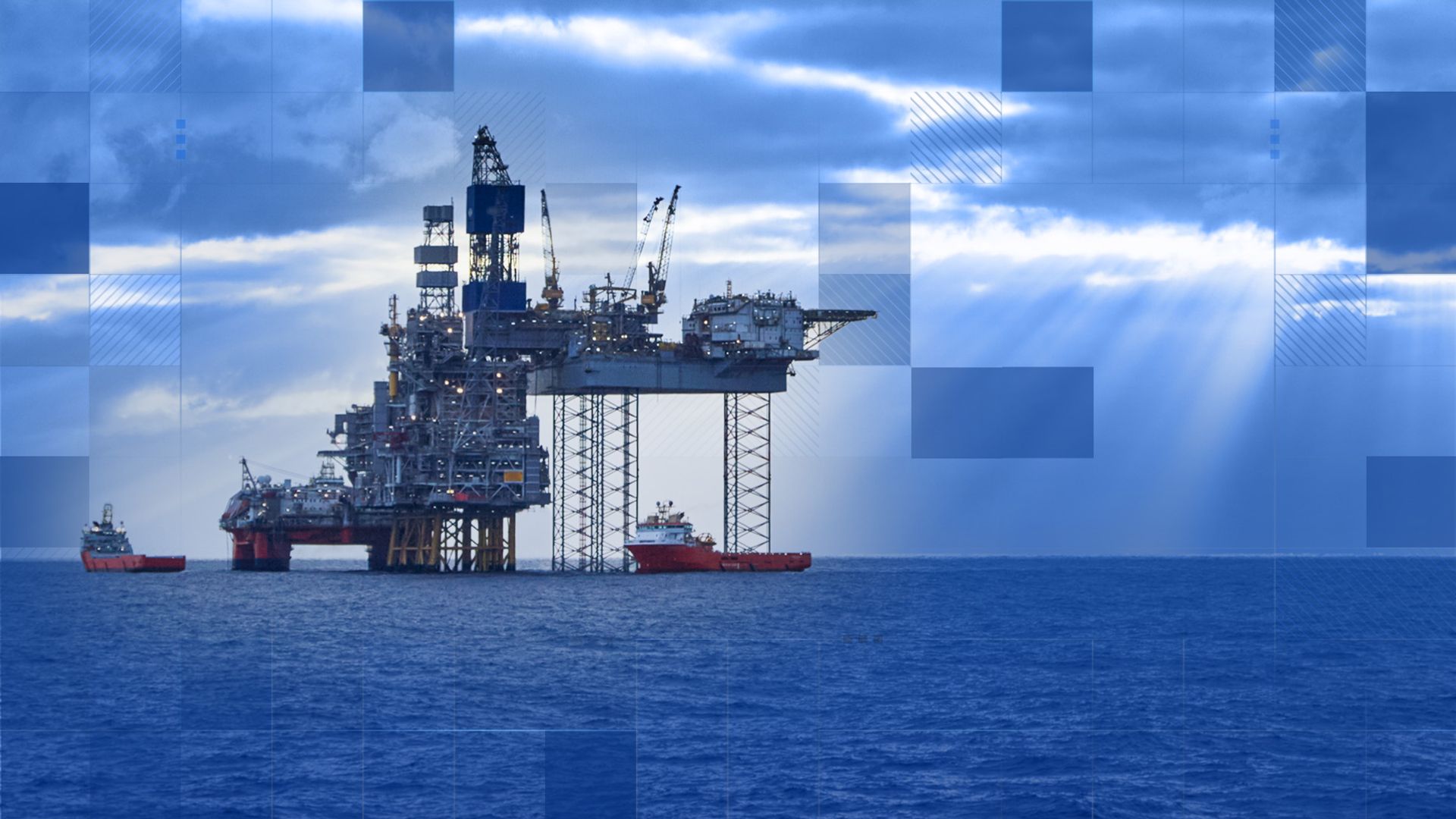
It is easy to forget that not all that long ago, Britain was one of the world’s biggest oil producers.
Back in 1986, this country was the fifth biggest crude producer in the world, just behind Mexico and above Iran and Iraq. Even as recently as the turn of the millennium, the UK was still in the top ten.
It is easy to forget, too, that as the oil gushed out of the North Sea it had an extraordinary impact on Britain’s public finances. In the middle of the 1980s, North Sea oil revenues accounted for a whopping 6% of all government revenues – the equivalent, in today’s money, of every pound we spend on our armed forces.
Yet speak to most folks, both in Westminster and beyond, these days and not only have they typically forgotten this history, they also assume something else: that the North Sea is essentially finished.
Such questions, always hotly debated, are suddenly all-important, given Britain is once again facing a sharp increase in energy prices, after the attacks on Iran and the closure of the Strait of Hormuz sent oil and gas prices spiralling.
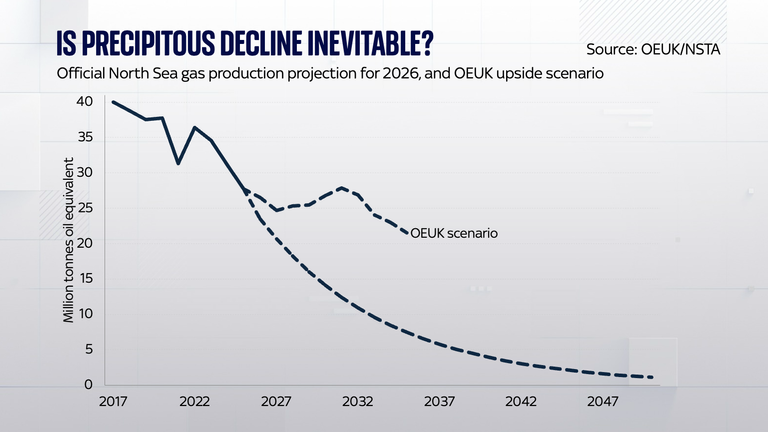
To some extent, this whole debate can be boiled down to a chart which frequently does the rounds in Westminster. It shows a precipitous decline in North Sea oil and gas production. And, even more damningly, it shows that even if there is more exploration and further discoveries, production would barely be any higher. The Labour MP Jeevun Sandher recently reproduced a version of this chart on X, in response to calls to explore for more North Sea gas, commenting: “What North Sea gas?”
I should probably come clean and admit that I have occasionally reproduced this chart as proof that there is little left to be squeezed out of the North Sea, even if we wanted to. But then I dug a bit further and found something intriguing. In fact, the chart isn’t necessarily inevitable; in fact, North Sea production could be considerably higher.
More from Money
To understand why we need to start with a little bit of geology. The North Sea is what most folks in the oil sector call a “mature basin”. This doesn’t mean there’s no oil left or indeed that new discoveries couldn’t happen (Norwegian firms seem to be discovering rather a lot of new fields at the moment) but it does mean there are pretty good geological maps of most of the region.
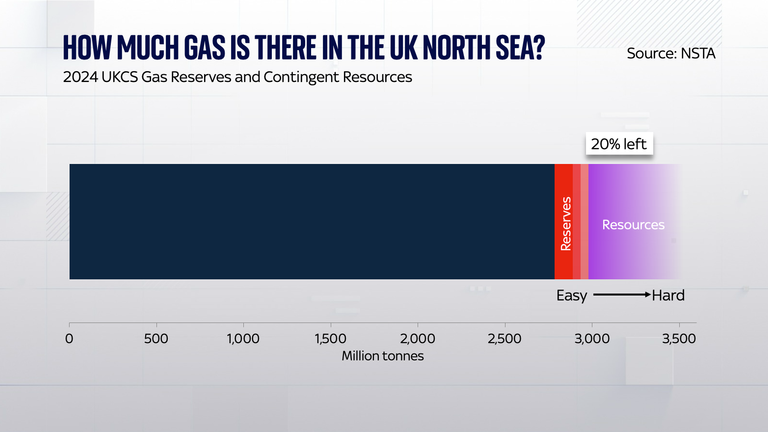
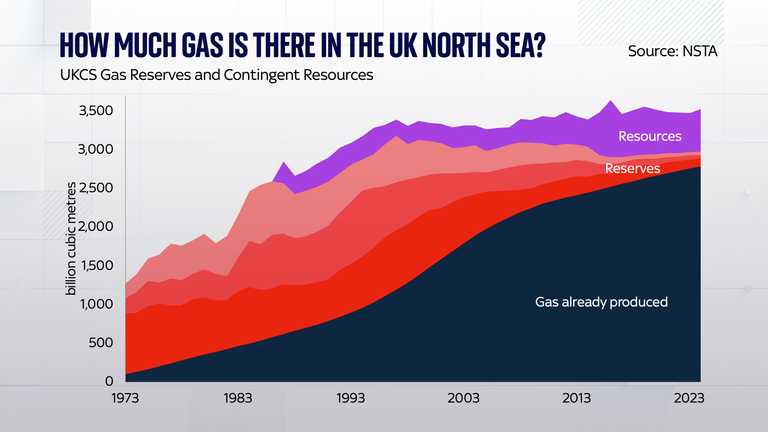
And we have a pretty good sense of how much oil and gas there is beneath the surface of the seabed. Those figures are marshalled by an organisation called the North Sea Transition Authority (NSTA), which does for oil and gas figures what the Office for Budget Responsibility does for the government’s economic and fiscal numbers – it’s a sort of independent regulator within government.
You need javascript enabled to view this content




 Enable javascript to share Share