

Under Viktor Orban, Hungary became an important financial and political backer of Milorad Dodik’s administration in Republika Srpska – and his electoral defeat could have serious consequences for the Bosnian Serb leader.
 Stefan Blagic



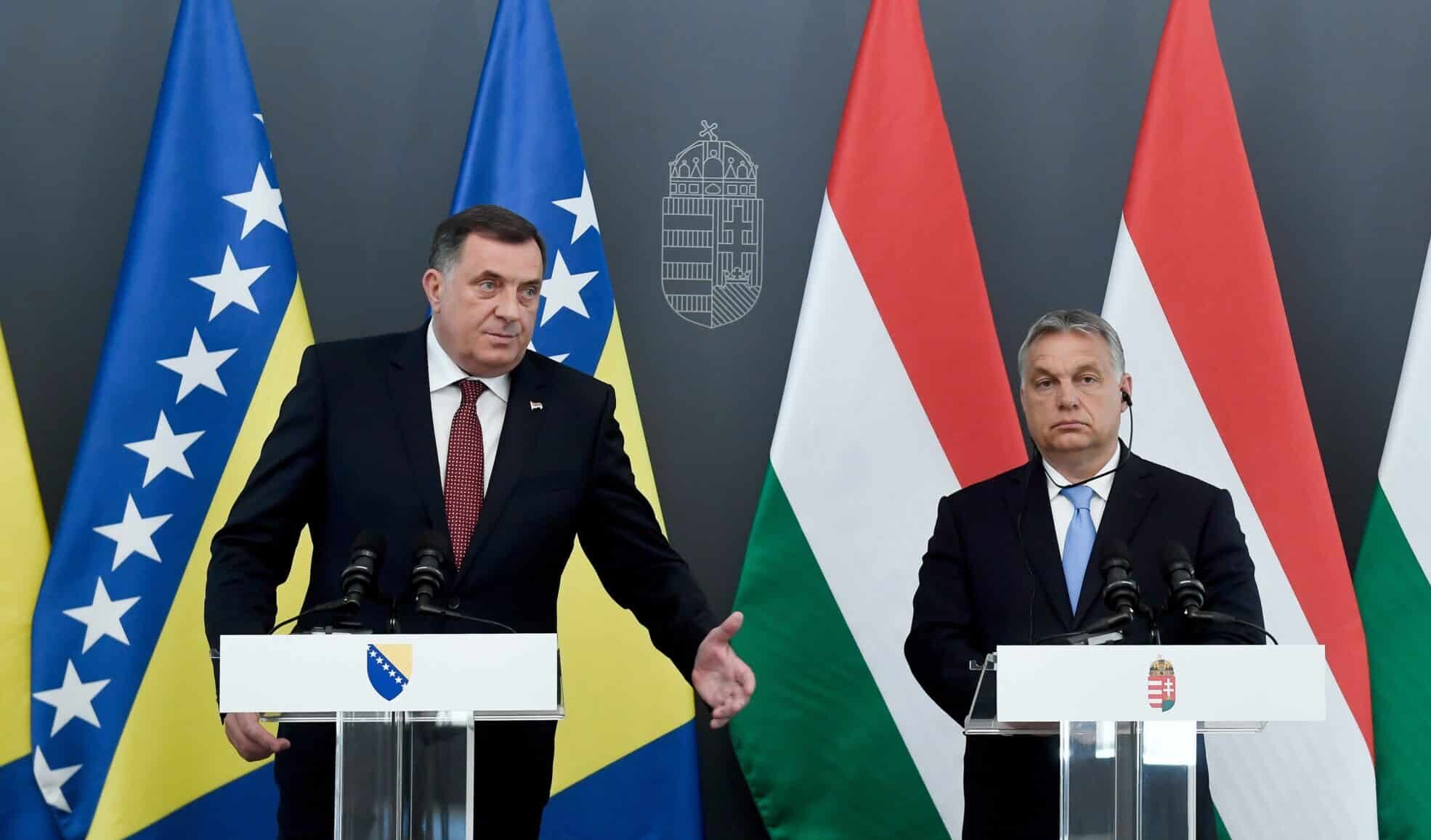
Viktor Orban’s electoral debacle was witnessed on both sides of the Atlantic on Sunday, as the Hungarian elections captured the attention of both Europe and the United States. While it’s evident that the European Union, Russia and the US had the most direct stakes in the outcome of these elections, the countries of the Western Balkans were far from indifferent observers. On the contrary, developments in Hungary were followed with considerable interest across the region.
In Republika Srpska, one of Bosnia and Herzegovina’s two entities, the Hungarian elections were monitored with particular attention. Over the past decade, former President of Republika Srpska Milorad Dodik has built a strategic alliance with long-serving Hungarian Prime Minister Orban. This relationship has manifested itself not only through political and ideological alignment, but also through tangible financial support provided by the Hungarian government and affiliated financial institutions.
To properly understand the depth and scope of this partnership, it is necessary to revisit several key developments, beginning in June 2019. At that time, Orban hosted Dodik in Budapest and publicly stated that Hungary would, in addition to maintaining relations with Sarajevo, pursue “intensive political and economic ties” with Banja Luka. This moment effectively marked the formalisation of a special relationship between Hungary and Republika Srpska, setting the tone for what would follow in the years ahead.