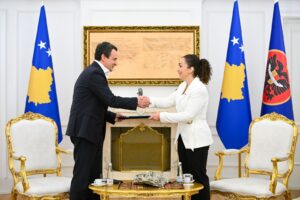

Viktor Orbán’s regime turned Mathias Corvinus Collegium (MCC), a private Hungarian educational institution, into a talent factory for Fidesz. By opening an office in Brussels and launching multiple events, MCC brought together rightwing politicians, journalists, academics, and other figures from across the world. These activities were facilitated by the peculiar
 Anton Shekhovtsov



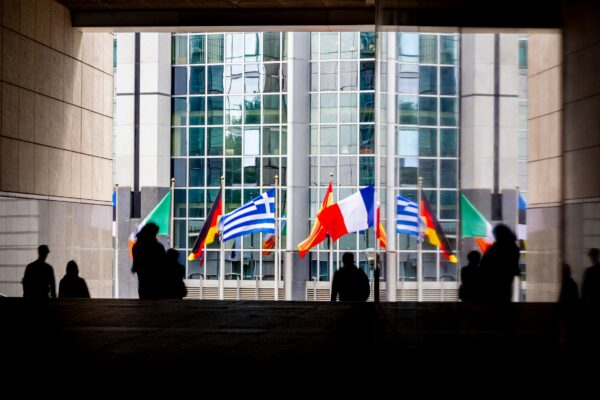
The defeat of the Fidesz party in the parliamentary elections in Hungary has not only ended 16 years of Viktor Orbán’s illiberal rule — but has also delivered a blow to far-right networks in Europe and beyond.
There are several aspects to this blow. The most obvious one is symbolic.
After returning to the premiership in 2010, following eight years in opposition, Orbán used his constitutional majority to reshape Hungary’s political system by centralising power, weakening checks and balances, and promoting a majoritarian, national-conservative state.
In 2014, apparently satisfied with the system he had been constructing, Orbán declared that it was a deliberate project aimed at building an illiberal state.
Since then, Hungarian authorities positioned their country as a laboratory for a new political order that openly rejected liberal democracy as a universal model.
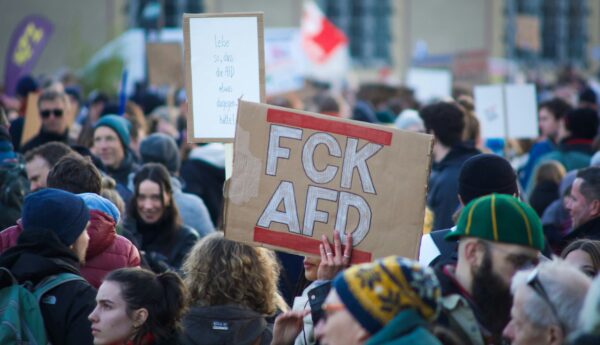
When Hungary refused to participate in sharing the EU’s burden during the 2015 refugee crisis, Orbán cast himself as the defender of “Christian Europe”, while his anti-migrant rhetoric became a reference point for many European far-right parties challenging their respective governments’ refugee policies.
Simultaneously, Orbán’s repeated confrontations with EU institutions, often met with limited resistance, strengthened his position as a leading figure of Europe’s far-right.
He cultivated transnational networks and promoted his governance model as exportable.
This culminated in 2024 with the formation of the “Patriots for Europe” group in the European Parliament, driven largely by his political influence.
However, the results of the 2026 parliamentary elections have demonstrated that, rather than constituting a perfect blueprint for building a lasting illiberal state, Orbán’s regime could be ultimately crushed by the very force he claimed to represent exclusively – the people.
What could be more humiliating for a populist than to be so decisively rejected by “his” nation?
International far-right networking
But the blow to the European far right delivered by Fidesz’s defeat goes beyond the symbolic dimension.
As it consolidated power in Hungary, Orbán’s regime turned Mathias Corvinus Collegium (MCC), a private Hungarian educational institution, into a talent factory for Fidesz.
At the same time, as Orbán became increasingly engaged in international far-right networking, MCC was transformed into a key hub for these activities.
By opening an office in Brussels and launching multiple recurring events, MCC brought together rightwing politicians, journalists, academics, and other figures from across the world.
In doing so, it strengthened Orbán’s position as a leader of the transnational far-right movement and further promoted his model of illiberal governance.
These activities were facilitated by the peculiar financial arrangements granted to MCC by the Fidesz government.
The billion-euro ‘think-tank’
In 2020, Hungarian authorities transferred large public assets – including significant stakes in the MOL oil and gas company (10 percent) and the Gedeon Richter pharmaceutical company (10 percent) – into MCC’s foundation, effectively endowing it with wealth worth over a billion euros.
These shares generated substantial annual dividends, providing MCC with a stable, long-term income stream. The funding was used, in particular, to support generous fellowships for international far-right figures, pay for speaking engagements, sponsor conferences and networking events, support publications and media platforms aligned with Orbán’s ideological agenda.