

From sentencing a citizen to 13 years for a bus stop graffiti and erasing court records to rehabilitating the architect of the ‘Red Terror,’ Felix Dzerzhinsky, Russia is rapidly backsliding into its most brutal Soviet-era habits. Russian historial Sergei Lukashevsky contends that Putin’s regime has adopted certain methods of governance
 Mirek Tóda



From sentencing a citizen to 13 years for a bus stop graffiti and erasing court records to rehabilitating the architect of the ‘Red Terror,’ Felix Dzerzhinsky, Russia is rapidly backsliding into its most brutal Soviet-era habits.
On the surface, these are two unrelated events. Both, however, showed this month how political repression in Russia is escalating and how Putin’s regime is increasingly using the harshest practices of the Soviet Union.
The regime erases its own repression
First, the independent Russian website Viorstka noticed all judicial statistics for the past two decades had disappeared from the website of the Russian Supreme Court. The court was obliged to publish new data by 20 April for the second half of 2025. It did not do so, and all existing records vanished from the section as well.
Reporters noticed that they had been replaced by a message about “temporary unavailability”.
The statistics were one of the last remaining tools that made it possible to map the scale of the Russian state’s repressions against its own citizens.
This finding is all the more serious because, since Russian president Vladimir Putin launched his all-out war against Ukraine in February 2022, political and personal freedoms in Russia have narrowed significantly and the number of arrests for offences such as treason, spreading “fake news” about the army, “discrediting” the army or sabotage has sharply increased.

One of the most absurd cases is the story of Sergei Veselov. He was sentenced to 13 years in prison for writing the approximate number of Russian soldiers killed in Ukraine on the wall of a bus-stop shelter.
The court sentencing him described this as an act of vandalism motivated by political hatred, the spreading of “fake news” about the army, and evidence of his alleged participation in a unit of Russian citizens fighting on Ukraine’s side.
Another example shows the enormous effort to silence critics and inconvenient facts about the country’s decline. Sociologist Salavat Abyzalikov was fined 5,000 roubles (€55) for giving an interview about Russia’s demographic crisis. He himself lives abroad and has no plans to return to Russia.
Reporters from Meduza spoke with him about how, by 2100, Russia’s population could fall to 90 million people, and under a pessimistic scenario to only 57 million. The Russian Federation currently has roughly 146 million inhabitants.
Particularly bizarre is the case of activist Pavel Andreyev from Syktyvkar. He faces criminal prosecution because investigators confused him with a namesake from Ulyanovsk. They do not want to admit their mistake, and so the case continues.
The end of a window into Russian justice
These are far from isolated cases. According to the Russian human rights organisation OVD-Info, from the start of Russia’s invasion of Ukraine until the end of September 2025, 692 people were criminally prosecuted on fabricated charges of “spreading false information” or “discrediting” the army.
Last year, the number of political prisoners rose to 1,217, compared with 805 at the end of 2024. As Human Rights Watch pointed out, these are only documented cases.
With the disappearance of judicial statistics, it is harder to determine the real figure.
The data that the Supreme Court deleted included the number of people convicted, their demographic breakdown, the sentences imposed under individual articles of the criminal code, and information on civil and administrative proceedings.
“These statistics were a key window into the reality of the Russian judiciary. They made it possible to compile a ranking of the most frequently used articles, track year-on-year trends and assess how courts in Russia actually operate,” respected Russian political scientist Yekaterina Shulman explained to the investigative website The Insider.
In addition, as the human rights project First Department discovered, president Putin approved a decree allowing Russian security bodies to arrest people for criticising the war without a court decision.
“On the basis of Putin’s decision, people considered ‘opponents’ of the war may be ‘transported and placed’ in facilities functioning as detention centres,” Meduza wrote.
Rehabilitating Iron Felix
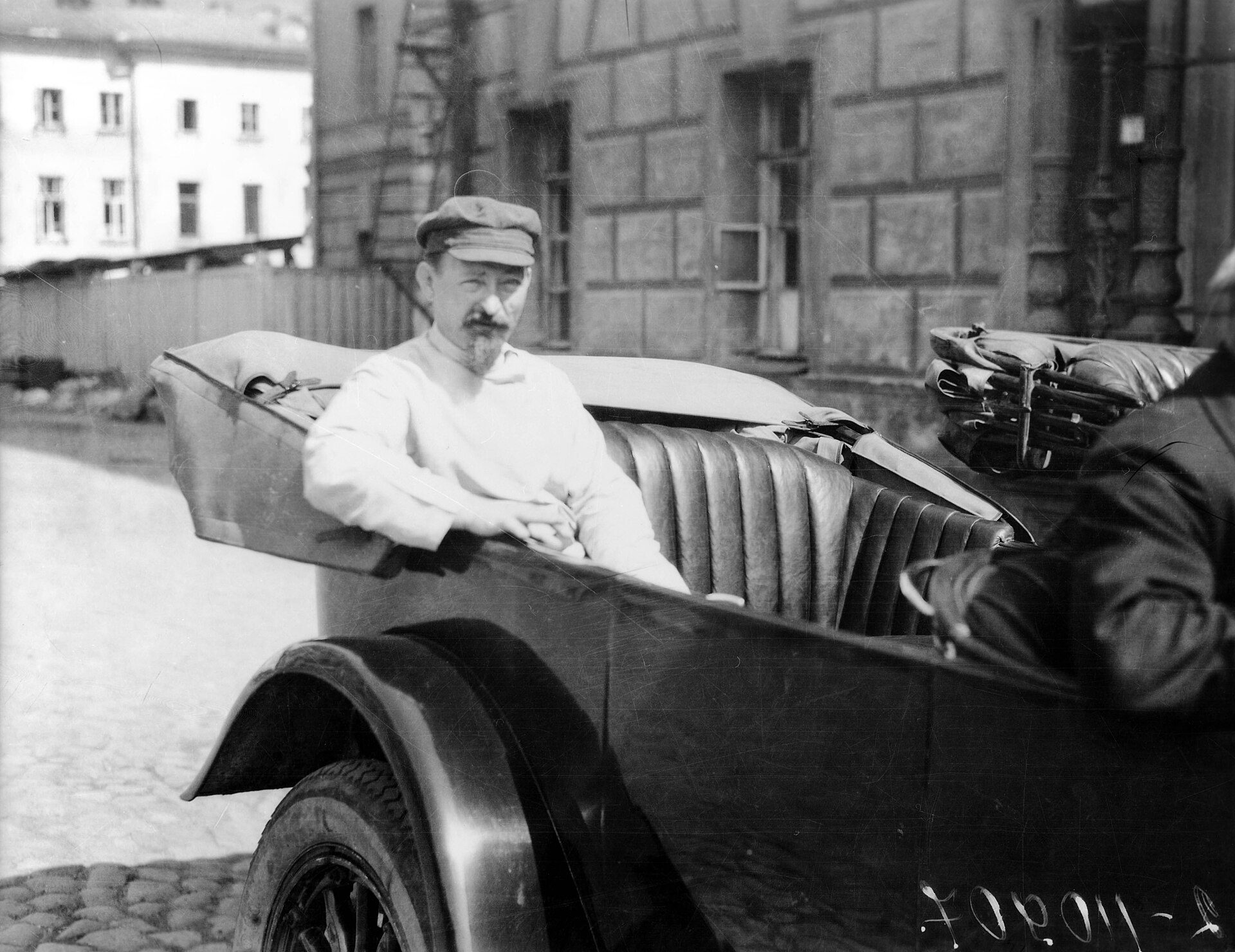
Putin showed where he was looking for inspiration with another decision. He granted the FSB Academy, the training institution of the Russian secret service, an honorary name after Felix Dzerzhinsky, the head of the first Soviet secret police, and the organiser of the so‑called “Red Terror” after the 1917 revolution.
The roots of the academy go back to 1921, when Dzerzhinsky’s secret police set up a special institute for the operational training of its agents, gradually changing its name in line with the reorganisation of Soviet security services.
The Institute for the Study of War described the renaming after Dzerzhinsky as a symbolic return by the Kremlin to the practices of the Stalin era.