
Romania is bracing for a period of political uncertainty after the resignation of one third of its ministers from its coalition government.
 Marian Chiriac



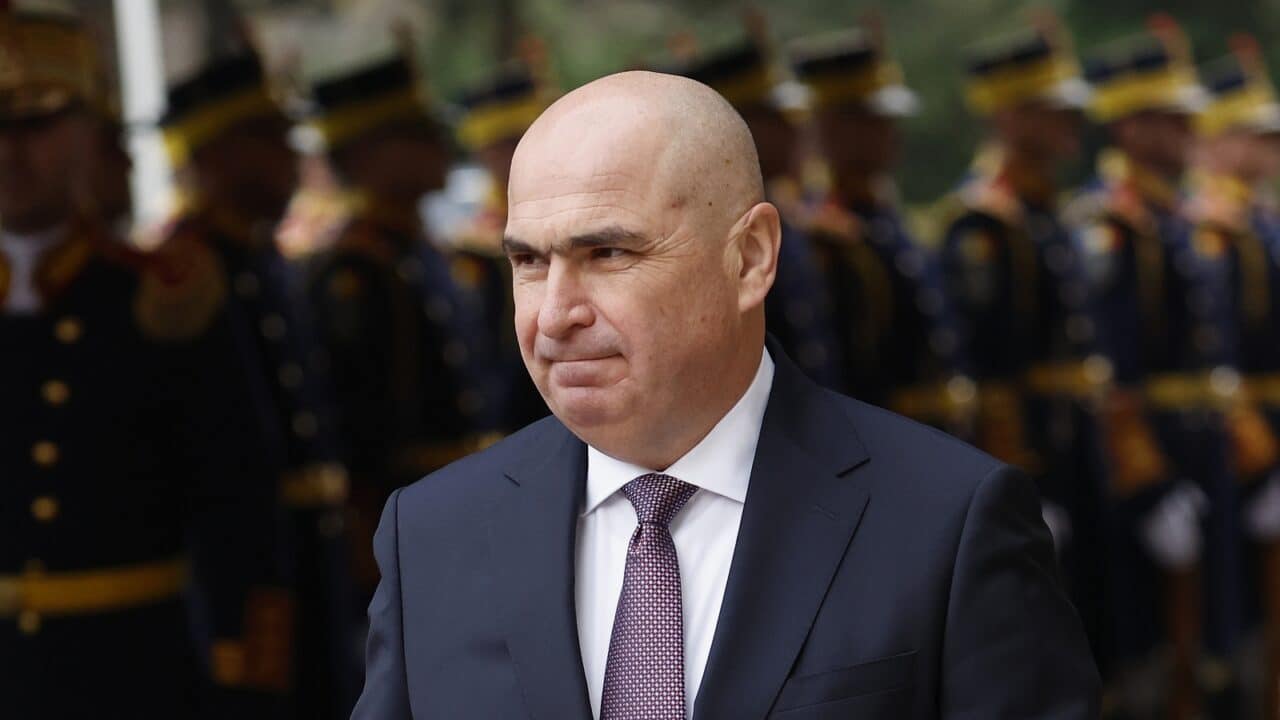
Romanian Prime Minister Ilie Bolojan in Bucharest, Romania, 13 November 2025. Photo: EPA/ROBERT GHEMENT.
Six ministers from Romania’s Social Democratic Party (PSD) resigned on Thursday, in a move aimed to signal their discontent with Prime Minister Ilie Bolojan’s reform agenda. The walk-outs trigger political instability and increase concerns over the rise of the country’s far-right, which enjoys significant support.
In a statement released following the resignation of its ministers, the PSD leadership said it “marks the start of the change demanded by a broad majority of Romanian citizens”. “From this point on, the prime minister no longer has the backing of a parliamentary majority and therefore lacks the democratic legitimacy to lead the government,” the statement continued.
It added that the party is ready to take part in forming a new pro-European government and to support a prime minister – political or technocratic – who is responsive to citizens’ concerns and capable of working with the parties that ensure a parliamentary majority.
In a public statement shortly after the formal announcement of PSD’s decision, Prime Minister Bolojan said he will not resign. “The government must keep working. We have so many important issues to resolve in this difficult context,” he said.
Bolojan also announced the appointment of interim ministers from the current cabinet to temporarily manage redistributed portfolios.
The four-party ruling coalition was formed in June 2025 to contain the rise of the far-right Alliance for the Union of Romanians (AUR), led by George Simion. It followed the Constitutional Court’s decision to annul the result of the November 2024 first-round presidential vote over suspected Russian interference in favour of nationalist Calin Georgescu.
PSD were the dominant force in the coalition, which also included Bolojan’s centre-right Liberals and two other centre-right parties.
The coalition’s mandate was to stabilise Romania’s economy, which has the highest public deficit in the EU, to unlock 11 billion euros in EU recovery funds and preserve Romania’s investment-grade rating.
To meet these goals, Bolojan’s reforms have focused mainly on raising taxes, cutting public spending and reducing the number of public sector employees.
However, these policies have alienated the PSD’s traditional voter base, primarily older and more conservative citizens, while simultaneously boosting support for far-right parties. These parties already hold roughly a third of parliamentary seats.
Analysts warn that the current situation remains highly volatile. “It is far from clear what will happen next,” said political analyst Cornel Codita. “It is possible for a minority government to function for a while, but it would make it harder to pass meaningful reforms and could jeopardise access to EU recovery funds.”
Codita believes that with PSD pushing for the prime minister’s removal and planning to file a no-confidence motion in the coming days, it is a real moment of jeopardy. “That risks fuelling public frustration and creating fertile ground for anti-establishment forces challenging Romania’s pro-European political order,” he said.
Meanwhile, two far-right opposition parties, including AUR – which currently leads in opinion polls with support of around 36 per cent – have also announced plans to table no-confidence motions in the coming weeks.