
A court in Kosovo will issue its verdict on Friday in the trial of three Serb men accused of involvement in a deadly attack on police in 2023. According to the indictment, Serbia is also in the dock.
 Ardita Zeqiri



In total, 44 individuals and one legal entity are named in the indictment. Forty-three of them, including Spasojevic, Tolic and Maksimovic, are charged with terrorism and serious acts against the constitutional order and security of Kosovo. The legal entity, RAD d.o.o., and its owner, Radule Stevic, are charged with money-laundering, as is one of the other 43 – the alleged ringleader, local Serb powerbroker, businessman and politician Milan Radoicic.
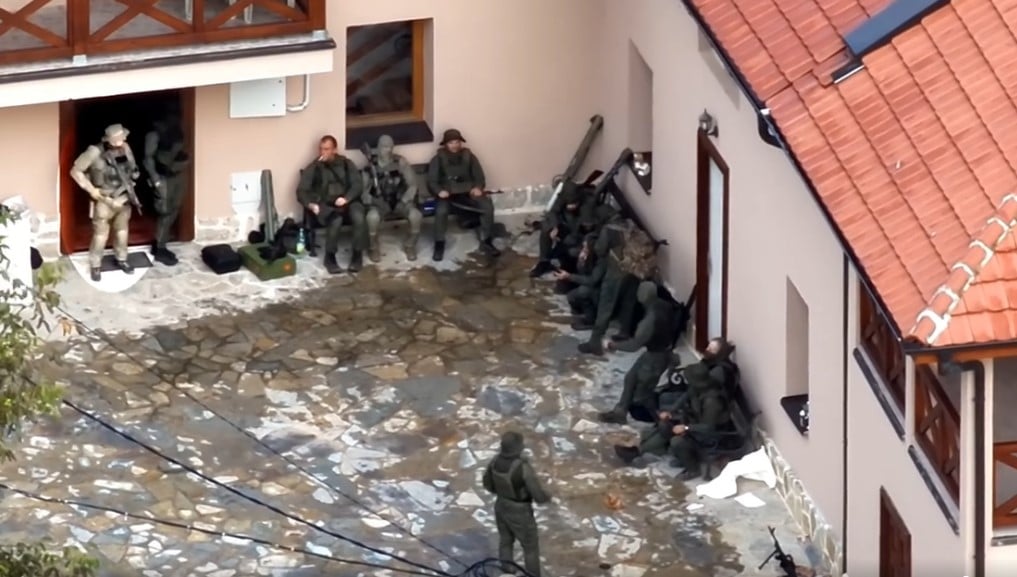
Two of the gunmen were confirmed killed, but reports say others were injured and treated in Serbia, their fate unknown.
Only Spasojevic, Tolic and Maksimovic are on trial, while the case against the others has been separated until such time as authorities can get their hands on them. Kosovo has issued international warrants for their arrest.
After the attack, Kosovo police seized anti-personnel mines, Zolja anti-tank rockets, 60mm mortar rounds and an M93 automatic grenade launcher.
Tolic, however, pleaded ignorance.
“I couldn’t have imagined such a tragedy would occur,” he told the court. “I did not want to be part of any violence.”
Maksimovic said he wasn’t involved at all, despite what prosecutors say are videos, photographs and phone conversations that place him at the scene, armed. All three face possible life imprisonment.
Radoicic is in Serbia, as, almost certainly, are the rest of his co-accused. He quickly took responsibility for the armed attack, but Serbia shows no sign of handing him over or putting him on trial itself.
Indeed, for years Radoicic had been a close political and business ally of Serbia’s government, deputy leader of the Belgrade-backed Srpska Lista party that works hand-in-glove with Serbia’s ruling Progressive Party in safeguarding Serbian interests in the north of Kosovo – a former Serbian province that broke away in war in 1998-99 and declared independence in 2008.
Radoicic stood down from the party in the wake of the Banjska attack and was questioned by Serbian prosecutors the following month on suspicion of creating an armed group, amassing weapons and “serious crimes against general security”. He was never charged in Serbia.
Radoicic claimed Serbia had no knowledge of his plans, but Kosovo says he would never have been able to amass such a cache of weapons and launch such an audacious attack without, at the very least, the tacit approval of Serbia.
In October 2023, BIRN reported that the mortar rounds and anti-tank rocket launchers used had passed through state maintenance centres in central Serbia in 2018 and 2021 respectively; the ammunition included 7.62x39mm assault rifle rounds that match those made in 2022 by the Belom factory, Serbia newest state arms producer.
Prosecutors in the case say preparations for the operation began almost two years earlier, at a meeting just over the border in Serbia between Serbian President Aleksandar Vucic and political representatives of the Kosovo Serbs, including Radoicic. Vucic has dismissed this as nonsense.
According to the indictment, Radoicic had been financing a “structured terrorist group” since 2017, with the aim of “separating” four Serb-majority municipalities in northern Kosovo “to join them with the Republic of Serbia”.
Prosecution seeks life imprisonment