

The government hails the ‘green revolution’ as a solution to economic decline, but some young jobseekers say the rhetoric does not match their experienceOn paper, Jake Snell, 19, sounds like the perfect candidate for a role in the UK’s burgeoning green energy sector. He has high grades in maths and
 Antonia Shipley



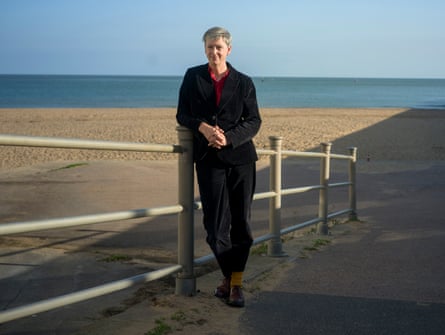
On paper, Jake Snell, 19, sounds like the perfect candidate for a role in the UK’s burgeoning green energy sector. He has high grades in maths and physics A-level, a distinction in BTec engineering and another distinction in an extended engineering diploma. He has also done work experience at an engineering company.
He is from Lowestoft, a coastal town in Suffolk, outside Great Yarmouth. Both towns contain areas that fall within the most deprived 20% in England and are part of a wider pattern of coastal places with low employment opportunities.
Snell’s hope, since secondary school, has been to join the green energy “revolution”, a sector the government is heavily investing in for economic growth. Last year, Ed Miliband pledged Labour would train people for an extra 400,000 green jobs by 2030, highlighting how roles in wind, nuclear and electricity networks would be spread across coastal and post-industrial communities, with higher salaries than the UK average.
To Snell, the path seemed relatively clear: undertake Stem subjects at college, then apply for apprenticeships rather than university. “We [college students] were all told that the education bodies that we were joining had great connections to industry and all these projects are coming up, look at these opportunities,” he says.
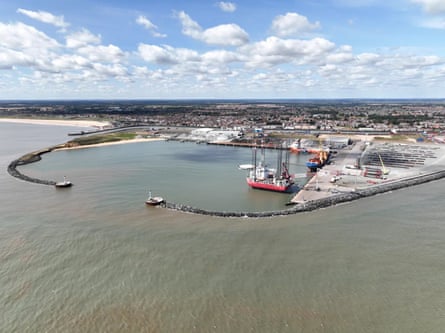
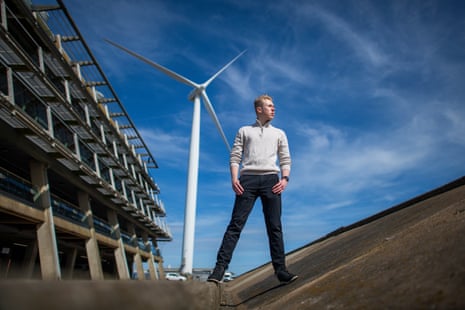
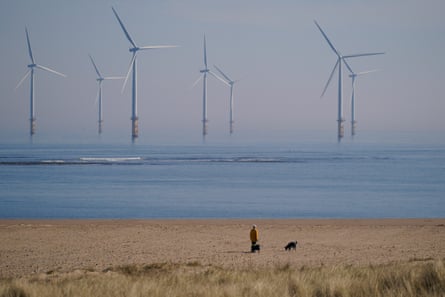
Where he lives on England’s wind-whipped east coast, these opportunities seem tantalisingly close. The east of England is home to 44% of the UK’s offshore windfarms. In Lowestoft, the Ness Point wind turbine, known locally as “Gulliver”, stands proudly on the shoreline, a sort of advertisement for the future. And in Great Yarmouth, the port was selected as the pre-assembly site for a £4bn offshore windfarm that is being constructed.
Yet at the end of Snell’s extended diploma, out of his 14-person cohort only two people ended up with apprenticeships, and only one of these was in engineering.
“It was quite frustrating,” Snell says. “Unfortunately, quite a lot of my friends who said that they didn’t want to go to university and wanted to take on these apprenticeship opportunities that were being promoted everywhere, are now going to university out of necessity more than anything, because they feel there’s no other option.”
It is easy to see why politicians are trying to sell green jobs as a panacea for economic decline in post-industrial heartlands, and as a way to appease net-zero sceptics. But to make these opportunities work for young people in these places, more work is needed, according to academics working in and with coastal communities.
Rachel Wilde, a social anthropologist at University College London who is working on a project examining the awareness and scope for green jobs in Great Yarmouth, says: “‘Green jobs’ is a somewhat nebulous term, and it would appear that there is little concrete evidence of what these jobs actually are.
“There’s a gap between politicians and policymakers wanting to get things out into the public eye and raise the profile of these new economic opportunities, and people on the ground who are trying to talk to young people about what jobs they might want to do. And there’s not really much joined-up thinking around that at the moment.”
Wilde has spent time working with organisations that run awareness schemes for careers within the renewables industry. She says there is a significant amount of promotion and advertising for well-paid roles, such as wind technicians, but that that is “not where most of the jobs are”.
“The government and some of the industry are setting people up to imagine that there’s all these jobs in high-profile roles when, actually all the apprenticeships and training opportunities for those are really oversubscribed,” she says.
This is particularly pertinent in coastal areas, where educational attainment is typically lower. But although this may seem like a problem for industry and the government, it actually presents an opportunity, says Avril Keating, a professor of youth studies at UCL who led the Coastal Youth Life Chances project.
“I think it’s part of thinking through ‘green jobs’ and what they are,” she says. “They are supposed to save deprived communities and help get people back into work. But are these posts suited to the people in these communities?
“There are lots of ways in which you could work in the green energy sector. It could be working in the canteen, it could be the porter, it could be the security guard.”
Yet this highly beneficial element of the green industry is vastly overlooked, say Wilde and Keating. They believe more investment in continuing careers support for people in coastal and other economically deprived areas is urgently needed.
Polly Billington, the MP for East Thanet and chair of the coastal parliamentary Labour party, agrees there needs to be more work on helping coastal communities to benefit from a future powered by green energy. She says the skills and jobs needed to support the green energy infrastructure have to be developed near the coast. “We need to make sure that work is not being bounced around the country and given primarily to workers who may come in on a contract and disappear.”
For the next generation coming on the heels of Snell and his friends, there could be hope on the horizon. The government announced as part of its clean energy jobs plan last year that it would establish five technical excellence colleges that would focus training around the green energy sector. . Today it announced that those will be the Colchester Institute, South Bank Technical College, London, the City of Liverpool College, the Education Collective, Redcar and the University Centre Somerset College Group. Between them they will offer training in training in areas such as nuclear, offshore wind, solar, hydrogen and construction trades aligned with the government’s clean energy jobs plan.
The Department for Energy said it had also created thousands of jobs in carbon capture and offshore wind in places such as Teesside, East Sussex and north Wales, and that jobs in wind, nuclear and electricity networks all advertised average salaries of more than £50,000. It said there were more opportunities to come.
Ed Miliband, the energy secretary, says: “The clean energy economy is supporting a generation of young people in coastal and post-industrial communities to secure good, well-paid jobs.” He adds that “new opportunities for engineers, plumbers and electricians” are being created.
Snell has now found a role on the economic development team within his local council in east Suffolk. He thinks improving access to opportunities in green energy is about more than just making money for people in places such as Lowestoft and Great Yarmouth. “Improved opportunities within the green sector could improve pride, as people will be able to see the impact they are having on their community,” he says.