Suspending the Association Agreement with Israel is the only tool left for the European Union. The EU remains Israel’s main trading partner – yet this leverage has rarely been used to apply pressure. EU foreign affairs chief Kaja Kallas has seemed more concerned with undoing what her predecessor Josep Borrell
 Xavier Abu Eid



Suspending the Association Agreement with Israel is the only tool left for the European Union to affirm its commitment to a rules-based international order.
Failing to do so, in light of the available evidence of ongoing Israeli war crimes and crimes against humanity, would simply confirm what Palestinian, Arab, and European civil societies have long been denouncing regarding the EU’s double standards.
It would also invite more people to abandon faith in international law.
While this may not produce immediate dramatic results in the short term, failing to hold Israel accountable should prompt the EU to start thinking about the next chapter — one without any realistic prospects for the two-state solution and requiring acceptance of the reality of Israel as an apartheid regime, and the need to deal with Tel Aviv accordingly.
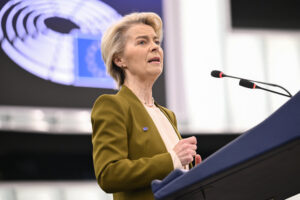
Under Ursula von der Leyen, the European Commission has shown little sympathy for Palestine.
It is still widely remembered that in 2023 she congratulated Israel on its independence while openly embracing colonial narratives aimed at whitewashing and even justifying the ethnic cleansing of Palestine.
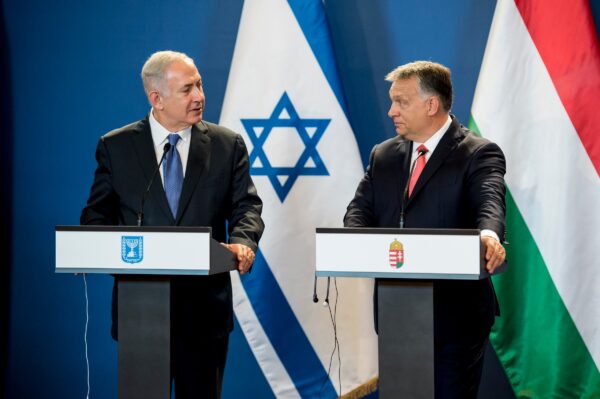
There remains an ideological bias in Brussels that continues to protect Israel, even in the absence of Viktor Orbán.
The idea that Israel is a democracy with which Europe shares values, though increasingly eroding, is still present. In this framework, the illegal Israeli occupation and its systematic violations of international law are treated as “problems” that should not harm the bilateral relationship.
In an interview with Haaretz in 2018, then EU representative to Tel Aviv Emanuele Giaufret referred to “diplomatic disagreements” as “insignificant,” noting that they were, as the newspaper wrote, “compared to the cooperation away from the spotlights.”
This policy of separating Israel from its illegal settler-colonial occupation has greatly contributed to the disappearance of prospects for a political solution.
The EU remains Israel’s main trading partner.
This leverage has rarely been used to apply pressure.
EU foreign affairs chief Kaja Kallas has seemed more concerned with undoing what her predecessor Josep Borrell sought to achieve in the region than with addressing the catastrophic consequences of allowing Israel to act with impunity.
This position has had consequences on the ground, where it is now widely acknowledged that the EU representation in Palestine appears significantly more conservative in its approach than it was under the previous representative, Sven Kühn von Burgsdorff.
Under the current approach, the EU has primarily focused on Palestinian reforms, as if Palestine’s central issue were one of institution-building rather than an illegal settler-colonial occupation.
War crimes openly stated
No matter a genocide, Israeli officials openly stating war crimes as their policies and utter opposition to the inalienable Palestinian right to self-determination, the EU does not change its behaviour.
Israel understands very well how the EU operates.
It has not facilitated the work of European diplomats and has rarely granted meetings with high-level EU officials over the past months.
Israeli authorities assume that the EU will refrain from speaking out against Israeli violations in order to secure a “seat at the table.”
The question, however, is: which table?
The only forum where Israel is currently engaging on regional issues is the so-called “Board of Peace,” a problematic initiative by the Trump administration that seeks to sideline the UN’s role while granting Israel impunity for crimes committed in Gaza, and conditioning reconstruction and humanitarian aid on alleged Israeli security concerns.
This is not a forum in which the EU should seek to promote its stated values of justice, equality, and self-determination.
The Palestinian Authority, constrained by Israeli sanctions and unable to pay salaries, is not leading calls for suspending the Association Agreement, neither it opposed the last EU-Israel Association Council.
For instance, it has praised Germany and Greece for their positions, despite their known opposition to sanctions on Israel.
Instead, it has largely engaged in the EU-led “reforms” process, being forced to discuss sensitive issues such as the educational curriculum, while the EU continues full cooperation with Israeli educational institutions that are complicit in discrimination and violence against Palestinians.
Fully ending the Israeli occupation — the only viable path to achieving a two-state solution — is not even mentioned in European statements.
The PA may have limited options, but the EU does not.
Moreover, the EU and its member states have both legal and political responsibilities to uphold. The EU’s strategic interest in preserving a rules-based multilateral order lies in holding Israel accountable for decades of systematic and well-documented war crimes and human rights violations. This is clearly stipulated in Article 2 of the Association Agreement.
Failing to act will not enhance the EU’s relevance; on the contrary, it will underscore its irrelevance by highlighting its failure to fulfill its obligations and by demonstrating that double standards and selectivity -rather than principles and “respect for human rights and democratic principles” – define its approach to international law.