
Armenia is hosting the eighth edition of the European Political Community (EPC) on Monday, where Canada’s Mark Carney is expected to attend. The EPC will be followed by the first-ever EU-Armenia summit on Tuesday.
 Elena Sánchez Nicolás



THIS WEEK offers a weekly snapshot of the key developments in Brussels and across Europe over the next seven days, published every Monday morning.
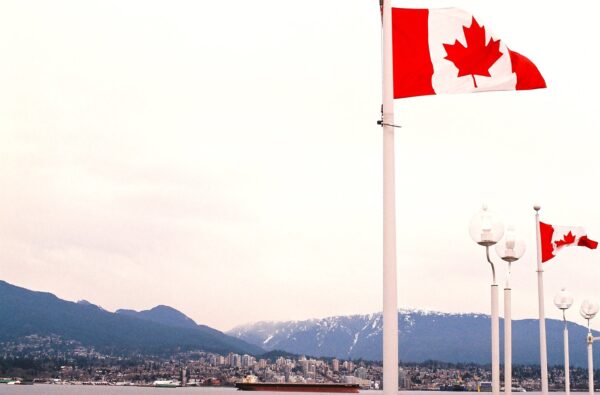
Armenia is hosting the eighth edition of the European Political Community (EPC) on Monday, where some 48 heads of state and government, plus Canadian prime minister Mark Carney, are expected to attend to discuss economic progress and security in the region.
Carney’s symbolic invitation shows that Europe and Canada are getting closer, especially on security issues that the EPC traditionally focuses on. And Canada’s recent integration into the EU’s defence SAFE programme is an example of that.
The move also follows the historic speech of Carney earlier this year in Davos, where he called for “middle powers” to unite against the “rupture” of the rules-based international order — mainly driven by the US, with Donald Trump threatening to invade Greenland, and breaking trust within Nato.
The first-ever EU-Armenia summit will follow on Tuesday (5 May) – when a partnership will be launched, covering transport, energy and digital cooperation.
After the US during peace negotiations between Armenia and Azerbaijan last year, the EU wants to take part in the development of the Trump Route for International Peace and Prosperity (TRIPP).
For Brussels, that geographical corridor also offers the EU a new route that bypasses Russia, while integrating Armenia deeper into Eurasian trade.
“Classically, [it takes] about 42 days to bring freight from China across to Europe. If you get this middle corridor working, you can bring that down to probably something close to 12 or 13 days,” an EU official told reporters ahead of the meeting.
But experts have criticised the EU for its lack of strategic leadership and delayed financial decisions, driving frustrations in the region and allowing the US to seize the geopolitical initiative in the South Caucasus.
Additionally, the EU–Armenia security and defence agreement is expected to be reinforced, including support for Armenia’s armed forces through the European Peace Facility, which has already allocated of €30m since 2014.
In a symbolic move to bring the country closer to the EU, Armenia will receive the first progress report on the visa-liberalisation action plan. In this sense, EU border agency Frontex is expected to start working closer with the Armenian ministry of internal affairs.
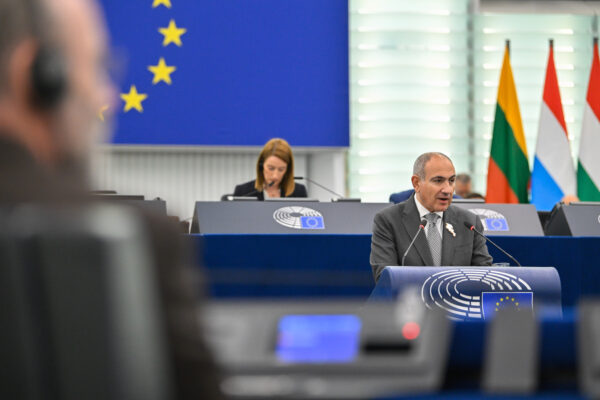
The summit follows the prime minister, Nikol Pashinyan’s, address in the European Parliament in March, where he highlighted his country’s EU membership aspirations and the need for peace with its arch-enemy Azerbaijan.
“Our democracy must make peace irreversible, and then peace will make democracy irreversible,” he told MEPs then.
Armenia will hold national elections on 7 June under the shadow of potential Russian interference — even though the EU is already supporting Armenia’s efforts against hybrid threats and disinformation.
Russia, once seen as Armenia’s main security guarantor, rapidly lost credibility following the war in Nagorno-Karabakh, where Moscow failed to intervene as Azerbaijan attacked the region in 2020 and again in 2023. But Moscow still maintains a couple of thousand troops at its 102nd military base in Gyumri, which it has leased until 2044.
In January 2025, Pashinyan’s government formally pursued EU membership, a move now central to the ruling party’s campaign. However, visa-free negotiations launched in 2024 remain stalled by scepticism from some member states.
Spain threatens to veto new anti-VAT fraud rules