
Patronising and inaccurate commentary from Western pundits aids Vladimir Putin’s aggression, writes Edward Lucas.
 Edward Lucas



Russia does not need to invade Nato to destroy it.
Stoking perceptions of instability can chill trade and investment and crash economies, leading to political upheaval. Intimidation can erode alliance solidarity too: why risk defending a country that looks doomed?
If Russia wins the war of nerves, everything else follows.
So words matter. In particular, to depict countries in Russia’s neighbourhood as economically stricken and militarily defenceless is as harmful as making direct donations to the Kremlin’s war machine.
But that is what a leading German defence expert has done, not once but twice.
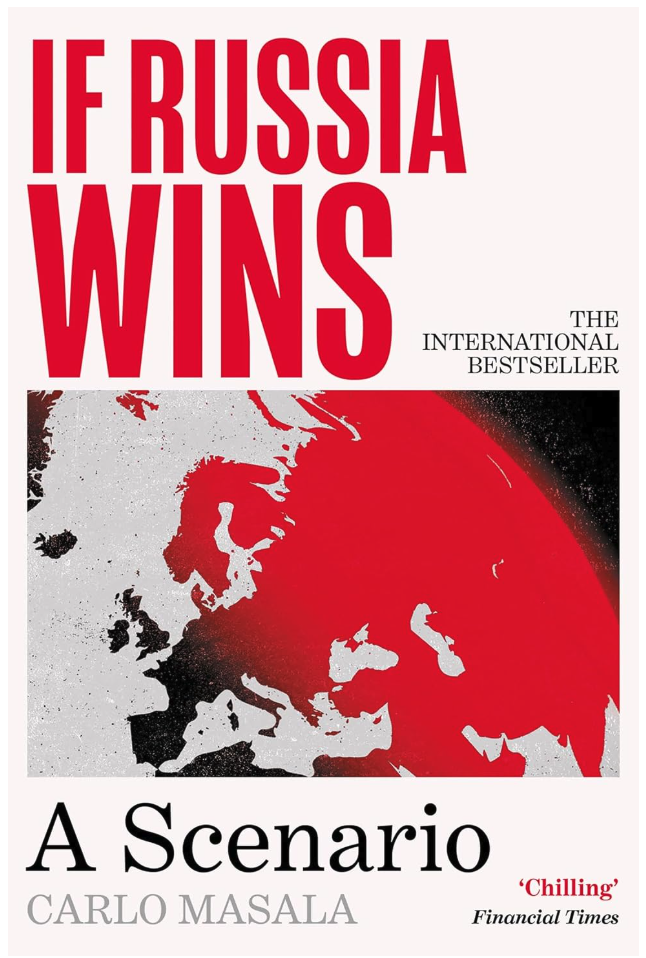
Carlo Masala is a professor at his country’s military university, the Bundeswehr Academy.
His speculative “If Russia Wins” is a best-seller in Germany, and widely translated into other languages. His overall message is timely and punchy: Europe’s security is precarious, and that we need to make big changes to stay safe.
Like many commentators from the old ‘West’, though, Masala’s focus slips when he starts talking about those strange, muddy places in the east.
In his book’s opening scenario, two brigades of Russian troops successfully attack Estonia. They “invade Narva from the north and the east”, aided by elements in the city’s population who have been supplied with weapons (also unnoticed by the authorities) in previous weeks.

Meanwhile Russian soldiers “disguised as tourists” aid an amphibious assault on Estonia’s second-largest island, Hiiumaa.
This scenario is not just geographically and militarily illiterate.
It is insulting and damaging. It promotes the idea that Estonia, like its Latvian and Lithuanian neighbours, has no agency: a terra nullius open for other countries to invade.
Estonia would fight back
Actually, that is quite untrue: the Baltic states are among the best in Europe when it comes to vigilance and readiness. The idea that they could be caught by surprise is fanciful. They would fight hard, too. They know what is at stake.
Now Masala has given an interview to the Czech magazine Respekt, (republished in English by the EUobserver) in which he says that he used Estonia only as an example, and that there are many other such vulnerable places.
That’s still annoyingly inaccurate.
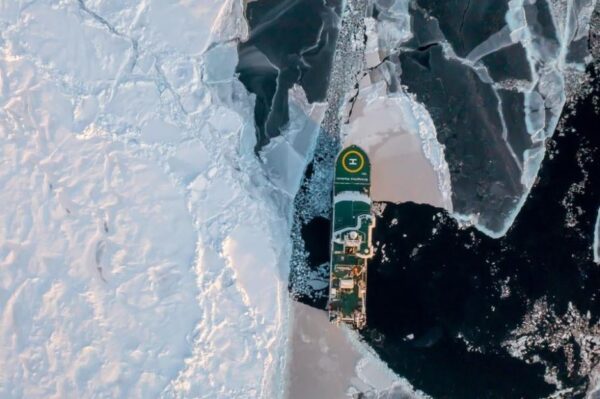
Better would be to say that other places are more vulnerable: a prime example is Svalbard, a Norwegian Arctic archipelago that is demilitarised under international law. Russia has visa-free access there and maintains a permanent presence in a semi-derelict coal mining town.
Masala then makes another truly outrageous statement, saying that the Estonians are complaining about his book “because for two years now there has been no direct foreign investment flowing into their country. Almost zero.”
This is so unfair. First, because it is untrue. A simple search on the internet would show that Invest Estonia recorded €431m in investment decisions in 2025.
Worse, Masala ascribes ulterior motives to the Estonian objections to his book. They are supposedly based not on its inaccuracy, but to avoid investor panic. I am glad he does not teach logic, as this makes no sense.
His initial response (he doesn’t teach journalism, either) is that he was misquoted or mistranslated.
Faced with proof, he now admits that he was just plain wrong : “feel free to criticize me”, he writes.
I’ve done that. But I don’t want to scapegoat Masala. He is right on a lot of things.
Yet his casual, sloppy approach exemplifies something truly troubling: an unwillingness in the commentariat in the old West to take the security of the frontline states seriously.
Their real achievements in defence and deterrence are ignored, while their real vulnerability, to western scaremongering, are ignored.
An ideal topic for a course at the Bundeswehr Academy.