
Rumen Radev, until recently President of Bulgaria and the leader of the new Progressive Bulgaria party, secured a decisive victory in the April 2026 parliamentary election, winning 131 out of 240 seats. The result is expected to end a cycle of technocratic governments, which have governed the country in between
 Marija Stojanović



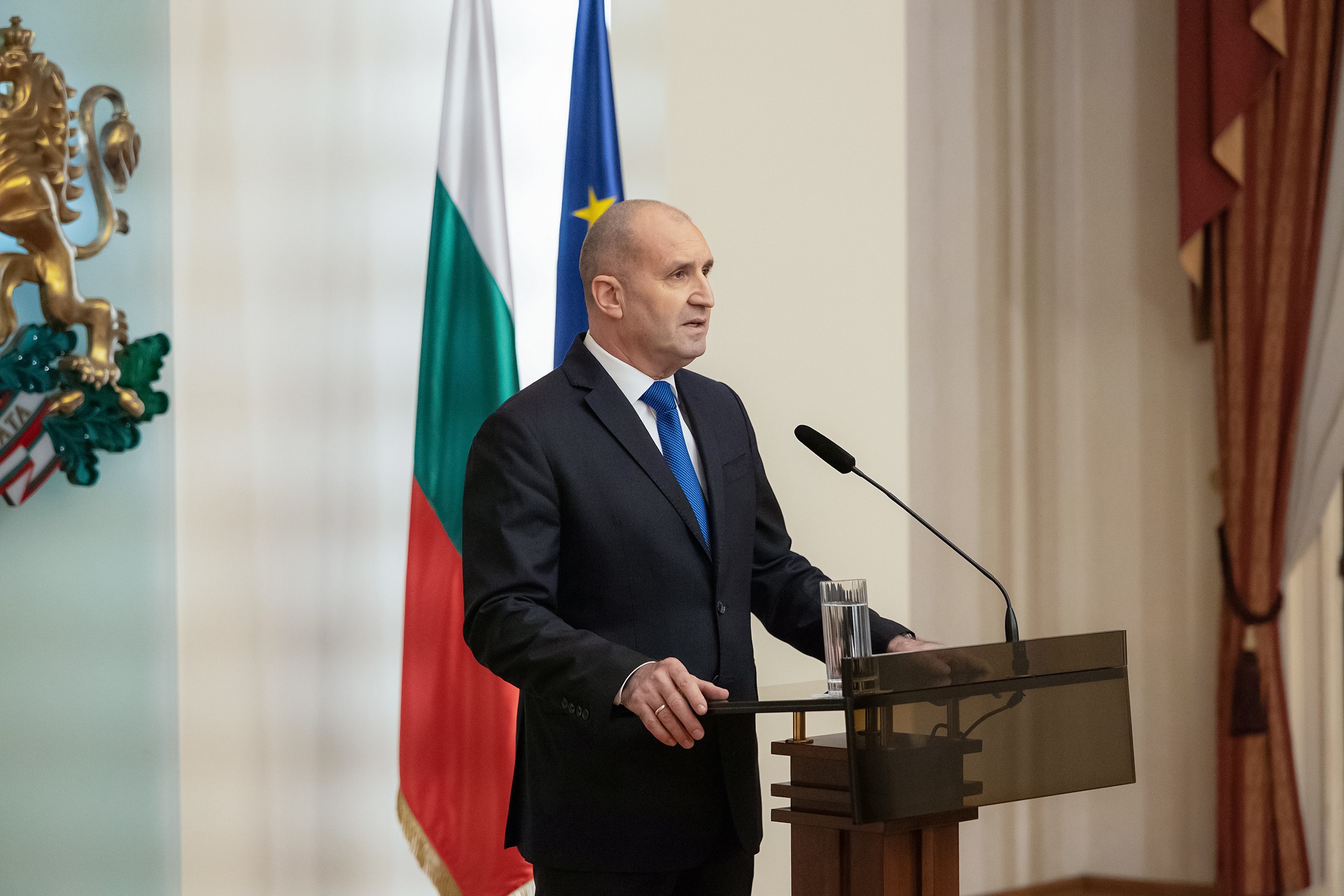
Rumen Radev, until recently President of Bulgaria and the leader of the new Progressive Bulgaria party, secured a decisive victory in the April 2026 parliamentary election, winning 131 out of 240 seats. The result is expected to end a cycle of technocratic governments, which have governed the country in between short-lived coalition cabinets since 2021.
Theoretically, this political stabilisation could provide an opening for a revision of relations between Bulgaria and North Macedonia, which have been strained ever since Sofia vetoed Skopje’s progress in the EU accession process in 2020.
Nevertheless, it is widely anticipated that Radev will maintain the demand for constitutional amendments in North Macedonia to include a Bulgarian minority as a non-negotiable precondition for progress on the country’s EU accession path. Therefore, a period of prolonged stagnation or a “status quo” in bilateral relations rather than a diplomatic breakthrough is expected.
Beyond the relations with North Macedonia, Radev’s approach to the Western Balkan countries remains unclear and will likely depend on his broader strategy for relations within the European Union.
In his public remarks following the landslide election victory, Radev framed the outcome as a decisive triumph of “hope over distrust” and “freedom over fear”.
Regarding the nation’s geopolitical trajectory, he reaffirmed that Bulgaria would continue to pursue its “European path”, but claimed that Europe had become “a victim of its own ambition to be a moral leader in a world without rules”.
Also, he called for the “practical relations” between the EU and Russia, based on mutual respect and equal treatment.
“A strict stance on North Macedonia will be maintained”
The accession of North Macedonia to the European Union has been significantly complicated by a multifaceted dispute with Bulgaria. The Bulgarian blockade, which started in 2020, is rooted in a fundamental disagreement over the interpretation of shared history and the ethnic identity of the Slavic population in North Macedonia.
Bulgaria insists that North Macedonia must amend its Constitution to explicitly include the Bulgarian minority as a constituent people within the state. Consequently, it requires North Macedonia to revise its school textbooks and public monuments to remove references that Sofia characterises as “anti-Bulgarian”.
Rumena Filipova, Chairperson of the Institute for Global Analytics in Bulgaria, states for EWB that it is likely that, as Prime Minister, Rumen Radev may continue to adopt a strict stance on North Macedonia, “given that as President he insisted on the inclusion of a reference to a Bulgarian minority in the Macedonian constitution”.
“He also expresses stances that are more nationally assertive, so a compromise in the process of bilateral relations may not be easily envisaged. At the same time, it needs to be mentioned that the topic of Bulgarian-Macedonian relations is absent from the public-political debate in Bulgaria, unlike four years ago when it was front and center. So, the new government may see less urgency in addressing bilateral matters”, Filipova notes.
Aleksandar Kržalovski, Director at the Macedonian Centre for International Cooperation (MCMS), points out that, while technical governments have been an excuse both in North Macedonia and Bulgaria not to engage more intensively on bilateral issues, it is not to be expected that, under Radev, there will be a major shift in the bilateral relations or some ‘boom’ in contacts and cooperation.
He clarifies Radev was the President in all these years since the disputes emerged on identity, language, ‘common history’ minority rights, etc”.
“Although he was not the creator of the problem itself, he contributed to ‘tightening’ of the relations and invented the major condition of ‘Constitutional Changes’, which is now stalling the Macedonian path towards the EU membership. It is not likely that Radev, now from a position of Prime Minister, will have any other stance, while also the VMRO-DPMNE-led government in North Macedonia does not show any willingness to move forward with the Constitutional changes, without firm guarantees that Bulgaria will not make any further obstacles and vetoes in the process”, he remarks.
Kržalovski adds that “still, every change is by itself a new opportunity to move things forward and break the stalemate”.
“Therefore, we can expect some renewed contacts and approaches with cautious optimism from both sides. Whether it will bring some breakthrough, remains to be seen”, he states.
On the other hand, Dimitar Nikoloski, Director of the Centre for European Strategies (EUROTHINK) in Skopje, notes for EWB that the victory of Radev, “viewed from the perspective of North Macedonia and its EU integration, can hardly be assessed as a positive development”.
“On the contrary, its main effect is the further consolidation of positions that are already blocking the dynamics of the accession process. The key thesis is that with Radev at the helm, the chances for any kind of compromise or reopening of the negotiating framework become even smaller. In the past period, Radev has clearly and consistently demonstrated that he has no intention of deviating from Bulgaria’s demands”, Nikoloski assesses.
In Nikoloski’s opinion, Radev will insist on the full implementation of these demands as a precondition for North Macedonia’s progress toward the EU.
According to him, “for North Macedonia this means a continuation of the status quo: no substantial progress in negotiations, but increased pressure to fulfil the obligations already undertaken”.
“Rather than a breakthrough, a scenario of prolonged stagnation is more likely, where the process will depend solely on our ability to meet the conditions – not on Bulgaria’s willingness to compromise. Radev’s victory signals that in the short to medium term, North Macedonia’s EU integration path will remain tightly conditioned and politically blocked, with minimal room for negotiation and virtually no prospects for revising the existing framework”, he remarks.
“Radev might engage more pro-actively with most of the WB countries”
One of the first leaders from the region to congratulate Radev was Serbian President Aleksandar Vučić, who stated that he held a telephone conversation with him shortly after the election.
“I congratulated Rumen Radev on his success and victory in the elections in Bulgaria. I am convinced that this result will be an opportunity to strengthen stability and progress, as well as to improve cooperation between Serbia and Bulgaria in the spirit of good neighborly relations and common interests. Serbia remains committed to building partner relations and regional stability”, Vučić said.
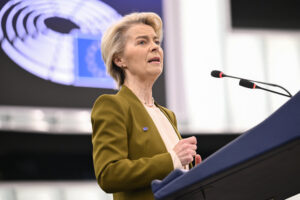
In spite of the widely spread concerns regarding Radev’s reputation for being sympathetic toward Russia and Vladimir Putin, top EU officials also congratulated him on the election victory. President of the European Commission, Ursula von der Leyen, stated that she was looking forward to working with Radev “for the prosperity and security” of Europe.
“Bulgaria is a proud member of the European family and plays an important role in tackling our common challenges”, she wrote in an X post.
Rumena Filipova stresses that “as regards relations with the Western Balkans, Radev has not yet formulated a clear stance, which will ultimately depend on how he approaches relations within the EU more generally”.
“That is, support for (the EU) enlargement will likely depend on the fulfilment of Bulgarian conditions towards North Macedonia, while the need to tackle Russian and Chinese influence in the region will similarly be contingent on how Radev clarifies his strategies towards Moscow and Beijing”, Filipova concludes.
Speaking on the same topic, Aleksandar Kržalovski notes that “this big win gives Radev rather a good starting position to engage more proactively with most of the WB countries and stimulate both mutual cooperation and their EU accession paths”.
“However, caution may be expected here as well from WB countries, but the EU too, regarding Radev’s reputation as tolerant, if not sympathetic, towards Russia and Putin, though perhaps it won’t be in the way Hungary and Viktor Orbán were balancing those and EU relations”, Kržalovski remarks.